
Yponomeuta multipunctella
Clemens, 1860
American Ermine Moth
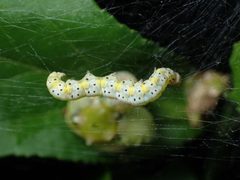
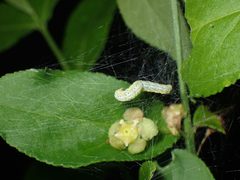
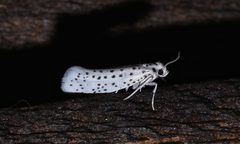
Yponomeuta multipunctella, commonly known as the American , is a small in the Yponomeutidae. It belongs to a noted for larvae that construct communal silk webs on plants. The is recorded from the northeastern United States, particularly Vermont. As a member of the Yponomeuta genus, it shares behavioral traits with related species, including -to-light that has been demonstrated to vary under selection pressure from artificial light pollution.
Pronunciation
How to pronounce Yponomeuta multipunctella: /ɪpɒnəˈmjʊtə ˌmʌltɪpʌŋkˈtɛlə/
These audio files are automatically generated. While they are not always 100% accurate, they are a good starting point.
Identification
Members of Yponomeuta are small white or pale with dark spotting patterns on the wings; specific diagnostic features separating Y. multipunctella from require examination of genitalia or detailed wing pattern analysis. The epithet 'multipunctella' refers to the multiple spotted pattern on the wings.
Images
Distribution
Recorded from Vermont, United States. Distribution appears restricted to the northeastern United States based on available occurrence data.
Host Associations
- Prunus - plant-level association inferred from known Yponomeuta relationships; specific host records for Y. multipunctella not confirmed
Behavior
-to-light has been documented in ; related Yponomeuta cagnagella shows reduced attraction to light in from light-polluted urban areas, with females less attracted than males. This suggests potential for similar behavioral plasticity in Y. multipunctella, though not directly tested.
Similar Taxa
- Yponomeuta cagnagellaSimilar size, coloration, and wing pattern; distinguished by geographic range (European) and subtle morphological differences
- Yponomeuta padellaOverlapping ; requires dissection or molecular analysis for reliable separation
More Details
Light pollution research context
While the provided context describes research on Yponomeuta cagnagella, not Y. multipunctella, the findings demonstrate that Yponomeuta can evolve reduced -to-light under urban light pollution. This establishes a plausible mechanism for behavioral variation in Y. multipunctella where it occurs in light-polluted areas.