Argyresthia canadensis
Freeman, 1972
Canadian arborvitae leafminer, cedar leafminer
Argyresthia canadensis is a small in the Argyresthiidae, commonly known as the Canadian arborvitae leafminer or cedar leafminer. The is found in North America and has a single per year. Larvae are specialized leafminers of Thuja occidentalis (northern white-cedar), feeding between the layers of needle tissue.
Pronunciation
How to pronounce Argyresthia canadensis: /ˌɑːr.dʒɪˈrɛs.θiə ˌkæn.əˈdɛn.sɪs/
These audio files are automatically generated. While they are not always 100% accurate, they are a good starting point.
Identification
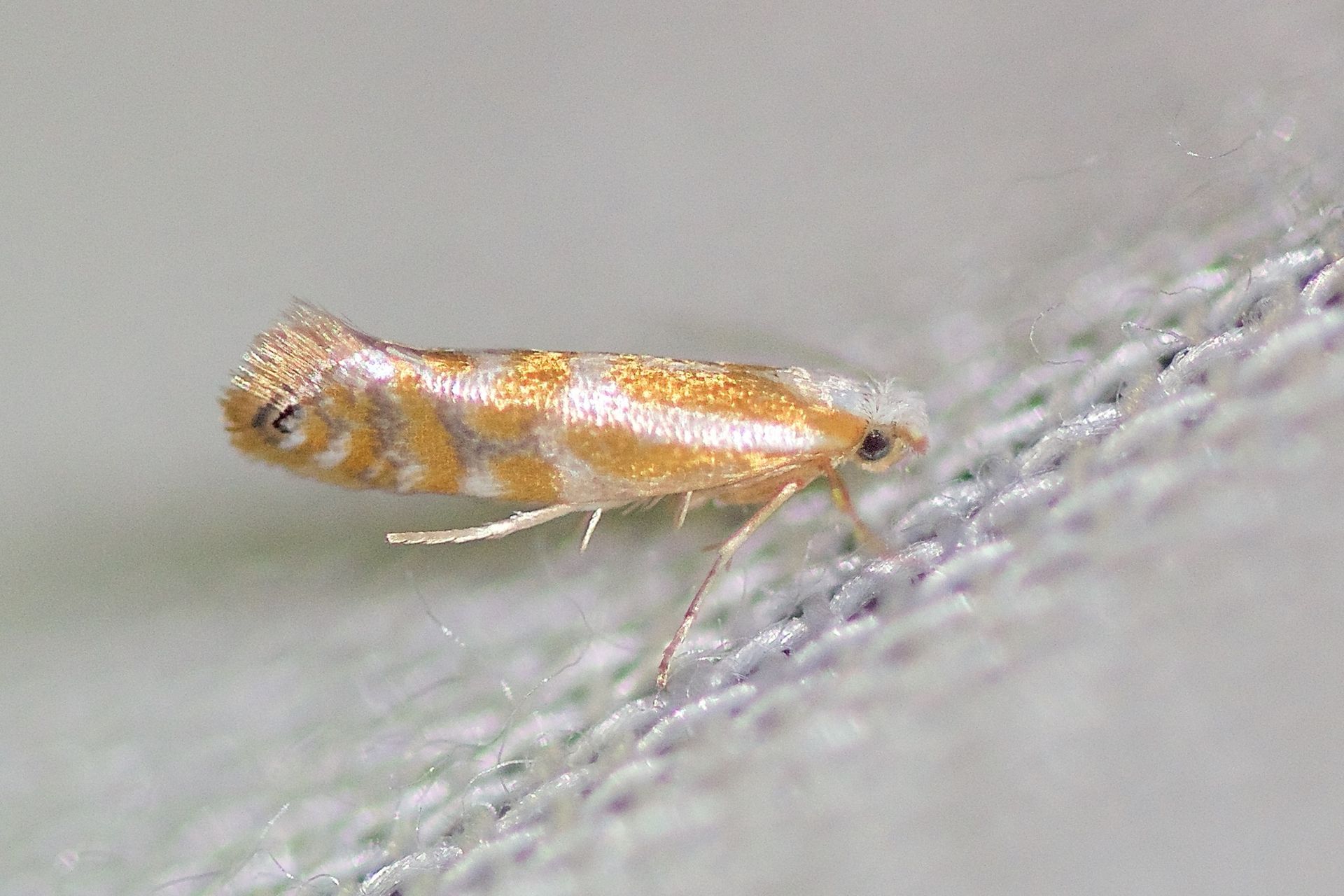
Small white with metallic wing banding, typical of Argyresthia. Larval identification is more reliable: green body with dark brown and distinctive central brown patch on prothoracic shield and anal plate. Leafmines in Thuja occidentalis foliage, with larvae in mined foliage and pupal cocoons visible externally on foliage April–June. Distinguished from other Argyresthia by specificity and larval markings.
Images
Habitat
Associated with stands of Thuja occidentalis (northern white-cedar, eastern arborvitae). Larvae occur within the foliage of this tree.
Distribution
North America. Specific range details beyond continent-level are not documented in available sources.
Seasonality
Nearly full-grown larvae overwinter in mined foliage. Full-grown larvae present from April to June. One per year.
Diet
Larvae feed exclusively on Thuja occidentalis, mining between tissue layers of the needles.
Host Associations
- Thuja occidentalis - larval Exclusive ; larvae mine needles
Life Cycle
(one per year). likely laid on foliage; larvae mine needles, with nearly full-grown larvae in mined foliage. Development resumes in spring, with full-grown larvae present April–June. occurs in a whitish, spindle-shaped cocoon attached to exterior of foliage.
Behavior
Larvae are leafminers, feeding internally within needle tissue. occurs within the mined foliage. takes place externally on foliage in a constructed cocoon.
Ecological Role
As a specialized herbivore, larvae function as primary consumers of Thuja occidentalis foliage. The contributes to local nutrient cycling through leaf damage and serves as potential prey for and other natural enemies.
Human Relevance
references its status as a leafminer of arborvitae/cedar, ornamental and native conifers of economic and landscaping value. No specific economic impact documented in available sources.
Similar Taxa
- Other Argyresthia speciesMany Argyresthia are visually similar white with metallic wing markings; identification to species often requires examination of genitalia or knowledge of larval plant and markings.
- Argyresthia thuiellaAnother Thuja-feeding Argyresthia ; may overlap in use and require careful distinction based on larval and geographic range.