
Sparganothis flavibasana
(Fernald, 1882)
Sparganothis flavibasana is a small tortricid described by Fernald in 1882. It occurs in the north-central regions of North America, with records from the Canadian prairies and adjacent U.S. states. The is one of several Sparganothis species associated with berry crops, though its specific remains poorly documented compared to congenerics like the cranberry fruitworm.
Pronunciation
How to pronounce Sparganothis flavibasana: /spɑːrɡəˈnɒθɪs flævɪˈbæsənə/
These audio files are automatically generated. While they are not always 100% accurate, they are a good starting point.
Identification
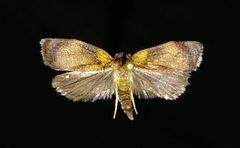
The can be distinguished from other Sparganothis by genitalia examination; external is similar to . The specific epithet references a yellowish basal wing marking that may aid recognition, though this requires confirmation with or original description.
Images
Habitat
Associated with temperate regions of the northern Great Plains and adjacent areas. Likely occurs in supporting larval plants, though specific vegetation are not documented.
Distribution
Recorded from Illinois, Iowa, Manitoba, Ontario, Quebec, Saskatchewan, and Alberta. Distribution spans the Canadian prairie provinces and north-central United States.
Human Relevance
Mentioned in agricultural extension contexts as a potential cranberry pest (Sparganothis fruitworm group), though specific economic impact of this versus the more commonly cited S. sulfureana is unclear. May be subject to similar monitoring and management protocols in cranberry production regions.
Similar Taxa
- Sparganothis sulfureanaThe cranberry fruitworm is a well-documented pest with similar and geographic overlap; reliable separation requires genitalia dissection or molecular methods.
- Other Sparganothis species contains multiple morphologically similar ; S. flavibasana distinguished by male genitalia valva structure and possibly basal wing coloration per species epithet.
More Details
Research context
This is mentioned in ongoing climate change research on cranberry pests in New Jersey, suggesting it may occur more widely than historical records indicate or that congeneric identification has been consolidated in some studies.