
Platynota rostrana
(Walker, 1863)
Omnivorous Platynota Moth
Platynota rostrana is a small tortricid with a wingspan of 13–17 mm, distributed across the Americas from the United States through Central America to South America, with established in the West Indies and occasional records in Europe via accidental importation. The is known to be a pest of citrus and other crops, with larvae that feed on a variety of plant materials.

Pronunciation
How to pronounce Platynota rostrana: /ˌplætɪˈnoʊtə rɒˈstrɑːnə/
These audio files are automatically generated. While they are not always 100% accurate, they are a good starting point.
Identification
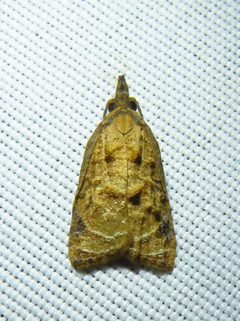
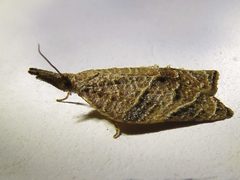
Small size (13–17 mm wingspan) distinguishes it from larger tortricid moths. Distinguished from Platynota stultana (omnivorous leafroller) by subtle wing pattern differences and geographic overlap in some regions; precise separation often requires genitalia examination or molecular analysis.
Images
Appearance
Small with wingspan of 13–17 mm. Forewings typically mottled brownish-gray with variable patterning.
Habitat
Agricultural and natural environments supporting plants; recorded in citrus groves and areas with diverse vegetation.
Distribution
Native to the Americas: United States (Alabama, Arizona, California, Florida, Georgia, Indiana, Louisiana, Mississippi, New Jersey, North Carolina, Oklahoma, South Carolina, Tennessee, Texas, Virginia), Mexico, Central America, South America (Venezuela, Brazil), and the West Indies. Introduced and occasionally established in Europe (Great Britain, with doubtful records from Belgium, France, and The Netherlands).
Diet
Larvae feed on diverse plant material including citrus; specific range poorly documented in available sources.
Host Associations
- Citrus - larval pest of citrus crops
- Lotuspossible association based on related , unconfirmed for P. rostrana
Ecological Role
Larval herbivore; contributes to leafroller guild in agricultural systems.
Human Relevance
Recognized agricultural pest, particularly of citrus. Subject of occasional accidental transport to Europe via tropical plants.
Similar Taxa
- Platynota stultanaSimilar ('omnivorous leafroller'), overlapping distribution, and comparable size; distinguished by wing pattern details
- Other Platynota species-level similarity in size and general ; -level identification requires detailed examination