
Amorbia emigratella
Busck, 1909
Mexican leaf-roller
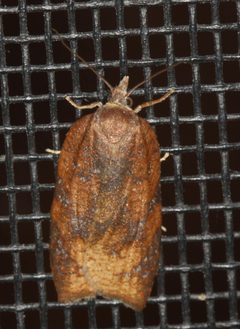
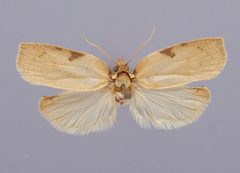
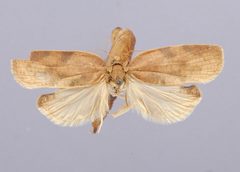
Amorbia emigratella, commonly known as the Mexican leaf-roller, is a tortricid native to the southern United States, Mexico, and Central America. It was first described from Hawaii in 1910 by August Busck, where it has become established on all major islands. The exhibits in forewing length and undergoes multiple annually. Larvae are , feeding on a broad range of cultivated and wild plants.
Pronunciation
How to pronounce Amorbia emigratella: /əˈmɔːr.bɪ.ə ˌɛ.mɪ.grəˈtɛl.ə/
These audio files are automatically generated. While they are not always 100% accurate, they are a good starting point.
Identification
Distinguished from similar tortricid by the combination of sexual size dimorphism (male forewings 8–11 mm, female forewings 11.5–12 mm) and its documented geographic distribution. Specific diagnostic morphological features for field identification are not detailed in available literature.
Images
Appearance
Forewing length 8–11 mm in males, 11.5–12 mm in females. As a tortricid , likely have the characteristic bell-shaped wing posture at rest, though specific coloration and pattern details are not provided in available sources.
Habitat
Found in agricultural, horticultural, and natural environments supporting its diverse plants. In Hawaii, occurs across multiple islands in varied elevations and vegetation types.
Distribution
Native to southern United States, Mexico, and Central America. Introduced and established in Hawaii (Kauai, Oahu, Molokai, Maui, and Hawaii Island).
Seasonality
Multiple per year; continuous breeding likely in tropical and subtropical climates where plants remain available.
Diet
Larvae are highly , feeding on at least 32 documented plant across numerous . Recorded include: Acacia koaia, Arachis hypogaea (peanut), Brassica oleracea (cabbage), Carica papaya (papaya), Citrus sinensis (sweet orange), Gossypium (cotton), Ipomoea batatas (sweet potato), Lycopersicon esculentum (tomato), Macadamia, Persea americana (avocado), Phaseolus (beans), Psidium guajava (guava), Rosa (rose), Rubus (blackberry/raspberry), Solanum melongena (eggplant), Solanum tuberosum (potato), Theobroma cacao (cacao), Zea mays (corn), and various orchids, among others.
Host Associations
- Acacia koaia - larval native Hawaiian
- Arachis hypogaea - larval peanut
- Brassica oleracea - larval cabbage and related crops
- Carica papaya - larval papaya
- Citrus sinensis - larval sweet orange
- Gossypium - larval cotton
- Ipomoea batatas - larval sweet potato
- Lycopersicon esculentum - larval tomato
- Macadamia - larval macadamia nut
- Persea americana - larval avocado
- Phaseolus - larval beans
- Psidium guajava - larval guava
- Rosa - larval rose
- Rubus - larval blackberry, raspberry
- Solanum melongena - larval eggplant
- Solanum tuberosum - larval potato
- Theobroma cacao - larval cacao
- Zea mays - larval corn
- Orchidaceae - larval orchid
Life Cycle
Complete with , larval, pupal, and stages. Pupal stage lasts approximately 10 days. Multiple occur annually. Larvae are the active feeding stage and are responsible for the 'leaf-roller' , suggesting they roll or tie leaves for shelter.
Behavior
Larvae construct leaf rolls or ties using silk, typical of tortricid leaf-roller . This provides protection during feeding and development.
Ecological Role
Herbivore and agricultural pest. larval feeding can impact native plants (e.g., Acacia koaia, Rubus hawaiiensis in Hawaii) and numerous crop .
Human Relevance
Significant agricultural pest in Hawaii and potentially elsewhere, affecting diverse crops including citrus, avocado, coffee relatives (cacao), nuts (macadamia), vegetables, and ornamentals. The broad range makes it economically important across multiple agricultural sectors.
Similar Taxa
- Amorbia humerosanaCongeneric in the same , potentially overlapping in distribution and use; specific distinguishing features require examination
- Other Tortricidae leaf-rollersSimilar larval of leaf-rolling; identification to level requires morphological examination or molecular methods
More Details
Taxonomic history
Described by August Busck in 1910 from Hawaiian specimens, though later recognized as native to the Americas and introduced to Hawaii
Pest management relevance
The extensive documented list (32+ ) indicates high adaptive capacity and potential for economic impact across diverse cropping systems