
Cacoecimorpha
Obraztsov, 1954
carnation tortrix moths
Species Guides
1- Cacoecimorpha pronubana(Carnation Tortrix)
Cacoecimorpha is a in the Tortricidae, established by Obraztsov in 1954. The genus contains a single , Cacoecimorpha pronubana, commonly known as the carnation tortrix. This species is a highly pest of horticultural and agricultural significance, native to the Mediterranean region but now widespread across Europe, North Africa, and introduced to North America. The genus is classified within the tribe Archipini of the Tortricinae.
Pronunciation
How to pronounce Cacoecimorpha: //kæˌkoʊsɪˈmɔrfə//
These audio files are automatically generated. While they are not always 100% accurate, they are a good starting point.
Identification
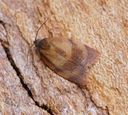
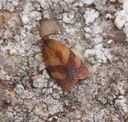
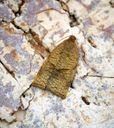
As a , Cacoecimorpha is defined by the characteristics of its sole C. pronubana. The genus can be distinguished from other tortricid genera by the combination of: forewings with light reddish ochreous ground colour and darker lines, rounded , and bright orange hindwings. Females have a wingspan of 18–22 mm, males 15–17 mm. For definitive identification, examination of female genitalia is required, as this was the basis for species confirmation in recent studies.
Images
Distribution
Native to the Mediterranean region. Present in Europe (including Albania, Balearic Islands, Belgium, Britain, Channel Islands, Corsica, Crete, Croatia, Cyprus, Denmark, France, Germany, Greece, Hungary, Ireland, Italy, Lithuania, Luxembourg, Madeira, Malta, Netherlands, Portugal, Romania, Sardinia, Serbia, Sicily, Slovenia, Spain, Sweden, Switzerland, UK, England and Wales, Scotland), northern Africa (Algeria, Libya, Morocco, Tunisia, Tangier), Asia Minor (Turkey, Anatolia, Azerbaijan, Israel), and South Africa. Introduced to North America with records from the USA (Oregon, Washington).
Human Relevance
The sole C. pronubana is a significant economic pest of ornamental plants and crops. It has been reported as a pest on olive trees, avocados, citrus, apples, pears, carnations, and numerous ornamental shrubs including Photinia, Prunus laurocerasus, Griselinia littoralis, Choisya ternata, and Pyracantha angustifolia. The species has been the subject of research due to its impact on horticultural industries.
More Details
Taxonomic history
The Cacoecimorpha was erected by Obraztsov in 1954. The type , originally described as Tortrix pronubana by Hübner in 1799, was transferred to this new genus based on distinct morphological characteristics of the genitalia.
Molecular studies
studies have revealed cryptic diversity within what was traditionally considered C. pronubana. Greek have been molecularly characterized as belonging to the European clade, showing 100% identity to French and Italian sequences and 99.77% similarity to UK and German sequences. Spanish populations show greater than 3.5% divergence, suggesting possible unrecognized -level divergence.
Sources and further reading
- BugGuide
- Wikipedia
- GBIF taxonomy match
- iNaturalist taxon
- NCBI Taxonomy
- Catalogue of Life
- Cacoecimorpha pronubana . [Distribution map].
- Cacoecimorpha pronubana . [Distribution map].
- Hylotelephium spectabile, a New Host for Carnation Tortrix Moth (Cacoecimorpha pronubana) and Molecular Characterization in Greece
- Effect of host plant on the life history of the carnation tortrix moth Cacoecimorpha pronubana (Lepidoptera: Tortricidae)
- Transgenerational effect of host plant on growth and reproduction in two species of moth, Cacoecimorpha pronubana and Epiphyas postvittana (Lepidoptera: Tortricidae)