
Argyrotaenia alisellana
(Robinson, 1869)
White-spotted Leafroller Moth
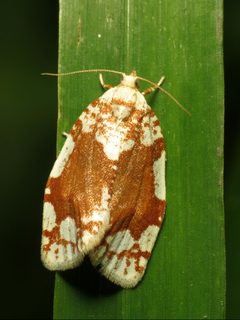
Argyrotaenia alisellana, commonly known as the white-spotted leafroller , is a of tortricid moth native to eastern and central North America. have a wingspan of 18–25 mm and are active from May through September. The species is notable for its larval association with oak species (Quercus), where caterpillars feed on leaves. It occurs across a broad geographic range from Quebec and Maine south to Florida, and westward to Arkansas and North Dakota.
Pronunciation
How to pronounce Argyrotaenia alisellana: /ˌɑːɡɪroʊˈteɪniə ˌælɪˈsɛlənə/
These audio files are automatically generated. While they are not always 100% accurate, they are a good starting point.
Identification
The combination of white spotting on the forewings, moderate size (18–25 mm wingspan), and the characteristic leafroller resting posture with wings held roof-like over the body may help distinguish this from similar tortricids. However, positive identification typically requires examination of genitalia or reference to regional . It may be confused with other Argyrotaenia species, particularly A. velutinana (red-banded leafroller), which has a prominent reddish-brown band across the forewings rather than white spots.
Images
Appearance
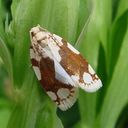
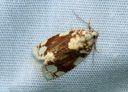
have a wingspan of 18–25 mm. The forewings display a pattern that includes white spots, contributing to the . Coloration and pattern details beyond the presence of white spots are not well documented in available sources.
Habitat
Associated with oak-dominated forests and woodlands, given the larval dependence on Quercus . Specific requirements for are not well documented, but the species is recorded from a range of forested and semi-forested environments across its distribution.
Distribution
Eastern and central North America, ranging from Quebec and Maine south to Florida, west to Arkansas, and north to North Dakota. Records are concentrated in the eastern United States and adjacent Canada.
Seasonality
are on wing from May to September, indicating a multi-month period that likely encompasses at least one complete and possibly partial second generation activity in southern portions of the range.
Diet
Larvae feed on the leaves of Quercus (oak) . feeding habits are not documented.
Host Associations
- Quercus - larval food plantoak
Life Cycle
Complete with , larva, pupa, and stages. Larvae are leaf-feeders on oaks. The pupal stage and strategy are not documented in available sources. The extended adult period (May–September) suggests either a single extended or multiple generations, but this has not been definitively established.
Behavior
Larvae exhibit leaf-rolling typical of the Tortricidae, constructing shelters by rolling or folding leaves. are and have been observed at light sources. Specific mating or behaviors are not documented.
Ecological Role
As a folivore on oaks, larvae contribute to nutrient cycling and energy transfer within forest . They serve as prey for various and , though specific relationships are not documented. The is not considered a significant pest of oaks.
Human Relevance
Not known to be of significant economic importance. Unlike some (e.g., A. velutinana, which occasionally damages apple orchards), this appears restricted to native oaks and is not documented as a crop pest.
Similar Taxa
- Argyrotaenia velutinanaSimilar size and general appearance, but distinguished by a prominent reddish-brown transverse band on the forewings and broader range including apple and other deciduous trees and fruits
More Details
Taxonomic history
Originally described as Tortrix alisellana by Robinson in 1869, later transferred to the Argyrotaenia.