
Archips rileyana
(Grote, 1868)
Southern Ugly-nest Caterpillar Moth
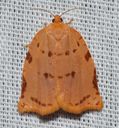
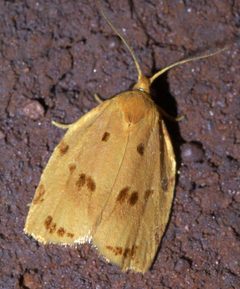
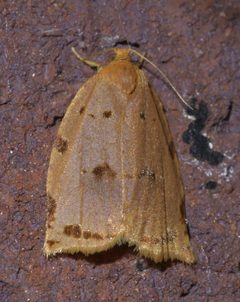
Archips rileyana, commonly known as the Southern Ugly-nest Caterpillar , is a of tortricid moth native to eastern North America. The species was first described by Grote in 1868 under the name Tortrix rileyana. Larvae construct characteristic 'ugly nests' by webbing together leaves and feeding within these shelters. The species has been recorded across a broad geographic range from Maine south to Florida and west to Texas and Missouri.
Pronunciation
How to pronounce Archips rileyana: /ˈɑːrkɪps rɪˈleɪənə/
These audio files are automatically generated. While they are not always 100% accurate, they are a good starting point.
Identification
are medium-sized tortricid moths with typical Archips . The can be distinguished from related clearwing moths (Sesiidae) such as Synanthedon rileyana, with which it has been historically confused, by its non-transparent wings and tortricid wing venation. The specific epithet honors the entomologist Charles Valentine Riley. Larvae are leafroller caterpillars that construct messy, webbed leaf shelters characteristic of the 'ugly-nest' .
Images
Distribution
Eastern North America: recorded from Alabama, Florida, Georgia, Maine, Mississippi, Missouri, North Carolina, Ohio, Tennessee, Texas, Virginia, and West Virginia.
Host Associations
- goldenrod - plantlarval feeding
Life Cycle
Complete with , larval, pupal, and stages. Larvae are leafrollers that construct silken webbing to bind leaves together into feeding shelters.
Behavior
Larvae exhibit a defensive 'ejection' when threatened: they drop from their leaf roll on a silken line, then climb back once danger passes. This behavior has been observed to be exploited by predatory such as Ancistrocerus unifasciatus, which use vibrations to stimulate the caterpillar to eject and then capture it in mid-air.
Ecological Role
Larval stage serves as prey for solitary , particularly mason wasps (Eumeninae) that hunt leafroller caterpillars to provision nests.
Similar Taxa
- Archips purpuranaSimilar leafroller and use; both associated with goldenrod
- Synanthedon rileyanaHistorically confused due to similar specific epithet and ; distinguished as a clearwing moth (Sesiidae) with transparent wings and -mimicking appearance versus tortricid
More Details
Taxonomic note
The epithet has appeared as both 'rileyana' and 'rileyanus' in literature; 'rileyana' is the accepted form per Catalogue of Life and GBIF.
Nomenclatural history
Originally described as Tortrix rileyana Grote, 1868; later transferred to Archips.