
Adoxophyes negundana
(McDunnough, 1923)
Shimmering Adoxophyes Moth, Shimmering Gold Adoxophyes Moth
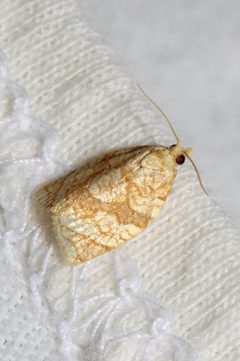
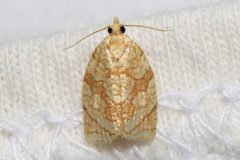
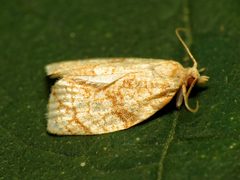
A small tortricid with forewings 7.5–9.5 mm in length. are active from June to early September. The is specialized on boxelder (Acer negundo), with larvae that roll leaves to feed and develop.
Pronunciation
How to pronounce Adoxophyes negundana: /əˌdɒksəˈfaɪiz nɛˈɡʌndənə/
These audio files are automatically generated. While they are not always 100% accurate, they are a good starting point.
Identification
Distinguished from other Adoxophyes by forewing length of 7.5–9.5 mm and association with Acer negundo as the larval . Leaf-rolling on boxelder is a key indicator of larval presence.
Images
Appearance
Small with forewings measuring 7.5–9.5 mm. The specific coloration and pattern are not detailed in available sources.
Habitat
Associated with stands of boxelder (Acer negundo). Specific requirements beyond plant presence are not documented.
Distribution
North America: Ontario to Manitoba, south to Florida, west to Utah. Additional records from Alberta, Saskatchewan, and Vermont.
Seasonality
active June to early September. Larval stage timing not specified.
Diet
Larvae feed exclusively on Acer negundo (boxelder). feeding habits not documented.
Host Associations
- Acer negundo - larval food plantLarvae roll leaves of this
Life Cycle
Larval development occurs within rolled leaves of the plant. Specific details on , pupal, and stages are not documented.
Behavior
Larvae roll leaves of Acer negundo to create sheltered feeding sites.
Ecological Role
Herbivore specializing on boxelder; specific impacts not documented.
Human Relevance
No documented economic or medical significance. Occasionally observed by naturalists.
Similar Taxa
- Other Adoxophyes speciesSimilar size and ; distinguished by plant specificity and geographic range
- Other Tortricidae leaf-rollersSimilar leaf-rolling ; distinguished by plant association with Acer negundo
More Details
Original description
Originally described as Homona negundana by McDunnough in 1923, later transferred to Adoxophyes.