
Dichrorampha leopardana
(Busck, 1906)
Dichrorampha leopardana is a of tortricid in the Tortricidae, Olethreutinae, tribe Grapholitini. It was described by Busck in 1906. The Dichrorampha contains numerous small moths, many of which are associated with alpine and montane . Related species in this genus have been subjects of recent taxonomic revision due to cryptic diversity and long-standing confusion with similar species.
Pronunciation
How to pronounce Dichrorampha leopardana: //daɪˌkroʊˈræmfə liˌoʊpɑrˈdɑːnə//
These audio files are automatically generated. While they are not always 100% accurate, they are a good starting point.
Identification
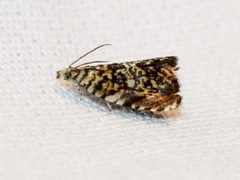
in the Dichrorampha are small tortricid moths that require careful examination of genitalia and for accurate identification. D. leopardana is distinguished from through dissection and comparison of male and female genitalia structures. Recent integrative taxonomic work on related Dichrorampha species has demonstrated that wing pattern alone is unreliable for species-level identification in this group.
Images
Distribution
The specific distribution of D. leopardana is not well documented in the provided sources. The Dichrorampha is widespread in the Holarctic region, with many occurring in alpine and montane of Europe and North America.
Similar Taxa
- Dichrorampha velataRecently described alpine from the Alps that was long confused with D. alpestrana and D. montanana; demonstrates the cryptic diversity common in this
- Dichrorampha alpestranaAnother small alpine tortricid that has been subject to recent taxonomic revision; historically confused with D. montanana
More Details
Taxonomic context
The Dichrorampha has been the focus of recent integrative taxonomic studies combining and molecular data. A 2021 study by Schmid and Huemer described D. velata as new from the Alps, resolving a 180-year-old confusion involving multiple synonymized names. This work highlights the importance of museum collections and careful revision of 'well-known' European fauna.
Research significance
in this exemplify how even extensively studied European Lepidoptera can contain overlooked diversity. The discovery and clarification of Dichrorampha species demonstrates that small, superficially similar may represent distinct species requiring genetic and morphological analysis for proper identification.