
Retinia albicapitana
(Busck, 1914)
Northern Pitch Twig Moth
Retinia albicapitana, the northern pitch twig moth, is a small tortricid specialized on Pinus . It occurs across and northern temperate North America, with a two-year . The species is notable for its extended larval development and association with coniferous forest .
Pronunciation
How to pronounce Retinia albicapitana: //rɛˈtɪniə ælˌbaɪkæpɪˈtænə//
These audio files are automatically generated. While they are not always 100% accurate, they are a good starting point.
Identification
Distinguished from other Retinia by the pale or white (albicapitana = white-headed). May be separated from similar pitch species by geographic range and associations, though precise identification often requires genitalia examination. The two-year is unusual among related species and may aid in -level identification.
Images
Appearance
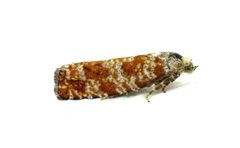
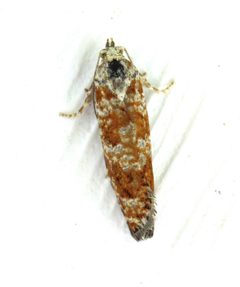
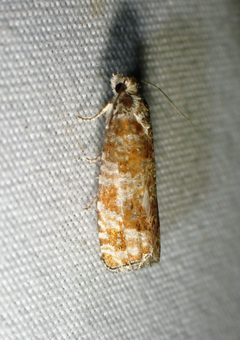
Small with wingspan 14–21 mm. are characterized by a white or pale , referenced in the specific epithet 'albicapitana' (white-headed). Wing pattern and coloration typical of Retinia members, with mottled forewings. Larvae are internal feeders in pine twigs and not readily observed.
Habitat
Coniferous forests dominated by Pinus . Associated with open and closed pine woodlands, including jack pine, lodgepole pine, and Scots pine stands. Occurs in forest, montane, and northern temperate forest zones.
Distribution
Canada: Nova Scotia to British Columbia, north to southern Northwest Territories. United States: Montana and Great Lakes states (Minnesota, Wisconsin, Michigan). Additional records from Alberta, Manitoba, and Saskatchewan.
Seasonality
active June to July. Larval development spans two years, with in twig galleries.
Diet
Larvae feed internally on twigs of Pinus banksiana (jack pine), Pinus contorta (lodgepole pine), Pinus mugo (mountain pine), Pinus ponderosa (ponderosa pine), Pinus resinosa (red pine), and Pinus sylvestris (Scots pine). Feeding induces pitch flow and gall-like swellings on twigs.
Host Associations
- Pinus banksiana - larval jack pine
- Pinus contorta - larval lodgepole pine
- Pinus mugo - larval mountain pine
- Pinus ponderosa - larval ponderosa pine
- Pinus resinosa - larval red pine
- Pinus sylvestris - larval Scots pine
Life Cycle
Two-year . laid on or near twigs. Larvae bore into twigs, creating resinous galleries, and develop over two growing seasons with winter . occurs within the gallery. emerge in early summer.
Behavior
Larvae are internal feeders, excavating tunnels in twig pith that stimulate copious resin (pitch) flow, creating characteristic pitch masses on infested twigs. are and attracted to light.
Ecological Role
As a specialized pine , larvae may cause localized twig dieback and reduced growth in heavy . Resin production in response to feeding represents a plant defense response. Serves as prey for and other natural enemies in coniferous forest .
Human Relevance
Minor forestry pest in some regions; larval feeding can reduce timber quality and growth in young pine stands. Not considered economically significant compared to other pine pests. Pitch masses on twigs may indicate presence to forest managers.
Similar Taxa
- Retinia resinellaSimilar European pitch twig moth; distinguished by geographic range and slight morphological differences in genitalia
- Retinia comstockianaAnother North American pitch ; differs in range and typically has faster one-year
- Other Retinia speciesMany require dissection for definitive identification; R. albicapitana distinguished by pale and two-year development
More Details
Taxonomic history
Originally described as Evetria albicapitana by Busck in 1914; later transferred to Retinia. The basionym Evetria albicapitana is preserved in some databases.
Life cycle duration
The two-year is relatively unusual among tortricid moths and represents an to the short growing season of northern and montane environments.