
Retinia
Guenée, 1845
Pine Shoot Moths
Species Guides
11- Retinia albicapitana(Northern Pitch Twig Moth)
- Retinia burkeana
- Retinia comstockiana(Pitch Twig Moth)
- Retinia edemoidana
- Retinia gemistrigulana(Gray Retinia Moth)
- Retinia houseri(Minute Pitch-blister Moth)
- Retinia metallica(Ponderosa Pine Caterpillar Moth)
- Retinia pallipennis
- Retinia picicolana
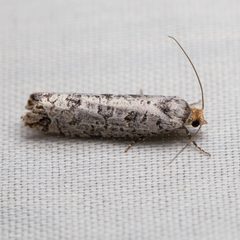
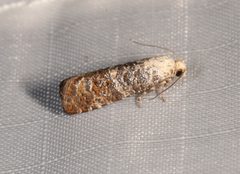
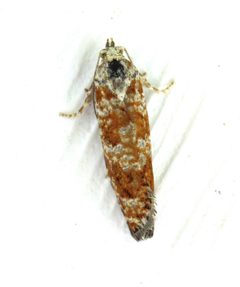
Retinia is a of tortricid moths in the Olethreutinae, commonly known as pine shoot . in this genus are associated with coniferous , particularly pines (Pinus spp.). The genus has been studied in European forestry contexts for its role as a pest of young pine stands. Larval feeding damages shoot tips, affecting tree growth form.
Pronunciation
How to pronounce Retinia: /rɛˈtɪniə/
These audio files are automatically generated. While they are not always 100% accurate, they are a good starting point.
Identification
Retinia are small to medium-sized tortricid moths. As a , they can be distinguished from related pine tip genera Rhyacionia and Blastesthia by genitalia and larval preferences. are generally nondescript with mottled gray-brown forewings. Accurate species-level identification typically requires dissection and examination of genital structures.
Images
Habitat
Young pine stands, both planted and naturally seeded. Retinia resinella has been observed at higher frequency in shaded aftergrowth conditions beneath older tree , in contrast to Rhyacionia buoliana which predominates in sun-exposed stands.
Distribution
Recorded from northern Europe (Denmark, Norway, Sweden) and North America (Vermont, United States). The has been specifically documented in southern and western Bohemia (Czech Republic) at elevations of 360–510 m.
Seasonality
activity and larval damage surveys conducted April–June in central European studies.
Host Associations
- Pinus - larval Pine ; specific associations vary by Retinia species
Ecological Role
As a pine tip , larval feeding damages terminal and lateral shoots of young pines. In shaded stand conditions, Retinia resinella has been observed to achieve 46.1% dominance among tip moth , suggesting competitive partitioning of with related .
Human Relevance
Forestry pest affecting young pine plantations and naturally regenerated stands. Shoot damage alters tree architecture and can reduce timber quality. Management considerations include stand exposure and shading conditions, which influence relative abundance of Retinia versus other tip .
Similar Taxa
- RhyacioniaAlso pine tip moths in Tortricidae; Rhyacionia buoliana predominates in sun-exposed stands while Retinia resinella favors shaded conditions, allowing ecological separation
- BlastesthiaRelated tortricid pine tip moths; Blastesthia achieve highest abundance at southern plantation edges (25.7% dominance) compared to Retinia's preference for shaded aftergrowth
More Details
Stand exposure effects
Research in Bohemia demonstrated that insolated aftergrowth serves as for Rhyacionia buoliana, while shaded aftergrowth under old tree cover favors Retinia resinella. This microhabitat partitioning affects damage distribution patterns in managed forests.