
Gypsonoma
Meyrick, 1895
Species Guides
8- Gypsonoma aceriana(poplar shoot-borer)
- Gypsonoma adjuncta
- Gypsonoma fasciolana(Willow-and-poplar Leafroller)
- Gypsonoma haimbachiana(cottonwood twig borer)
- Gypsonoma n-sp-one
- Gypsonoma parryana
- Gypsonoma salicicolana(Small Gypsonoma Moth)
- Gypsonoma substitutionis
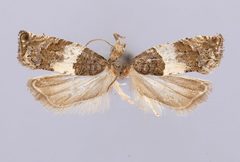
Gypsonoma is a of tortricid moths in the Olethreutinae. within this genus are twig-boring whose larvae develop inside plant shoots. The genus includes economically significant pests such as the poplar twig borer (G. aceriana) and the eastern cottonwood (G. haimbachiana).

Pronunciation
How to pronounce Gypsonoma: //d͡ʒɪpˈsəʊnəmə//
These audio files are automatically generated. While they are not always 100% accurate, they are a good starting point.
Identification
As a -level record, specific diagnostic features are not documented in available sources. identification within Gypsonoma requires examination of genitalia and larval associations.
Images
Habitat
Associated with woody plants, particularly of Populus (poplars and cottonwoods). Larvae inhabit tender shoots and twigs of host trees.
Distribution
Documented from Europe (Bulgaria, Denmark, Norway, Sweden) and North America (United States, including Vermont).
Diet
Larvae bore into twigs and shoots of plants. Specific feeding habits documented for G. haimbachiana on eastern cottonwood; other assumed to have similar twig-boring larval habits.
Host Associations
- Populus deltoides - planteastern cottonwood; documented for G. haimbachiana
- Populus - plantpoplar ; documented for G. aceriana
Life Cycle
Larvae develop within twigs, feeding internally. occurs within the host or in surrounding substrate. Specific timing varies by and .
Behavior
Larvae are , tunneling into plant shoots. This causes damage to growing tips and can affect host plant form and vigor.
Ecological Role
Larvae act as herbivores on woody plants. Several serve as for larval in Braconidae and Ichneumonidae, contributing to local dynamics.
Human Relevance
Some are economic pests of ornamental and plantation poplars. Gypsonoma aceriana has been studied for potential using native .
Similar Taxa
- Other Olethreutinae generaSimilar twig-boring habits and associations; distinguished by and genitalia characteristics
- Other Tortricidae twig borersShared larval habit of boring into woody plant tissue; requires dissection or molecular analysis for definitive identification
More Details
Taxonomic Note
The is classified in tribe Eucosmini within Olethreutinae. Some older literature may place in related genera; current follows Meyrick's 1895 establishment of the genus.
Research Focus
Most detailed biological studies focus on G. aceriana and G. haimbachiana due to their pest status. -wide biological patterns are inferred from these well-studied .
Sources and further reading
- BugGuide
- Wikipedia
- GBIF taxonomy match
- iNaturalist taxon
- NCBI Taxonomy
- Catalogue of Life
- Biology of Gypsonoma haimbachiana (Lepidoptera: Olethreutidae), a Twig Borer in Eastern Cottonwood
- Species composition, structure and impact of larval parasitoids of poplar twig borer,Gypsonoma aceriana (Dup.) (Lepidoptera, Tortricidae), on poplar ornamental trees in Sofia
- Bioecological characteristics of Bassus tumidulus (Nees) (Hym., Braconidae), a parasitoid of the poplar twig borer, Gypsonoma aceriana (Dup.) (Lep., Tortricidae) in Bulgaria