
Gypsonoma haimbachiana
(Kearfott, 1907)
cottonwood twig borer
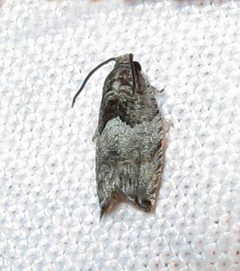
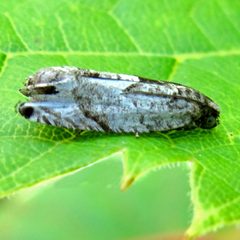
Gypsonoma haimbachiana is a small tortricid known as the cottonwood . The is named for Frank Haimbach, who collected the first specimens in Cincinnati, Ohio. It is a twig-borer whose larvae develop within the shoots of cottonwood and related poplar species, causing damage to growing twigs. Multiple occur annually in southern portions of its range.

Pronunciation
How to pronounce Gypsonoma haimbachiana: /dʒɪpˈsɔːnə mə haɪmˈbækiˌænə/
These audio files are automatically generated. While they are not always 100% accurate, they are a good starting point.
Identification
Ash grey with wingspan of 13–17 mm. Distinguished from similar tortricids by association with Populus and twig-boring larval habit; precise diagnostic characters for field identification require examination.
Images
Habitat
Twigs of eastern cottonwood (Populus deltoides) and other Populus sect. Aigeiros . Associated with riparian and floodplain forests where poplars occur.
Distribution
Eastern North America, from Canada (Alberta, Manitoba, Saskatchewan) to the Gulf Coast of the United States, west to Missouri.
Seasonality
Four or more per year in the southern part of the range; activity pattern in northern portions not specified.
Diet
Larvae feed internally on twigs of Populus sect. Aigeiros and other Populus .
Host Associations
- Populus deltoides - primary eastern cottonwood
- Populus sect. Aigeiros - section of poplars including cottonwoods
Life Cycle
Completes development within plant twigs. Multiple annually in southern range; specific details of , larval, and pupal stages require further documentation.
Behavior
Larvae bore into and develop within growing shoots of poplars, causing damage to twigs.
Ecological Role
Phytophagous insect; activity may influence plant growth form through twig damage.
Human Relevance
Potential minor pest of cottonwood and related poplar in forestry and ornamental contexts. Named for collector Frank Haimbach.
Similar Taxa
- Other Gypsonoma speciesSimilar size and general appearance; require dissection or association for reliable identification
- Other Olethreutinae twig borersConvergent twig-boring habit on woody ; host specificity and genitalia examination needed for separation