
Ancylis tineana
(Hübner, [1796-1799])
Rannoch Roller
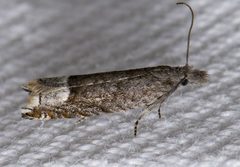
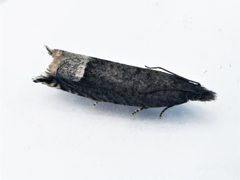
Ancylis tineana is a small tortricid with a wingspan of 11–15 mm. It has a broad distribution across the Palearctic, from southern Sweden through Asia Minor, the Trans-Caucasus, Siberia, and eastern Russia, with introduced in North America. In Europe, it produces two annually. The is known to feed on a range of woody plants and can occasionally become a minor pest in orchards.
Pronunciation
How to pronounce Ancylis tineana: /ˈæn.sɪ.lɪs tɪˈniː.ə.nə/
These audio files are automatically generated. While they are not always 100% accurate, they are a good starting point.
Identification
The small size (11–15 mm wingspan) and in Europe ( April–May and July–August) may aid identification. Separation from other Ancylis requires examination of genitalia or detailed wing pattern analysis; specific diagnostic features are not provided in available sources.
Images
Appearance
Small with wingspan of 11–15 mm. Wing pattern and coloration typical of Ancylis; specific markings not detailed in available sources.
Habitat
Associated with plants including Malus, Pyrus, Crataegus, Prunus spinosa, Prunus domestica, Betula, and Populus tremula. include orchards, woodlands, and scrubland where these woody plants occur.
Distribution
Palearctic distribution from southern Sweden to Asia Minor, and from the Trans-Caucasus to Siberia and southern eastern Russia. Also present in North America (introduced). Recorded from Belgium with presence confirmed in Brussels-Capital Region, Flemish Region, and Walloon Region.
Seasonality
In Europe, are on wing in two : April to May, and July to August. in other parts of the range is not specified.
Diet
Larvae feed on Malus, Pyrus, Crataegus, Prunus spinosa, Prunus domestica, Betula, and Populus tremula. feeding habits are not documented.
Host Associations
- Malus - larval
- Pyrus - larval
- Crataegus - larval
- Prunus spinosa - larval
- Prunus domestica - larval
- Betula - larval
- Populus tremula - larval
Life Cycle
In Europe, two per year with active in spring (April–May) and summer (July–August). Larval development occurs on plants; details of , pupal, and stages are not specified.
Ecological Role
Larval herbivore on woody plants; occasional minor pest in orchards.
Human Relevance
Larvae can occasionally become a pest in orchards, presumably causing damage to fruit trees. No other documented human interactions.
Similar Taxa
- Other Ancylis speciesSimilar size and general ; reliable separation requires detailed examination of genitalia or wing pattern characteristics not specified for A. tineana in available sources.
More Details
Nomenclature
Originally described as Tortrix tineana by Hübner in 1796–1799. Placed in Ancylis, Olethreutinae, tribe Enarmoniini.