Monopis monachella
(Hübner, 1796)
White-blotched Clothes Moth
Monopis monachella is a small tineid with a nearly distribution spanning Eurasia, Africa, Asia, the Americas, and Oceania. The is commonly known as the White-blotched and has been observed feeding on animal remains during its larval stage. are active from spring through late summer in temperate regions.
Pronunciation
How to pronounce Monopis monachella: /mɔˈnoʊ.pɪs ˌmoʊ.nəˈkɛl.lə/
These audio files are automatically generated. While they are not always 100% accurate, they are a good starting point.
Identification
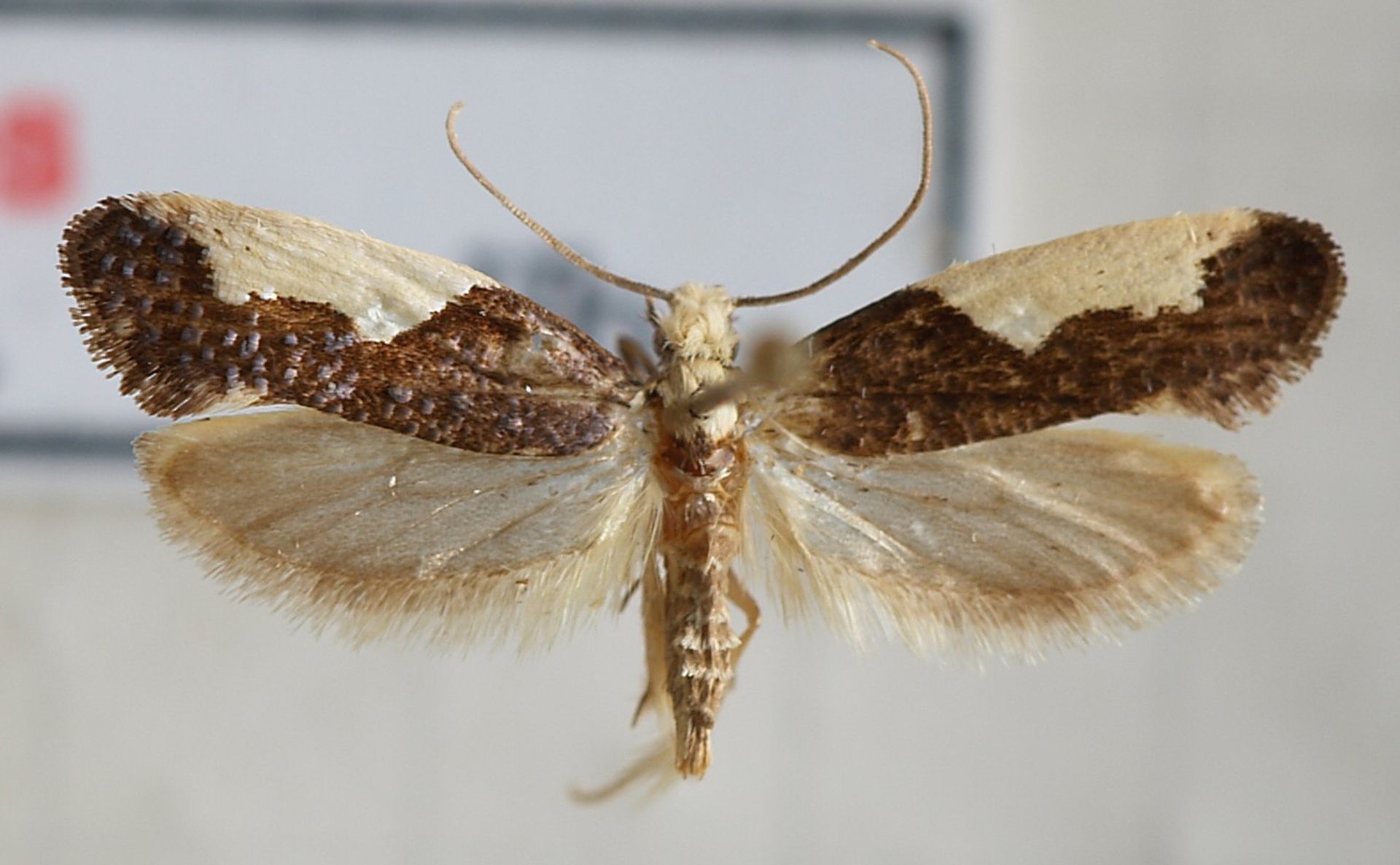
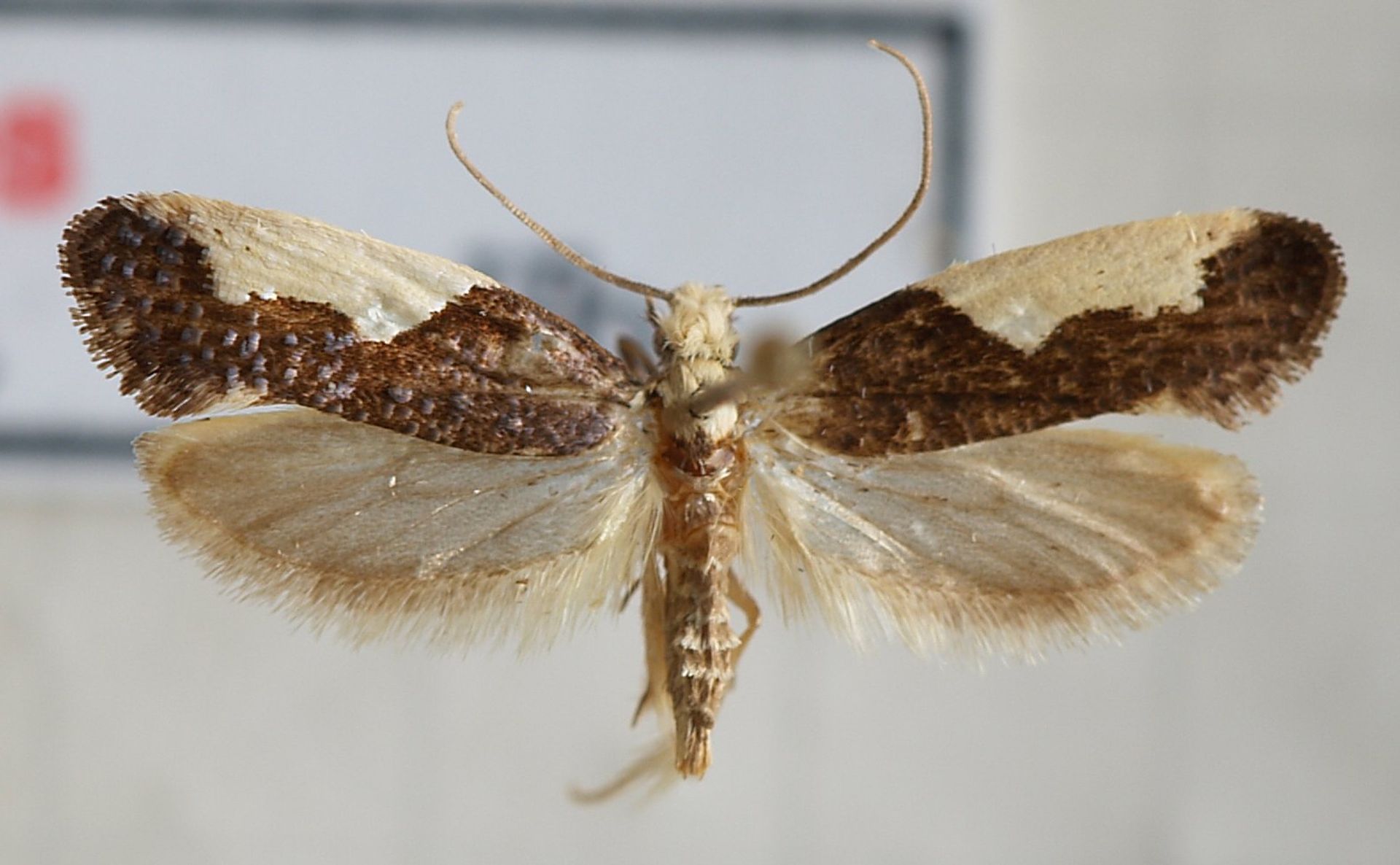
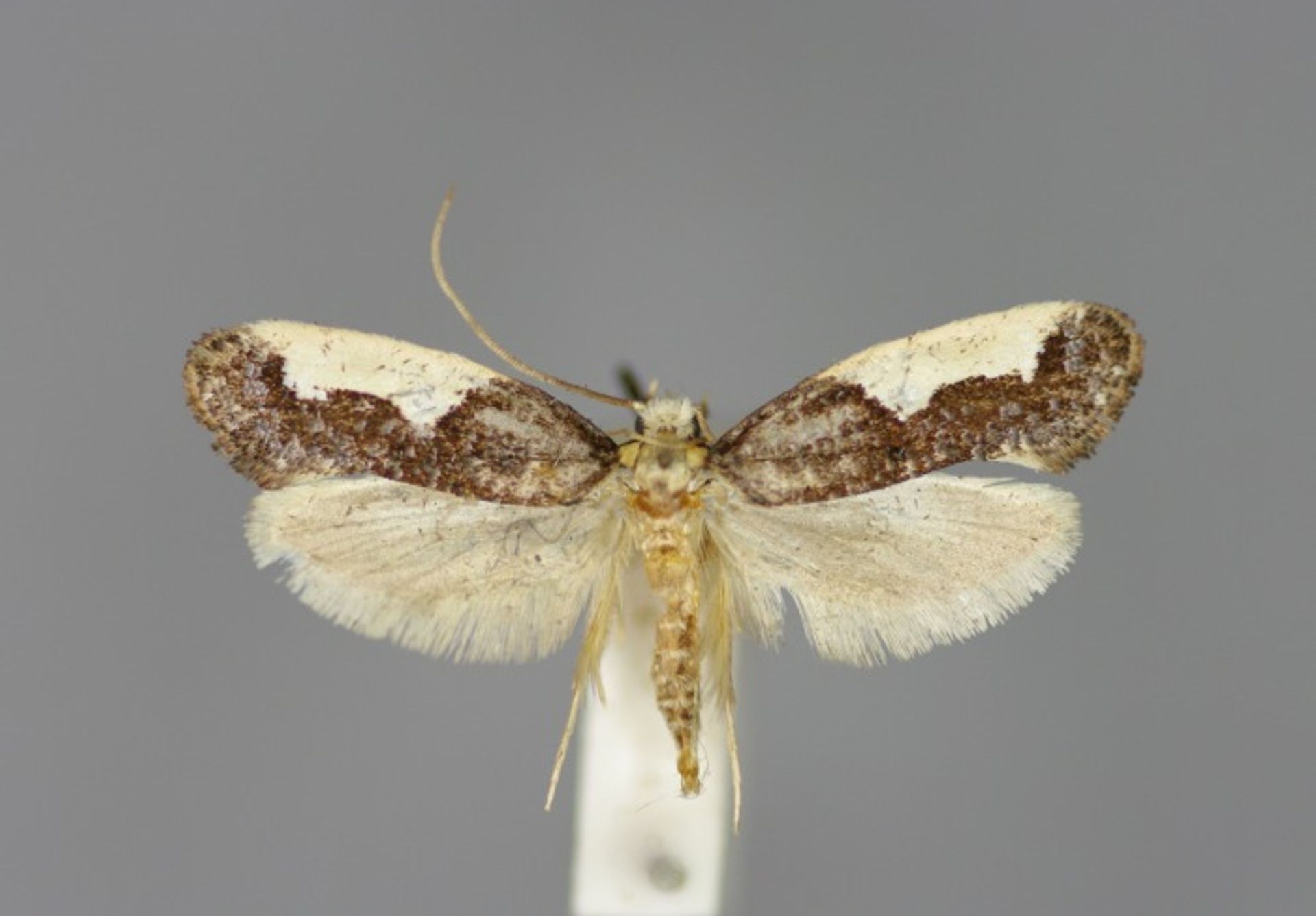
Distinguished from other clothes moths by the conspicuous white blotch on the forewings; most similar in Tineidae lack this bold marking. Smaller than many domestic pest tineids such as Tineola bisselliella. The combination of small size, mottled pattern, and white forewing blotch separates it from Monopis species with more uniform wing coloration.
Images
Appearance
Small with wingspan of 12–20 mm. Forewings are mottled with a distinctive white blotch that gives the its . Overall coloration is brownish with variable darker and lighter patterning.
Habitat
Found in diverse environments across its broad range; larvae develop in association with decomposing animal material. include woodlands, grasslands, and human-altered environments where carrion or animal remains occur.
Distribution
Widespread across six continents: Eurasia, Africa (including Madagascar region), South Asia (India, Sri Lanka, Burma), Southeast Asia (Sumatra, Java, Philippines), East Asia (Taiwan, Japan), Oceania (New Guinea, Samoa), North America, and South America. Presence confirmed in Belgium with records from both Flemish and Walloon regions.
Seasonality
period spans April to September in temperate regions; activity pattern in tropical portions of range not documented in sources.
Diet
Larvae feed on animal remains, including carrion and decomposing animal matter. Specific prey or carrion types not detailed.
Ecological Role
Contributes to decomposition of animal remains; functions as a in nutrient cycling.
Human Relevance
references association with clothing and stored materials, though primary larval diet is animal remains rather than wool or fabric. Not a major domestic pest compared to clothes moths such as Tineola bisselliella.
Similar Taxa
- Tineola bisselliellaSimilar size and domestic association, but lacks white forewing blotch and has more uniform golden-brown coloration; primarily feeds on keratin-based fabrics rather than carrion.
- Other Monopis speciesCongeneric may share general body plan but differ in forewing pattern; M. monachella specifically distinguished by prominent white blotch.
Misconceptions
'White-blotched ' may suggest primary pest status for clothing damage, but larvae feed on animal remains rather than stored fabrics or woolens.