Monopis laevigella
(Denis & Schiffermüller, 1775)
Skin Moth
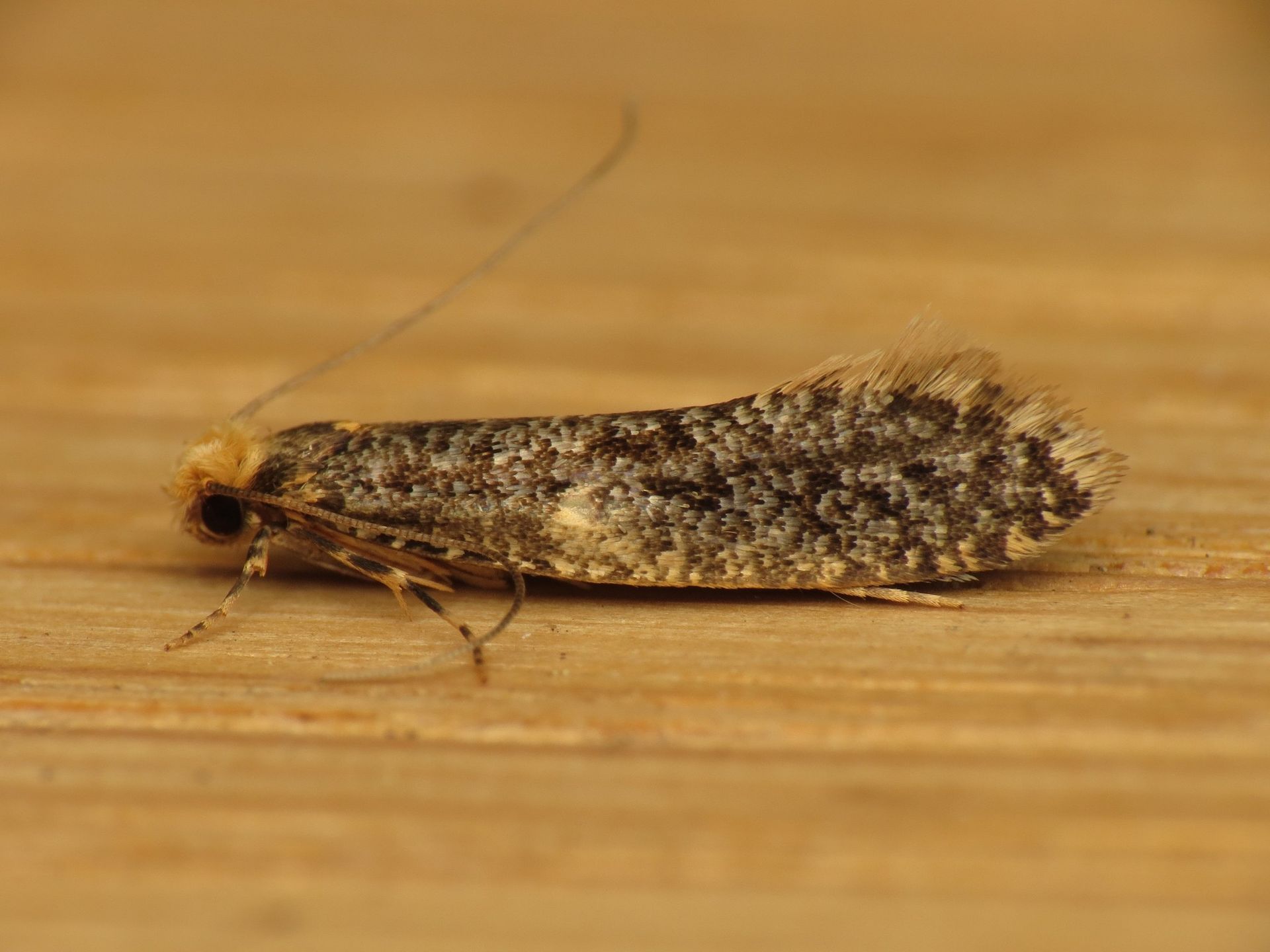
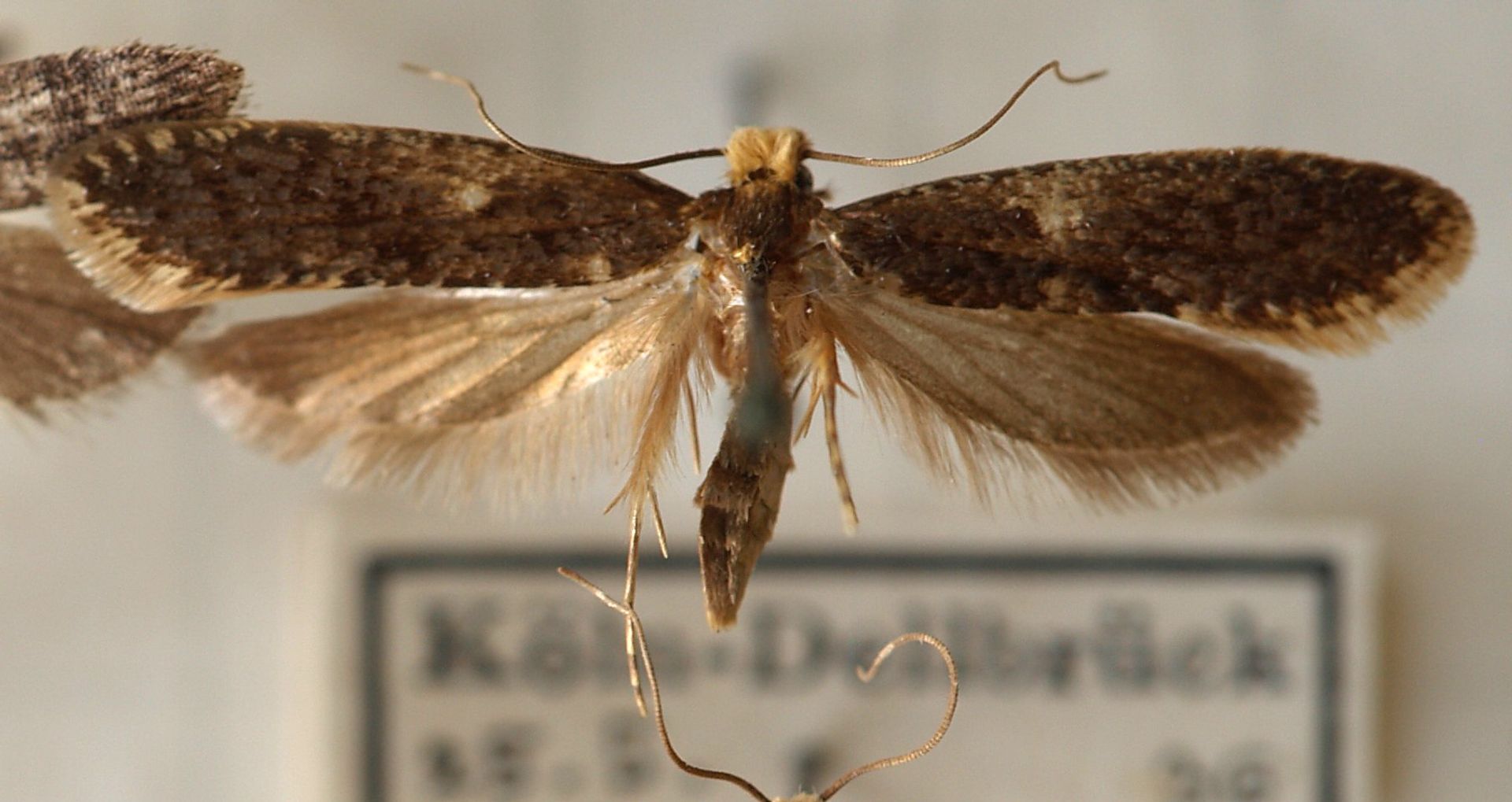
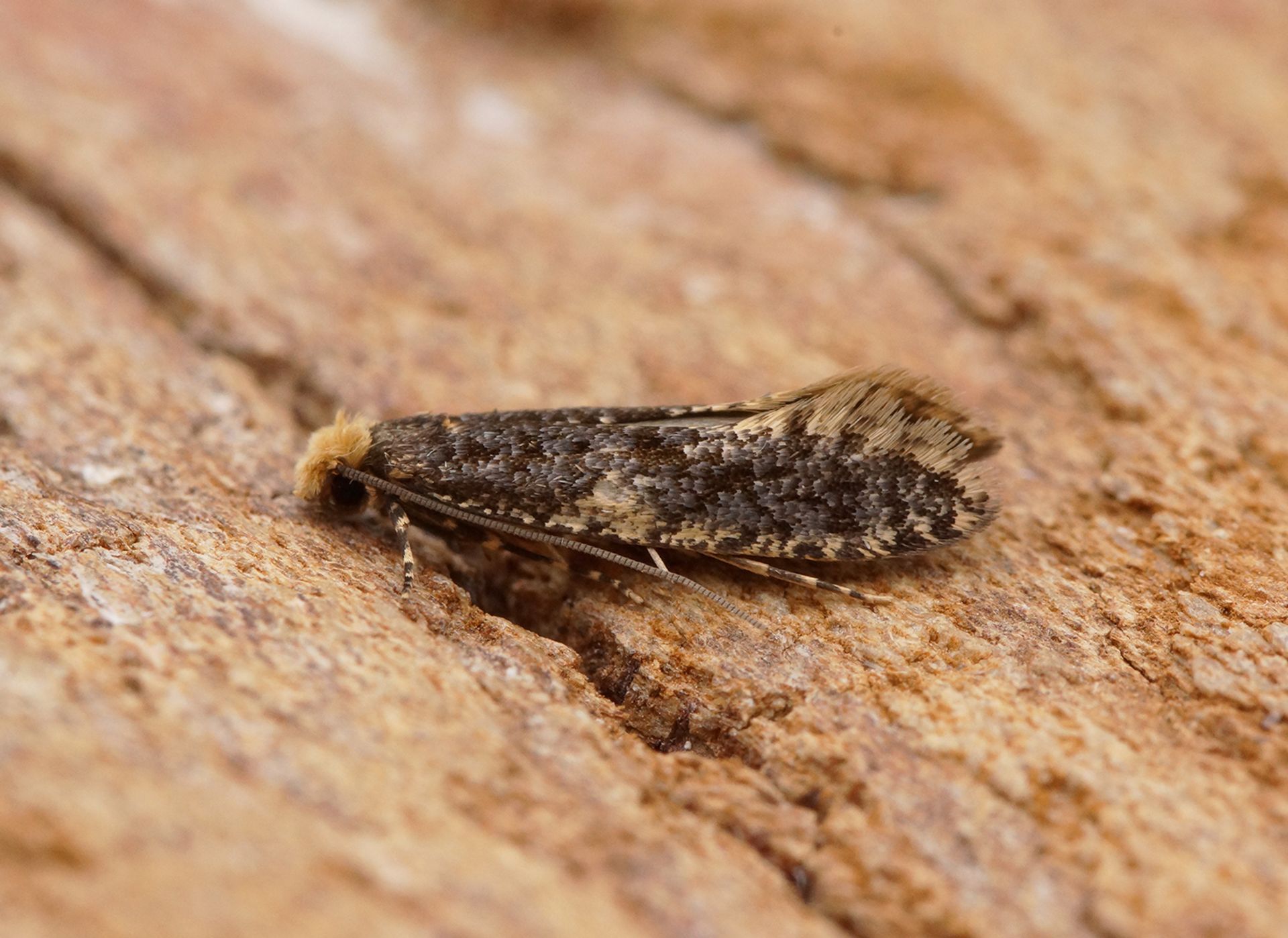
Monopis laevigella, commonly known as the skin , is a small tineid moth with a wingspan of 13–20 mm. It is widespread across the western Palearctic and North America, where larvae feed on animal detritus including dried carcasses, feathers, fur, and bird nest debris. The is the type species of the Monopis and has been frequently confused with due to historical misapplication of names.
Pronunciation
How to pronounce Monopis laevigella: /mɔˈnoʊpɪs læˈvɪdʒɛlə/
These audio files are automatically generated. While they are not always 100% accurate, they are a good starting point.
Identification
Distinguished from by the combination of a translucent central forewing spot without adjacent white markings, dark brown forewings with white fringe, and reddish-ochre tuft. Differs from the cryptic M. jussii in COI barcode sequences, four nuclear loci, and subtle forewing coloration details. Historically confused with Tineola bisselliella (common clothes moth) and misidentified as Tinea vestianella by earlier authors.
Images
Habitat
Found in environments containing animal detritus, including dried animal carcasses, bird nest debris (particularly owl pellets and nest remnants), and accumulations of organic material with feathers, fur, or hair.
Distribution
Widespread across the western Palearctic and North America. Recorded from Austria, Belgium, Italy, Denmark, Finland, Macedonia, and throughout Europe. Present in southern Finland where extensive occur; notably absent from some Mediterranean islands. Not yet recorded from Slovenia but expected given neighboring country records.
Seasonality
on the wing from May to September depending on location. , active at dusk. Two per year may occur as far north as southern England; larvae present during colder months where single generation occurs.
Diet
Larvae feed on animal detritus: dried-out animal carcasses, bird nest debris, owl pellets, feathers, furs, hairs, carpets, rags, and rotted fabrics.
Life Cycle
Two per year in southern England; single generation with larval stage in colder months elsewhere. Larval development occurs in detritus substrates.
Behavior
; emerge at dusk.
Ecological Role
Decomposer of animal keratinous materials and organic detritus in terrestrial .
Human Relevance
Occasional pest of stored materials containing animal fibers (furs, feathers, wool products).
Similar Taxa
- Monopis jussiiCryptic sister distinguished by COI barcode sequences, four nuclear loci, and subtle forewing pattern differences; has boreo-montane distribution and primarily associated with owl nests
- Tineola bisselliellaCommon clothes moth; historically confused with M. laevigella due to similar appearance and in stored products
- Other Monopis congenersMany have white markings adjacent to the central forewing spot, which M. laevigella lacks
Misconceptions
The name Tinea vestianella was frequently misapplied to this by earlier authors; the species was also confused with Tineola bisselliella. Blabophanes semispilotella was incorrectly believed to refer to this species or M. weaverella, but is merely a chance form.