
Oiketicinae
Herrich-Schäffer, 1855
bagworm moths, bagworms
Genus Guides
3- Apterona
- Oiketicus(bagworm moths)
- Thyridopteryx(bagworm moths)
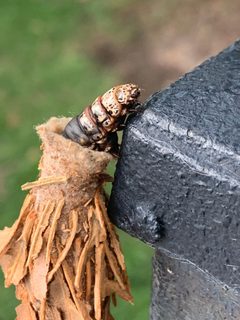
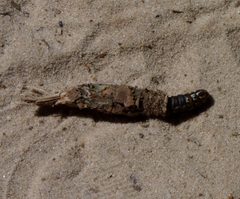
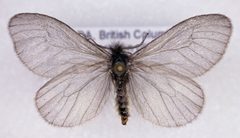
Oiketicinae is a of bagworm moths (Psychidae) characterized by larvae that construct portable cases from silk and environmental materials. The subfamily includes with diverse ecological strategies, from herbivores to with narrow plant associations. Some species exhibit unusual , including on other insects. males are typically winged and free-living, while females are often flightless and may remain or enclosed within their cases.
Pronunciation
How to pronounce Oiketicinae: /ɔɪˌkɛtɪˈt͡ʃaɪniː/
These audio files are automatically generated. While they are not always 100% accurate, they are a good starting point.
Images
Distribution
Global distribution with documented occurrences in North Africa, the Near and Middle East, the Mediterranean region (including Malta, Sicily, Tunisia, Algeria), Australia, and North America.
Life Cycle
Complete with larval, pupal, and stages. Larvae construct portable silk cases incorporating plant material, soil particles, or other debris. Cases are enlarged sequentially as larvae grow. occurs within the case. Adult males emerge from cases to seek females; females of many remain within or attached to their larval cases and may lack wings.
Behavior
Larvae carry their constructed cases throughout development, extending the end to feed and retracting for protection. Some within the exhibit atypical feeding strategies: Chalcoela iphitalis larvae are predatory on paper wasp (Polistes) larvae within nests, and at least one species (Thyridopteryx ephemeraeformis) has been recorded as a for the Calliephialtes grapholithae.
Ecological Role
Herbivory on diverse plant groups; some function as Casuarinaceae . Larval cases contribute to nutrient cycling through incorporation of plant detritus. Certain species occupy unusual as of social larvae.
Sources and further reading
- BugGuide
- iNaturalist taxon
- NCBI Taxonomy
- Catalogue of Life
- Bug Eric: A Potential New Host Record for Calliephialtes grapholithae (Hymenoptera: Ichneumonidae) from a Paper Wasp nest (Hymenoptera: Vespidae: Polistes metricus)
- Notes on the identity of Oiketicoides tedaldii (Heylaerts, 1882) (Psychidae, Oiketicinae)
- Rediscovery and life history of Bathromelas hyaloscopa (Meyrick & Lower, 1907) Lepidoptera: Psychidae: Oiketicinae
- A taxonomic review of the genus Amicta Heylaerts, 1881 in North Africa, Near and Middle East (Lepidoptera, Psychidae, Oiketicinae, Acanthopsychini)
- Faunistic and taxonomic notes on Phalacropterix apiformis (Rossi, 1790) and P. restonicae (Fiumi & Govi, 2015) from Corsica, France (Lepidoptera, Psychidae, Oiketicinae)