
Atheloca subrufella
Hulst, 1887
Palm Bud Moth, Coconut Moth
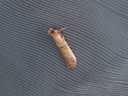
Atheloca subrufella is a small snout moth (Pyralidae: Phycitinae) known as a significant pest of coconut and other palms. have a wingspan of 14–18 mm and brownish coloration. The occurs in the southeastern United States, Mexico, Caribbean islands, and Brazil. Larvae are specialized feeders on developing palm fruits, causing substantial agricultural damage through gallery formation in the mesocarp and premature fruit shedding.
Pronunciation
How to pronounce Atheloca subrufella: /əˈθɛləkə sʌbˌruːˈfɛlə/
These audio files are automatically generated. While they are not always 100% accurate, they are a good starting point.
Identification
Small brownish pyralid with wingspan 14–18 mm. Distinguished from similar Phycitinae by association with palm ; precise morphological separation from requires examination of genitalia.
Images
Habitat
Associated with palm-growing regions; larvae develop within developing coconut and palm fruits, specifically in the meristematic region beneath the fruit perianth.
Distribution
Southeastern United States (Georgia, Florida, Texas), northern Mexico, Cuba, Bermuda, United States Virgin Islands, and Brazil (Atlantic coast states).
Diet
Larvae feed on developing fruits of palms ( Arecaceae), including Cocos nucifera (coconut), Attalea , Syagrus species, Sabal palmetto, and Serenoa species. Young larvae consume carpels of tender flowers; older larvae bore into developing fruits and feed on mesocarp tissue.
Host Associations
- Cocos nucifera - larval primary ; coconut
- Attalea - larval palm
- Syagrus - larval palm
- Sabal palmetto - larval cabbage palm
- Serenoa - larval saw palmetto
Life Cycle
Complete . Larvae develop within palm fruits, feeding on floral carpels or penetrating developing fruits through bract bases. Specific details of , pupal, and longevity not documented in available sources.
Behavior
Female calling mediated by long-distance and short-distance . Females exhibit age-dependent shifts in release timing: older females initiate calling earlier to compensate for reduced attractiveness to males, who prefer younger females with higher reproductive potential. Both sexes select mates based on morphological and physiological traits. Males locate females through , and/or search, and direct encounter.
Ecological Role
Primary consumer of palm fruits. Indirect interaction with coconut mite (): mite-induced of fruit perianth creates entry points that facilitate larval . Without such damage, larvae cannot penetrate intact perianth (0% colonization success vs. 23% with mite damage, 60% with mechanical damage). This facilitative relationship enhances pest status in mite-infested areas.
Human Relevance
Major economic pest of coconut production. Larval feeding causes premature fruit abortion and yield loss. Pest management complicated by cryptic larval beneath fruit perianth. Potential target for -based behavioral control strategies.
Similar Taxa
- Other PhycitinaeSimilar small brownish appearance; separation requires association or genital dissection.
- Aceria guerreronis (coconut mite)Exploits same (meristematic region beneath coconut perianth) and facilitates A. subrufella , but belongs to different (Arthropoda: Arachnida) and causes distinct damage (surface vs. internal galleries).
Sources and further reading
- BugGuide
- Wikipedia
- GBIF taxonomy match
- iNaturalist taxon
- NCBI Taxonomy
- Catalogue of Life
- Atheloca subrufella . [Distribution map].
- Mating behavior in Atheloca subrufella Hulst, 1887 (Lepidoptera: Pyralidae: Phycitinae)
- BIOLOGY AND MATING BEHAVIOR OF THE COCONUT MOTH ATHELOCA SUBRUFELLA (LEPIDOPTERA: PHYCITIDAE)
- Age-dependent pattern of calling behavior in Atheloca subrufella (Hulst) (Lepidoptera: Phycitidae)
- Infestation of coconut fruits by Aceria guerreronis enhances the pest status of the coconut moth Atheloca subrufella