
Atheloca
Heinrich, 1956
Species Guides
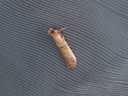
1- Atheloca subrufella(Palm Bud Moth)
Atheloca is a of snout moths in the Pyralidae, Phycitinae, containing two : A. subrufella and A. bondari. Both species are associated with palms, particularly coconut (Cocos nucifera). A. subrufella occurs in the Americas from the southern United States through the Caribbean to Brazil, while A. bondari is found in South America and parts of Central America and the Caribbean. The genus was established by Carl Heinrich in 1956.
Pronunciation
How to pronounce Atheloca: /æˈθɛloʊkə/
These audio files are automatically generated. While they are not always 100% accurate, they are a good starting point.
Images
Habitat
Associated with palms, specifically the meristematic region beneath the fruit perianth of coconut fruits. Larvae require access points under the perianth bracts to reach the meristematic tissue, which is typically achieved through pre-existing damage such as caused by other arthropods.
Distribution
A. subrufella: North America (Mexico, USA: Florida, Georgia, Texas), Central America and Caribbean (Bermuda, Cuba, United States Virgin Islands), and South America (Brazil). A. bondari: Central America and Caribbean ( Rica, Trinidad and Tobago), South America (Brazil: Amazonas, Bahia, Pernambuco, Rio de Janeiro, Sergipe; Colombia; Guayana).
Diet
Larvae feed on coconut (Cocos nucifera) fruit tissue; A. subrufella also associated with Sabal palmetto, and A. bondari with Roystonea oleracea.
Host Associations
- Cocos nucifera - larval Primary for both ; larvae bore into fruit under the perianth
- Sabal palmetto - larval for A. subrufella
- Roystonea oleracea - larval for A. bondari
Behavior
Mating in A. subrufella involves distinct courtship patterns including , female searching by and/or flying, female calling behavior, and display. Copulation is mediated by both long-distance and short-distance . larvae are unable to colonize intact coconut fruits without pre-existing damage to the perianth.
Human Relevance
Both are pests of coconut palms. A. subrufella is considered a key pest of coconut fruits in Brazil, where its damage potential is enhanced by prior of fruits by the coconut mite . The mite-induced provides necessary access points for larvae to colonize the fruit meristem, leading to fruit abortion.
More Details
Indirect species interaction
The pest status of A. subrufella is strongly linked to the presence of the coconut mite . Mite damage creates entry points that larvae cannot otherwise exploit, representing an indirect facilitative interaction between the two .
Oviposition behavior
Female A. subrufella show no preference for damaged versus undamaged fruits for oviposition, indicating that larvae high mortality on intact fruits and that successful depends on pre-existing damage.
Sources and further reading
- BugGuide
- Wikipedia
- GBIF taxonomy match
- iNaturalist taxon
- NCBI Taxonomy
- Catalogue of Life
- Atheloca bondari . [Distribution map].
- Atheloca subrufella . [Distribution map].
- Mating behavior in Atheloca subrufella Hulst, 1887 (Lepidoptera: Pyralidae: Phycitinae)
- BIOLOGY AND MATING BEHAVIOR OF THE COCONUT MOTH ATHELOCA SUBRUFELLA (LEPIDOPTERA: PHYCITIDAE)
- Age-dependent pattern of calling behavior in Atheloca subrufella (Hulst) (Lepidoptera: Phycitidae)
- Infestation of coconut fruits by Aceria guerreronis enhances the pest status of the coconut moth Atheloca subrufella