
Anerastia lotella
Hübner, 1813
Sandhill Knot-horn, Sandhill Knot-horn moth
Anerastia lotella, commonly known as the Sandhill Knot-horn , is a small pyralid moth with a -level assembly available. are active in July and are single-brooded. The shows phenotypic variation between coastal and inland , with coastal individuals typically larger and paler.
Pronunciation
How to pronounce Anerastia lotella: /ˌænəˈræstiə loʊˈtɛlə/
These audio files are automatically generated. While they are not always 100% accurate, they are a good starting point.
Identification
Distinguished from similar pyralid moths by the combination of small size, sandy-brown forewings with white costal streak, and association with sandy grassland . The variable speckling pattern and coastal versus inland size variation can complicate identification; genitalia examination may be necessary for certain separation from .
Images
Appearance
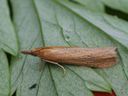
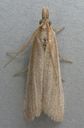
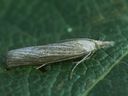
Small with wingspan 19–27 mm. Forewings sandy-brown with variable speckles and streaks, featuring a distinct white costal streak. Hindwings pale. Coastal are generally larger and paler; inland populations smaller and darker.
Habitat
Coastal sand dunes and inland sandy or dry grassland sites. Larvae inhabit the base of grass stems in silken tubes covered with sand particles.
Distribution
Europe (widespread), western Russia, Asia Minor, Iran, western Turkestan, and most of Canada. In Britain, distribution is local with strong coastal concentration and scattered inland .
Seasonality
fly in July. Single-brooded; larval feeding period extends from September through June.
Diet
Larvae feed on grass stems and rootstocks, particularly Ammophila arenaria (Marram), Festuca ovina (Sheep's Fescue), Corynephorus canescens, and other Poaceae .
Host Associations
- Ammophila arenaria - larval food plantMarram; primary in coastal dunes
- Festuca ovina - larval food plantSheep's Fescue; important in inland sites
- Corynephorus canescens - larval food plantGrey hair-grass
Life Cycle
Single-brooded (). emerge and fly in July. laid on or near grasses. Larvae feed from September through June, constructing silken tubes covered with sand at the base of grass stems. occurs in a cocoon at the base of the host plant.
Behavior
Larvae construct silken tubes covered with sand particles at the base of grass stems, using these as shelter while feeding on stems and rootstocks. are and attracted to light.
Ecological Role
Herbivore; larvae act as primary consumers in sandy grassland , feeding on grasses. May contribute to nutrient cycling in dune systems through herbivory and larval tunneling activity.
Human Relevance
Subject of genomic research with a published -level assembly. Of minor interest to lepidopterists due to its restricted associations. Not known as an agricultural pest.
Similar Taxa
- Other Anerastia speciesSimilar size and general pyralid ; reliable separation requires examination of genitalia or association with specific and plants
- Other Phycitinae in sandy habitatsOverlap in use and general appearance; white costal streak and specific grass associations help distinguish A. lotella
More Details
Genomic resources
-level assembly published (Wellcome Open Research 2025, PMCID: PMC12485358), making this one of the better genetically characterized pyralid moths.
Phenotypic variation
Coastal and inland show consistent differences in size and coloration, likely reflecting local to dune versus inland grassland environments.