
Anerastia
Hübner, 1825
snout moths
Species Guides
1- Anerastia lotella(Sandhill Knot-horn)
Anerastia is a of snout moths in the Pyralidae, Phycitinae. The genus was established by Jacob Hübner in 1825 and contains approximately 12 described . The best-known member is Anerastia lotella, the Sandhill Knot-horn , which has been the subject of genomic research. Species occur across parts of Europe, Africa, and North America.
Pronunciation
How to pronounce Anerastia: //ˌænəˈræstiə//
These audio files are automatically generated. While they are not always 100% accurate, they are a good starting point.
Identification
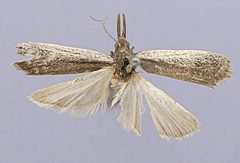
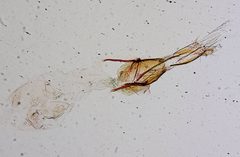
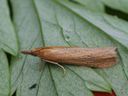
As a -level record, specific identification criteria are not applicable. within Anerastia are small to medium-sized pyralid moths with characteristic snout-like palps. Anerastia lotella specifically has sandy-brown forewings with variable speckles and streaks, and a distinct white costal streak.
Images
Habitat
varies by . Anerastia lotella inhabits coastal sand dunes and inland grasslands, where larvae construct silken tubes at the base of grass stems. Other species' habitats are not well documented.
Distribution
The is known from Egypt and Sudan (type region), with additional records from Denmark, Norway, and Sweden. Anerastia lotella specifically occurs locally in Britain, throughout Europe east to Russia, and in Canada.
Seasonality
Anerastia lotella is single-brooded and flies in July. Other ' seasonality is not documented.
Diet
For Anerastia lotella: larvae feed on grass stems and rootstocks, particularly Marram (Ammophila arenaria) and Sheep's Fescue (Festuca ovina). Feeding period extends from September through June. Diet of other is unknown.
Host Associations
- Marram - larval food plantAmmophila arenaria, coastal dune grass
- Sheep's Fescue - larval food plantFestuca ovina
Life Cycle
Anerastia lotella is single-brooded. Larvae live in silken sand-covered tubes at the base of grass stems and rootstocks, pupating in a cocoon at the base of the plant. details for other are unknown.
Behavior
Anerastia lotella larvae construct distinctive silken tubes covered with sand particles at the base of grass stems. Inland of this often produce smaller, darker than coastal populations.
Human Relevance
Anerastia lotella has been the subject of genomic research; a -level assembly has been generated from a female specimen collected at Winterton Dunes, Norfolk, UK, achieving EBP reference standard (6.C.Q61). No economic or agricultural significance is documented for the .
Similar Taxa
- Other Phycitinae generaSimilar general as pyralid snout moths; distinguished by genitalic and wing pattern characteristics specific to Anerastia
More Details
Genomic Resources
A high-quality -level assembly exists for Anerastia lotella (QV 61.7, 98.6% BUSCO completeness, 32 chromosomal pseudomolecules including W and Z ). This represents one of the better-resolved lepidopteran genomes available.
Species Count
The contains at least 12 described : A. celsella, A. dubia, A. flaveolella, A. gnathosella, A. incarnata, A. infumella, A. lavatella, A. lotella, A. metallactis, A. mitochroella, and A. stramineipennis.