
Conchylodes salamisalis
Druce, 1895
Blush Conchylodes Moth
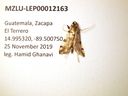
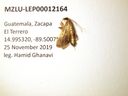
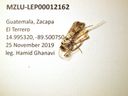
Conchylodes salamisalis, commonly known as the Blush Conchylodes , is a of moth in the Crambidae. It was first described by Herbert Druce in 1895. The species is distributed across Central America and the southern United States, with confirmed records from Ecuador, Rica, Panama, Guatemala, Mexico, and Texas. The moth exhibits distinctive wing patterning with silky hyaline white forewings and hindwings marked with dark brown streaks, bands, and spots.
Pronunciation
How to pronounce Conchylodes salamisalis: /kɒŋkɪˈloʊdiːz səˈlæmɪˌseɪlɪs/
These audio files are automatically generated. While they are not always 100% accurate, they are a good starting point.
Identification
The combination of silky hyaline white wings with three short dark brown streaks on the forewings, two broad brown bands crossing to inner margin, a dark brown spot, and fawn submarginal band distinguishes this from similar Conchylodes. The fawn spot on the hindwings with fine black lines on each side provides additional diagnostic characters. Distinguished from Conchylodes ovulalis (zebra conchylodes ) by the latter's bold black and white zebra striping pattern rather than brown and fawn markings.
Images
Appearance
Forewings and hindwings are silky hyaline white. Forewings bear three short dark brown streaks, two broad brown bands crossing from costal to inner margin, a dark brown spot near the apex, and a fawn submarginal band. Hindwings feature a fawn spot with a fine black line on each side.
Distribution
Ecuador, Rica, Panama, Guatemala, Mexico, and the southern United States (Texas).
Similar Taxa
- Conchylodes ovulalisBoth share the Conchylodes and pattern 'conchylodes ', but C. ovulalis exhibits bold black and white zebra striping rather than the brown and fawn markings of C. salamisalis
- Other Conchylodes speciesMembers of this share similar wing shapes and hyaline wing bases, but specific pattern elements of brown streaks, bands, and fawn spots distinguish C. salamisalis
More Details
Taxonomic history
Described by Herbert Druce in 1895, with the specific epithet salamisalis likely derived from Salamis, an ancient Greek city-state on Cyprus, though the etymological significance for this remains unclear.
Observations
As of the data cutoff, iNaturalist records 734 observations of this , indicating it is moderately well-documented by citizen scientists within its range.
Sources and further reading
- BugGuide
- Wikipedia
- GBIF taxonomy match
- iNaturalist taxon
- NCBI Taxonomy
- Catalogue of Life
- September | 2022 | Beetles In The Bush
- Bug Eric: Thoh-Dah Prairie Bioblitz
- Bug Eric: Remembering Moth Week 2025
- Insecta | Beetles In The Bush | Page 5
- science | Beetles In The Bush | Page 5
- predator avoidance | Beetles In The Bush