
Cydalima
Lederer, 1863
Species Guides
1- Cydalima perspectalis(box tree moth)
Cydalima is a of in the Crambidae, Spilomelinae. The genus contains approximately nine described , with Cydalima perspectalis (box tree moth) being the most economically and ecologically significant due to its status in Europe and North America. Most species in the genus are native to Asia, with limited documented information available for the majority of species beyond taxonomic descriptions.
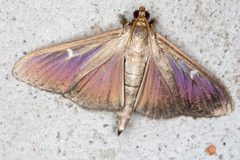
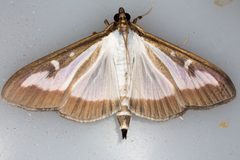
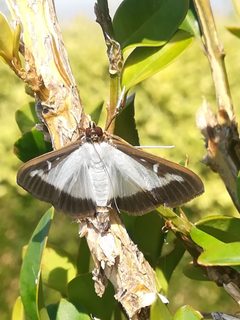
Pronunciation
How to pronounce Cydalima: /sɪˈdælɪmə/
These audio files are automatically generated. While they are not always 100% accurate, they are a good starting point.
Images
Distribution
Native range includes East Asia (China, Japan, Korea). The has become in Europe and North America through accidental introduction, primarily via Cydalima perspectalis. GBIF records indicate presence in Denmark, Norway, and Sweden, though these likely represent introduced of C. perspectalis rather than native occurrences of the genus as a whole.
Human Relevance
The is primarily known to the public and agricultural sectors through Cydalima perspectalis, which is a major pest of ornamental boxwood (Buxus spp.) in horticulture. The box tree has caused significant economic damage to historical gardens, nurseries, and landscape plantings across Europe since 2007 and is an emerging threat in North America following its detection in Canada in 2018 and subsequent U.S. detections.
More Details
Species diversity
The comprises nine recognized : Cydalima capriniodes, C. decipiens, C. diaphanalis, C. joiceyi, C. laticostalis, C. mysteris, C. perspectalis, C. pfeifferae, and C. violalis. Most species were described in the late 19th to early 20th century, with C. perspectalis described by Walker in 1859.
Taxonomic history
The was established by Lederer in 1863. were originally described under various other genera (Phakellura, Glyphodes) before being transferred to Cydalima.
Sources and further reading
- BugGuide
- Wikipedia
- GBIF taxonomy match
- iNaturalist taxon
- NCBI Taxonomy
- Catalogue of Life
- Cydalima perspectalis adult - Entomology Today
- Cydalima perspectalis damage - Entomology Today
- Beware, Boxwoods: Another Pest is On the Horizon
- Beleaguered boxwoods beware, box tree moth, Cydalima perspectalis, arrives in the DMV — Bug of the Week
- New Guide Highlights IPM for Boxwood Pests
- Curious People Lead the Way in Catching New Invasive Species
- Cydalima perspectalis Walker. [Distribution map].
- Cydalima perspectalis . [Distribution map].
- Cydalima perspectalis . [Distribution map].
- Cydalima perspectalis (box tree moth).
- Overview of invasion and control management options of Cydalima perspectalis (Lepidoptera, Crambidae) Pregled invazije i mogućnosti upravljanja kontrolom Cydalima perspectalis (Lepidoptera, Crambidae)
- Predictive Determination of Cydalima perspectalis Spread Areas by Using Maxent Model
- Cydalima perspectalis Walker (Lepidoptera: Crambidae) Presence and Distribution in Montenegro
- Biology of development of Cydalima perspectalis (Lepidoptera: Crambidae) in laboratory conditions
- Cydalima perspectalis (Walker) (Lepidoptera: Crambidae, Spilomelinae)’in Türkiye’de Coğrafi Yayılışı, Yaşam Döngüsü Ve Zararı Geographic Distribution, Lifecycle and Damage of Cydalima perspectalis (Walker) (Lepidoptera: Crambidae, Spilomelinae) in Turkey
- Ecological aspects of manifestations of the inva-sive species Cydalima Perspectalis (Walker, 1859) in urbanized ecosystems
- Modeling of the modern climatic range of <i>Cydalima perspectalis</i> (Lepidoptera, Crambidae) in Eurasia
- The temperature increase due to climate change will not favour Cydalima perspectalis in southern Europe
- [Bird predation on larvae of the box tree moth, Cydalima perspectalis (Walker, 1859)]
- Potential of entomopathogens in biological control of the box-tree moth, Cydalima perspectalis (Lepidoptera: Crambidae)
- The box tree moth Cydalima perspectalis: a review of biology, invasiveness, management practices and future perspectives of control strategy in Europe
- Comparative metabolomics reveals how the severity of predation by the invasive insect Cydalima perspectalis modulates the metabolism re-orchestration of native Buxus sempervirens.