
Lineodini
Amsel, 1956
Genus Guides
3Lineodini is a tribe of medium-sized snout moths within the Spilomelinae ( Crambidae), comprising seven and approximately 94 . The tribe was originally proposed by Hans Georg Amsel in 1956, fell into synonymy, and was reinstated in 2019 based on phylogenetic evidence. Members are predominantly Neotropical to temperate Nearctic in distribution, with the exception of the Old World genus Leucinodes. The tribe is economically significant due to larval feeding on Solanaceae crops.

Pronunciation
How to pronounce Lineodini: /lɪˈneɪoʊˌdaɪnaɪ/
These audio files are automatically generated. While they are not always 100% accurate, they are a good starting point.
Identification
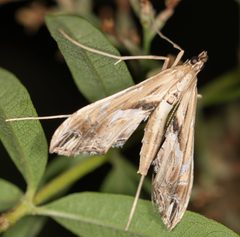
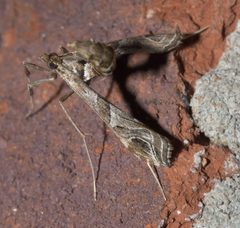
Distinguished from other Spilomelinae by the combination of: single frenular bristle in females (two in Rhectosemia); ventrally open sacci tympani; and unsclerotized ductus bursae in females (a tribal synapomorphy). The variable but characteristic male genitalia—particularly fibula structure and valva shape—aid in -level identification. Atomopteryx and Lineodes are recognizable by their narrow wings and elongated, -like habitus.
Images
Distribution
Predominantly Neotropical to temperate Nearctic. The Leucinodes is exceptional with Old World distribution (Asia, Africa). associated with globally traded Solanaceae fruits are frequently intercepted outside native ranges, including European ports where Leucinodes orbonalis (Asian) and L. africensis, L. pseudorbonalis, and L. rimavallis (Afrotropical) are commonly detected.
Diet
Larvae feed exclusively on Solanaceae (nightshade ). Known plants include tomato (Solanum lycopersicum), eggplant (S. melongena), potato (S. tuberosum), Capsicum (pepper), Physalis, and numerous other within the family. Larvae tie leaves together or bore into plant tissues, particularly fruits.
Host Associations
- Solanum lycopersicum - larval food planttomato
- Solanum melongena - larval food planteggplant
- Solanum tuberosum - larval food plantpotato
- Capsicum - larval food plantpepper
- Physalis - larval food plant
Life Cycle
Larval stage characterized by leaf-tying or boring into plant tissues, especially fruits. Specific details of , pupal, and longevity not documented in available sources.
Behavior
Larvae exhibit two primary feeding strategies: tying leaves together with silk to create shelters, and boring directly into plant tissues. Fruit-boring significantly reduces marketable value of crops.
Human Relevance
Major agricultural pests of Solanaceae crops. Larval feeding in fruits renders produce unmarketable. are frequently transported internationally via infested fruits in global trade, leading to interceptions and potential establishment outside native ranges. Leucinodes orbonalis and related species are of particular concern for biosecurity.
Similar Taxa
- Other Spilomelinae tribesLineodini is distinguished by the synapomorphy of unsclerotized ductus bursae in females, ventrally open sacci tympani, and single frenular bristle (mostly); other Spilomelinae lack this combination and often show euspilomeline characteristics.
- Pterophoridae (plume moths)Atomopteryx and Lineodes superficially resemble plume moths due to narrow wings and long legs, but lack the divided wings characteristic of Pterophoridae and possess typical crambid tympanal organs.
Misconceptions
The tribe was long considered a synonym of Pyraustinae and later Spilomelinae due to insufficient understanding of evolutionary relationships; its reinstatement in 2019 reflects modern phylogenetic resolution rather than new morphological discovery.
More Details
Taxonomic history
Proposed by Amsel in 1956 based on Lineodes, but rejected until Hayden et al. (2013) recognized the 'Leucinodes group' and it was formally reinstated as a tribe in 2019.
Included genera
Seven (94 ): Atomopteryx, Euleucinodes, Leucinodes, Lineodes, Neoleucinodes, Proleucinodes, Rhectosemia.
Biosecurity significance
The association with globally traded Solanaceae fruits creates high pressure for human-mediated , with established outside native ranges possible through commercial fruit transport.