
Hydririni
Minet, 1982
Genus Guides
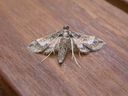
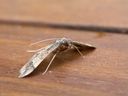
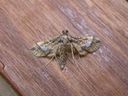
7Hydririni is a tribe of in the Spilomelinae ( Crambidae) comprising approximately 104 across eight . The tribe is primarily Neotropical in distribution, with most species described from tropical Central and South America. range from narrow- to broad-winged, with wing patterns varying from inconspicuous brown and ochre to more colorful displays. Hydririni is characterized by distinctive genitalic synapomorphies: females possess an appendix bursae on the corpus bursae, and males typically exhibit hair patches on the edge of abdominal sternite 8. The tribe forms part of the 'non-euspilomeline' group within Spilomelinae.
Pronunciation
How to pronounce Hydririni: /haɪˈdraɪrɪnaɪ/
These audio files are automatically generated. While they are not always 100% accurate, they are a good starting point.
Identification
Distinguished from other Spilomelinae tribes by two synapomorphies: (1) female genitalia with appendix bursae on corpus bursae, and (2) male genitalia with hair patches on central edge of abdominal sternite 8. Distinguished from the 'euspilomeline' clade by plesiomorphic characters: absence of longitudinal sclerotized strip on of male abdominal segment 8, straight or concave of valves, and evenly sclerotized phallus apodeme in male genitalia. Female signa either 'ediacaroid' (elongate, zipper-shaped to nearly circular with reduced transverse axis) or circular with radiating spines; Ommatospila possesses both types. Choristostigma, Hydriris, Nehydriris and Rhectothyris share additional male genitalic features: lobar processes with hair-pencil fields and phallus with long caecum.
Images
Habitat
Tropical and subtropical environments, predominantly in Central and South America. Specific microhabitat preferences are poorly documented.
Distribution
Primarily Neotropical, with majority of described from tropical Central and South America. The Lamprosema contains many Old World species that are taxonomically misplaced in this tribe.
Diet
Larvae predominantly feed on Sapindaceae: recorded include Allophylus psilospermus, A. racemosus, Paullinia bracteosa, P. costaricensis, P. faginea, P. fuscescens, P. grandifolia, P. turbacensis, Serjania atrolineata, S. mexicana, S. rhombea, S. schiedeana, S. valerioi, and Urvilea ulmacea. Hydriris ornatalis larvae feed on Ipomoea batatas (Convolvulaceae) and related plants—young larvae on leaf undersides, older instars skeletonizing leaves. A single record of Lamprosema feeding on Senna obtusifolia (Fabaceae) from Rica.
Host Associations
- Allophylus psilospermus - larval food plantSapindaceae
- Allophylus racemosus - larval food plantSapindaceae
- Paullinia bracteosa - larval food plantSapindaceae
- Paullinia costaricensis - larval food plantSapindaceae
- Paullinia faginea - larval food plantSapindaceae
- Paullinia fuscescens - larval food plantSapindaceae
- Paullinia grandifolia - larval food plantSapindaceae
- Paullinia turbacensis - larval food plantSapindaceae
- Serjania atrolineata - larval food plantSapindaceae
- Serjania mexicana - larval food plantSapindaceae
- Serjania rhombea - larval food plantSapindaceae
- Serjania schiedeana - larval food plantSapindaceae
- Serjania valerioi - larval food plantSapindaceae
- Urvilea ulmacea - larval food plantSapindaceae
- Senna obtusifolia - larval food plantFabaceae; single Rican record for Lamprosema
- Ipomoea batatas - larval food plantConvolvulaceae; Hydriris ornatalis
Life Cycle
Complete (, larva, pupa, ). Larval and chaetotaxy have not been scientifically described. In Hydriris ornatalis, young larvae feed on leaf undersides while older instars skeletonize leaves.
Behavior
Larvae of Hydriris ornatalis exhibit age-related feeding shift: young larvae feed on leaf undersides, older instars skeletonize leaves.
Ecological Role
Larvae function as herbivores, predominantly on Sapindaceae. Role in and processes otherwise undocumented.
Human Relevance
Hydriris ornatalis larvae feed on sweet potato (Ipomoea batatas), indicating potential agricultural relevance. No other documented economic or cultural significance.
Similar Taxa
- Other Spilomelinae tribesHydririni distinguished by appendix bursae in females and hair patches on male sternite 8; 'euspilomelines' lack these plesiomorphic traits and possess derived characters including longitudinal sclerotized strip on male abdominal segment 8
- PyraustinaeShares plesiomorphic characters with Hydririni (appendix bursae, ediacaroid signum) but is sister group to Spilomelinae rather than nested within it; precise distinction requires phylogenetic analysis
More Details
Systematic history
Proposed by Joël Minet in 1982, originally placed in Glaphyriinae based on homoplastic characters (spatulate hindwing , spinose signa). Molecular and morphological phylogenetic studies subsequently placed Hydririni in Spilomelinae as sister group to all other sampled Spilomelinae.
Taxonomic composition
Currently comprises eight and 104 : Choristostigma (syn. Namangania), Gonocausta, Hydriris (syn. Antiercta, Hyperectis, Spanista), Lamprosema (misspelled Lamphosema), Nehydriris, Ommatospila (syn. Thelda), Rhectothyris, and Syllepis.
Phylogenetic position
Forms part of the 'non-euspilomeline' group within Spilomelinae, with the 'euspilomeline' clade nested within this group. This paraphyly is characterized by retention of plesiomorphic traits shared with sister group Pyraustinae.