Nascia
Curtis, 1835
Species Guides
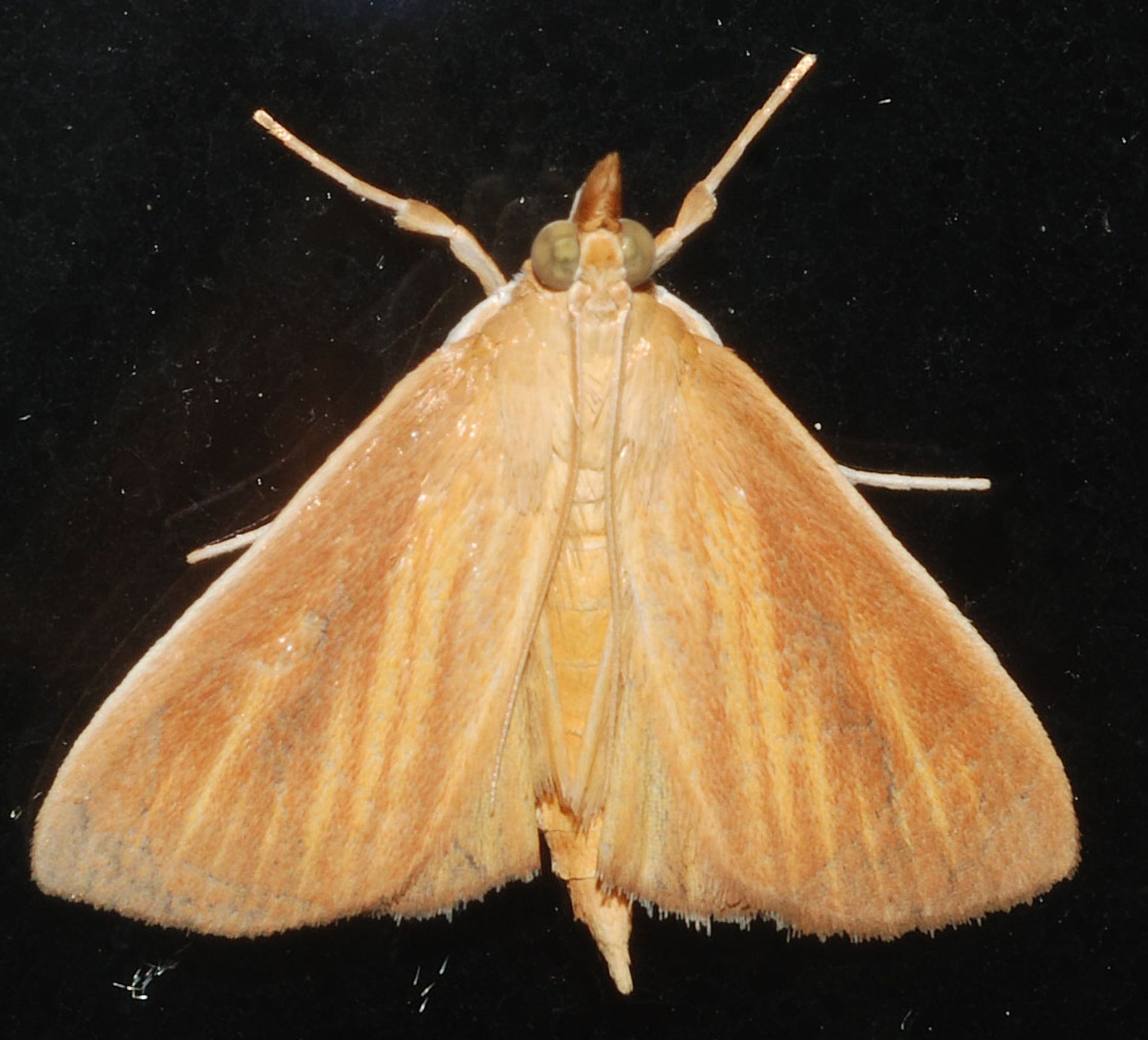
1- Nascia acutellus(Streaked Orange Moth)
Nascia is a of grass moths in the Crambidae, Pyraustinae. The genus was established by John Curtis in 1835 and contains three recognized distributed across parts of Europe and North America. These are small to medium-sized associated with grassland .
Pronunciation
How to pronounce Nascia: /ˈnæs.si.a/
These audio files are automatically generated. While they are not always 100% accurate, they are a good starting point.
Identification
Nascia can be distinguished from similar pyraustine crambid by wing pattern and genitalia . The genus is characterized by relatively broad forewings with pale yellowish to ochreous ground color and darker transverse lines. Male genitalia feature a distinctive gnathos structure. Species-level identification requires examination of genitalia or detailed wing pattern analysis.
Images
Habitat
Grasslands, meadows, and marshy areas. Larvae develop in the stems and roots of grasses.
Distribution
Recorded from Denmark, Sweden, and the northeastern United States (Vermont). The has a trans-Atlantic distribution with in Europe and North America.
Host Associations
- Poaceae - larval grasses
Ecological Role
Larval herbivory on grasses contributes to nutrient cycling in grassland . may serve as prey for insectivorous birds and bats.
Human Relevance
No significant economic impact. Occasionally encountered by naturalists and lepidopterists in grassland surveys.
Similar Taxa
More Details
Taxonomic History
Nascia has been classified in Pyraustinae within Crambidae. The was revised by South in 1901 and subsequent have confirmed its distinctiveness from related genera.
Species Composition
The contains three : Nascia acutellus (Walker, 1866), Nascia cilialis (Hübner, 1796), and Nascia citrinalis Warren, 1892. Nascia cilialis is the type species of the genus.