
Nascia acutellus
Walker, 1866
Streaked Orange Moth
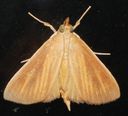
Nascia acutellus, commonly known as the streaked orange moth, is a small crambid native to eastern and central North America. First described by Francis Walker in 1866, this inhabits wet grassy areas with sedges. are active from late spring through summer, with a wingspan of approximately 22 mm. The larval stage likely feeds on Cyperaceae (sedge ) species.
Pronunciation
How to pronounce Nascia acutellus: /ˈnæsia əˈkjuːtɛləs/
These audio files are automatically generated. While they are not always 100% accurate, they are a good starting point.
Identification
Distinguished from similar crambid by its small size (22 mm wingspan), streaked orange wing pattern, and association with sedge-dominated wetlands. Separation from other Nascia and orange-colored pyraustine crambids requires examination of genitalia or detailed wing pattern analysis.
Images
Habitat
Wet grassy areas with sedges, including marshes, wet meadows, and sedge-dominated wetlands.
Distribution
Eastern and central North America: Nova Scotia south to Florida, west to Texas, north to Nebraska, Michigan, and Ontario. Also reported from Colorado and Vermont.
Seasonality
active from May to August.
Diet
Larvae probably feed on Cyperaceae (sedge ) .
Host Associations
- Cyperaceae - probable larval food plant-level association inferred from preference and larval of related
Ecological Role
Larval herbivore in wetland , potentially contributing to nutrient cycling in sedge-dominated .
Similar Taxa
- Other Nascia species share similar size range and preferences; require detailed morphological examination for separation.
- Orange-colored PyraustinaeSimilar coloration and patterning in related crambid ; precise identification requires knowledge.
More Details
Taxonomic history
Described by Francis Walker in 1866, with the name 'acutellus' retained in current usage.
Observation frequency
Over 1000 observations recorded on iNaturalist, indicating it is relatively well-documented among North American crambid .