
Musotiminae
Meyrick, 1884
Genus Guides
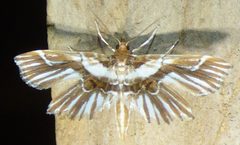
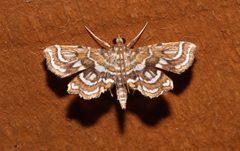
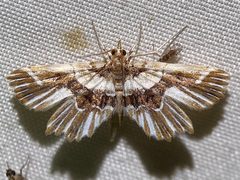
2Musotiminae is a of snout moths (Crambidae) established by Edward Meyrick in 1884. The group comprises approximately 20 distributed primarily in tropical and subtropical regions, with notable diversity in the Oriental and Australasian regions. Several have been studied for their specialized associations with Lygodium climbing ferns, with some investigated as potential agents for fern . The subfamily was historically classified within Pyralidae but is now placed in Crambidae.
Pronunciation
How to pronounce Musotiminae: /ˌmuː.səʊˈtɪm.ɪniː/
These audio files are automatically generated. While they are not always 100% accurate, they are a good starting point.
Images
Habitat
Tropical and subtropical regions, particularly in association with Lygodium fern . Specific microhabitat preferences vary by and .
Distribution
Primarily Oriental and Australasian regions, with distributed across Southeast Asia, the Pacific islands, and parts of the Neotropics. Exact range boundaries are incompletely documented for many constituent .
Diet
Larval feeding has been documented on Lygodium ferns (Lygodiaceae), with multiple showing specialized associations to this plant group.
Host Associations
- Lygodium ferns - larval food plantDocumented association for multiple Musotiminae ; some investigated for of Lygodium species
Human Relevance
Some Musotiminae have been investigated as potential agents for Lygodium ferns, particularly in Florida and other regions where these ferns threaten native .
Similar Taxa
- ScopariinaeAlso a Crambidae with similar Oriental distribution; distinguished by different wing venation and male genitalia structures
- HeliothelinaeFormerly grouped with Musotiminae in some classifications; separated based on larval associations and
More Details
Taxonomic History
Musotiminae was originally described by Edward Meyrick in 1884. The was long classified within Pyralidae but was transferred to Crambidae following phylogenetic revisions of the Pyraloidea. The constituent have been subject to multiple revisions, with several new genera described in the 2000s based on survey work.
Biological Control Research
Intensive survey work in the native Asian range of Lygodium ferns has revealed multiple Musotiminae with narrow ranges, making them candidates for . Notable in this research include Austromusotima, Lygomusotima, and Neomusotima.