
Euchromiusini
Genus Guides
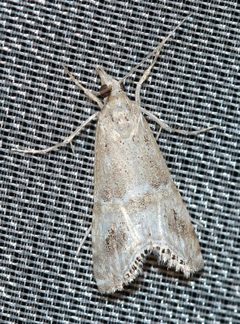
1Euchromiusini is a tribe of grass moths within the Crambidae. The tribe comprises small to medium-sized associated primarily with grassland and savanna . Members are predominantly distributed across the Old World, with highest diversity in the Afrotropical and Palearctic regions. The Euchromius, which gives the tribe its name, contains the majority of described .
Pronunciation
How to pronounce Euchromiusini: /juː.kroʊˈmiː.ʌ.sɪˌni/
These audio files are automatically generated. While they are not always 100% accurate, they are a good starting point.
Identification
Euchromiusini are distinguished from other crambid tribes by a combination of genitalic characters and wing venation patterns. Males typically possess specialized structures on the and modified genitalia with distinct valvae and phallus . Forewings often show characteristic longitudinal stripes or banding patterns. Accurate identification to or level requires examination of genitalia and often dissection.
Images
Habitat
Grasslands, savannas, steppes, and other open herbaceous . Many are closely associated with grasses (Poaceae) as larval plants. Some occupy agricultural areas and disturbed grasslands.
Distribution
Old World distribution centered on Africa, Europe, and Asia. Highest in the Afrotropical region, particularly sub-Saharan Africa and Madagascar. Present but less diverse in the Palearctic, extending into parts of the Oriental region. Absent from the Americas and Australasia.
Seasonality
activity patterns vary by and region. In temperate zones, most species fly during summer months. In tropical and subtropical regions, adults may be present year-round with peaks during rainy seasons.
Diet
Larvae feed on grasses (Poaceae), including both wild and cultivated . Some species have been recorded feeding on cereal crops.
Host Associations
- Poaceae - larval primary larval food source; includes wild grasses and cereals
Life Cycle
Complete with , larva, pupa, and stages. Larvae are stem borers or feed on grass stems and seeds. occurs in silken cocoons within grass stems or in soil.
Behavior
are generally and attracted to light. Larvae are concealed feeders within grass stems. Some are known to be strong fliers and may undertake local .
Ecological Role
Larvae function as primary consumers in grassland , processing plant material and serving as prey for and . Some are minor agricultural pests of cereals.
Human Relevance
Several are occasional pests of cereal crops, including maize, sorghum, and rice. Economic impact is generally minor compared to other crambid pests. No significant cultural or medicinal uses recorded.
Similar Taxa
- CrambiniSimilar grassland and larval stem-boring habit; distinguished by genitalic and wing venation
- SchoenobiiniOverlapping distribution and grass-feeding larvae; Euchromiusini typically have more distinct wing patterning and different male genitalia
- HaimbachiiniNew World grass moths with convergent ; Euchromiusini is strictly Old World
More Details
Taxonomic History
The tribal classification within Crambidae has undergone significant revision. Euchromiusini was elevated to tribal status based on phylogenetic studies, though some earlier treatments placed these within broader groupings.
Research Gaps
Many remain poorly described, particularly from African and Asian regions. Larval and associations are incompletely known for most species.