Agriphila ruricolellus
Zeller, 1863
Lesser Vagabond Sod Webworm Moth
Agriphila ruricolellus is a small crambid commonly known as the lesser vagabond sod webworm. It was described by Philipp Christoph Zeller in 1863. The is widespread across North America, occurring from Quebec and Maine south to South Carolina, west to Arizona, and north to Alberta. are active from late spring through summer, and larvae feed on grasses and herbaceous plants in open .
Pronunciation
How to pronounce Agriphila ruricolellus: /ˌæɡrɪˈfaɪlə ˌruːrɪkoʊˈlɛləs/
These audio files are automatically generated. While they are not always 100% accurate, they are a good starting point.
Identification
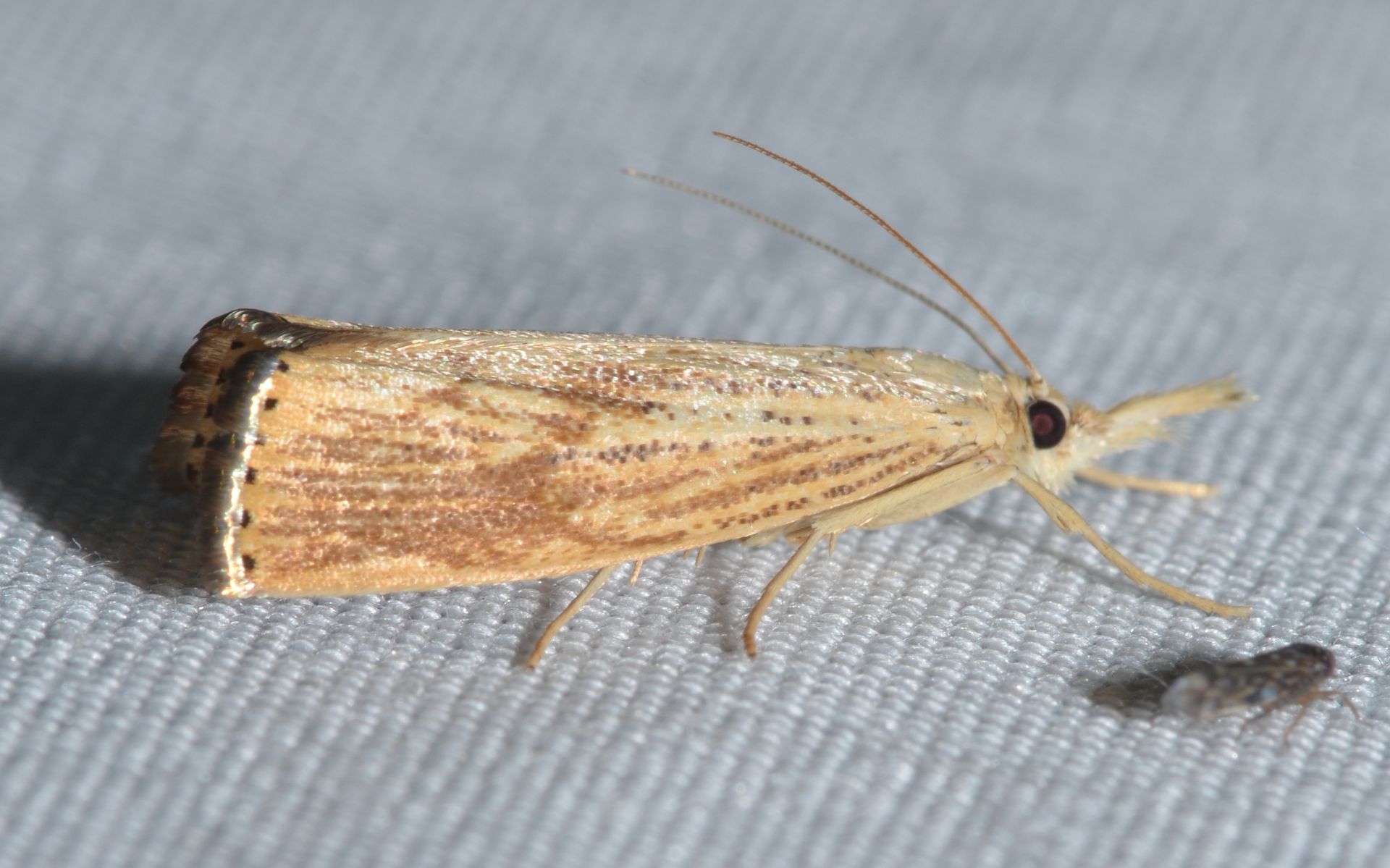
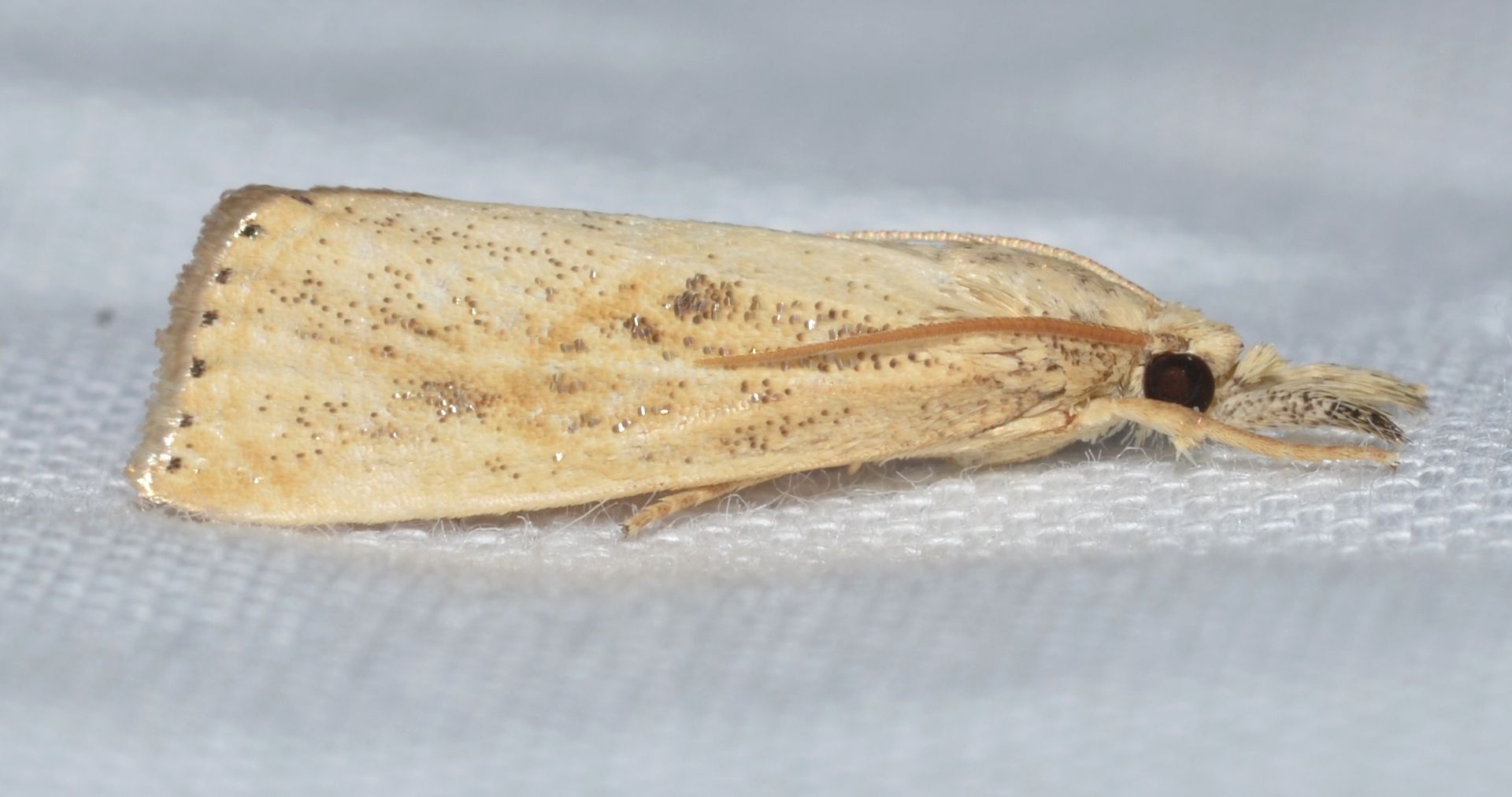
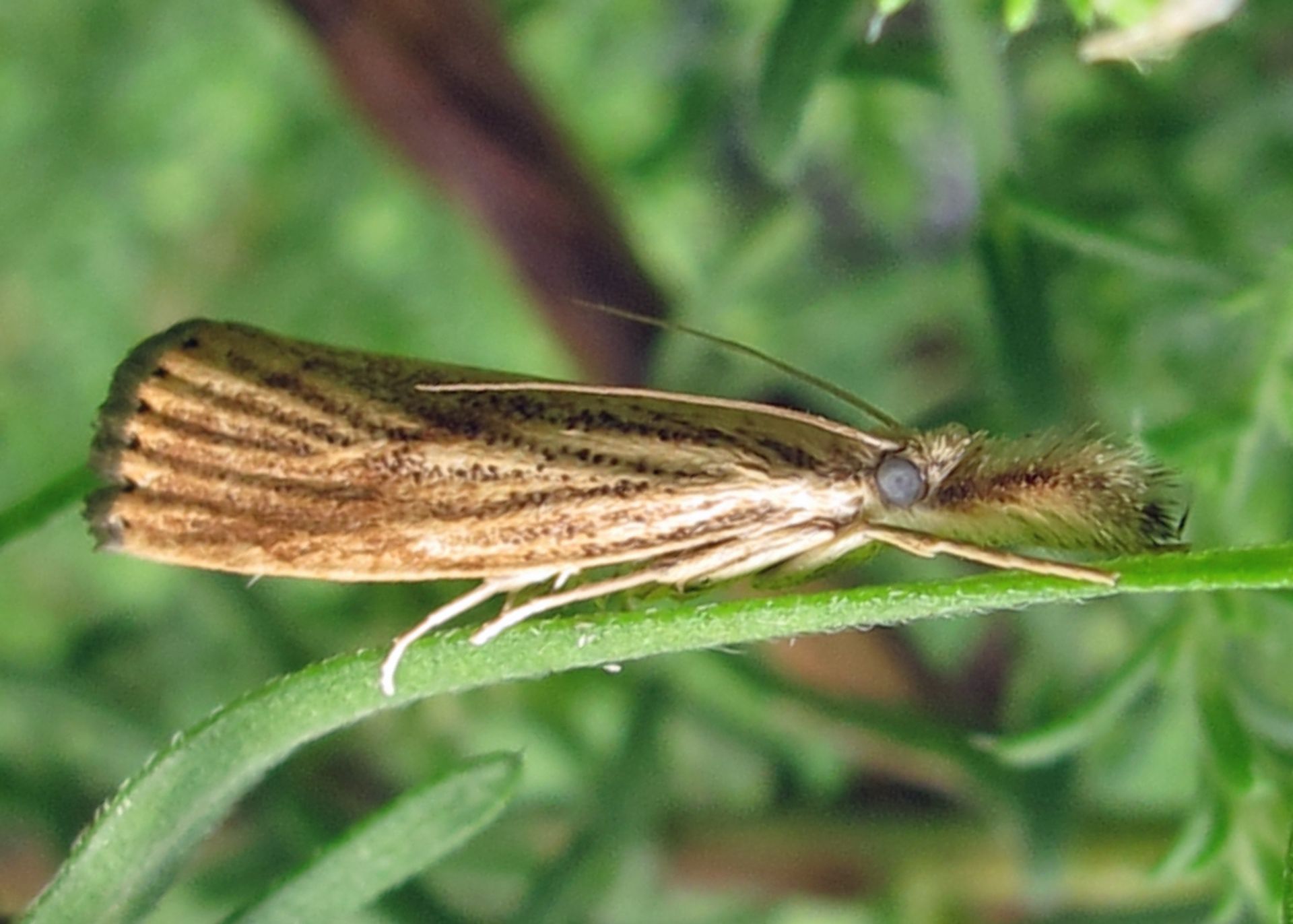
Distinguished from similar Agriphila by forewing pattern: A. ruricolellus shows less distinct, more diffuse transverse lines compared to A. tristella, which has sharper, more contrasting markings. A. ruricolellus is generally paler than A. straminella. Genitalia examination may be required for definitive identification. The "lesser vagabond" distinguishes it from the larger "vagabond" sod webworm, Parapediasia teterrellus, which has broader wings and more contrasting pattern.
Images
Appearance
are small with wingspan approximately 18–24 mm. Forewings are narrow, elongated, and pale brown to ochreous with variable darker speckling and faint transverse lines. Hindwings are paler, grayish-white, and narrower than forewings. The body is slender and matches the forewing coloration. are and relatively long. At rest, wings are folded tent-like over the body, creating a cylindrical profile. Larvae are pale green to grayish with a darker capsule and sparse setae.
Habitat
Open grasslands, meadows, weedy fields, agricultural areas, and cultivated lands. Often found in disturbed with mixed grasses and herbaceous vegetation. Elevation range extends from lowlands to moderate elevations in montane regions.
Distribution
North America: Quebec and Maine south to South Carolina, west to Arizona, north to Alberta and southern Canada. Records from Alberta, Manitoba, and Saskatchewan in Canada; Vermont in the United States.
Seasonality
have been recorded from May through September, with peak activity in June and July in most of the range. Multiple per year are likely in southern portions of the range.
Diet
Larvae feed on grasses (Poaceae) and various herbaceous plants. Specific records include turf grasses and pasture grasses; detailed host plant specificity has not been documented.
Life Cycle
Complete with , larval, pupal, and stages. Larvae are subterranean or concealed in thatch and silk-lined tunnels, feeding on roots and basal portions of grasses. stage likely as larvae, though this has not been confirmed for this specifically.
Behavior
are and attracted to light. Larvae construct silk-lined burrows in soil or thatch and emerge at night to feed on vegetation. When disturbed, larvae retreat rapidly into burrows.
Ecological Role
Larvae function as primary consumers in grassland . may occur in agricultural settings, though economic impact is generally minor compared to related sod webworm .
Human Relevance
Occasional minor pest of turf and pasture grasses. Larval feeding can produce scattered brown patches in lawns, but damage is typically superficial and self-limiting. Not considered a significant agricultural pest.
Similar Taxa
- Agriphila tristellaSimilar size and ; distinguished by sharper, more contrasting forewing transverse lines and generally darker coloration
- Agriphila straminellaOverlapping range; typically darker and more straw-colored with better-defined markings
- Parapediasia teterrellusLarger "vagabond sod webworm" with broader wings, more robust build, and more contrasting wing pattern
More Details
Taxonomic Note
The specific epithet is sometimes misspelled 'ruricolella' in older literature, but the original spelling 'ruricolellus' (masculine to match Agriphila) is correct.