
Parapediasia teterrellus
(Zincken, 1821)
bluegrass webworm moth, bluegrass webworm, bluegrass sod webworm moth, bluegrass sod webworm
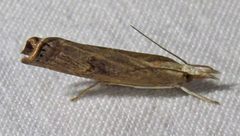
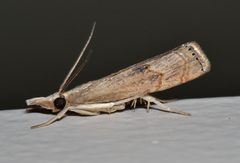
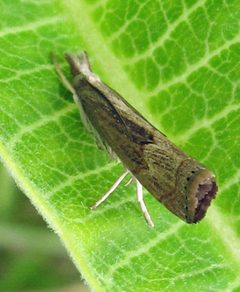
Parapediasia teterrellus is a small crambid with a wingspan of approximately 21 mm. Native to eastern North America, it has expanded westward across the continent since the 1800s and has been introduced to Japan and eastern China as an . The completes two per year, with active from May through October. Larvae are turf pests that feed primarily on bluegrasses and related grasses.
Pronunciation
How to pronounce Parapediasia teterrellus: //ˌpærəˌpɛdiˈeɪʒiə ˌtiːtərˈɛləs//
These audio files are automatically generated. While they are not always 100% accurate, they are a good starting point.
Identification
Distinguished from similar lawn Tehama bonifatella and Crambus sperryellus by its successful competitive displacement of these in urban environments; specific morphological distinguishing features not documented in available sources.
Images
Appearance
Small with wingspan approximately 21 mm. Specific coloration and pattern details not documented in available sources.
Habitat
Urban and suburban lawns, turfgrass areas, and grasslands. Associated with maintained grass environments including residential lawns, parks, and sod fields.
Distribution
Native range: North America from Ontario and New England south to Florida, west to California and north to Nebraska. Introduced range: Japan and eastern China, where established as . Historical expansion documented: reached midwestern United States by late 1800s, Albuquerque NM and Tucson AZ 1935–1940, Los Angeles 1954, San Francisco Bay area 1988.
Seasonality
active May through October. Two per year.
Diet
Larvae feed on Poa (bluegrasses), Festuca arundinacea (tall fescue), and occasionally Cynodon dactylon (bermudagrass). feeding habits not documented.
Host Associations
- Poa - larval food plantprimary
- Festuca arundinacea - larval food planttall fescue
- Cynodon dactylon - larval food plantbermudagrass, occasional
Life Cycle
Two per year. Complete with , larval, pupal, and stages. Specific details of developmental timing and stage not documented in available sources.
Behavior
Larvae construct silken webs at soil surface in turf. Has competitively displaced native lawn Tehama bonifatella and Crambus sperryellus in urban areas.
Ecological Role
Herbivore in grassland and turf . in Japan and eastern China where introduced. Competitor to native crambid in North American urban environments.
Human Relevance
Larval stage is a turf pest damaging lawns and sod. Spread facilitated by human and urban development patterns across North America. Subject of entomological study as one of the first pyralid moths recorded in North America (described 1821 from Georgia).
Similar Taxa
- Tehama bonifatellaFormer competitor in lawn ; displaced by P. teterrellus in urban areas
- Crambus sperryellusFormer competitor in lawn ; displaced by P. teterrellus in urban areas
More Details
Historical significance
One of the first pyralid moths recorded in North America, described in 1821 from Georgia.
Range expansion
Westward expansion across North America closely tracked human and urban development, with documented establishment dates in western cities from 1935–1988.