Agriphila vulgivagellus
Clemens, 1861
Vagabond Sod Webworm Moth, Vagabond Crambus, Vagabond Sod Webworm
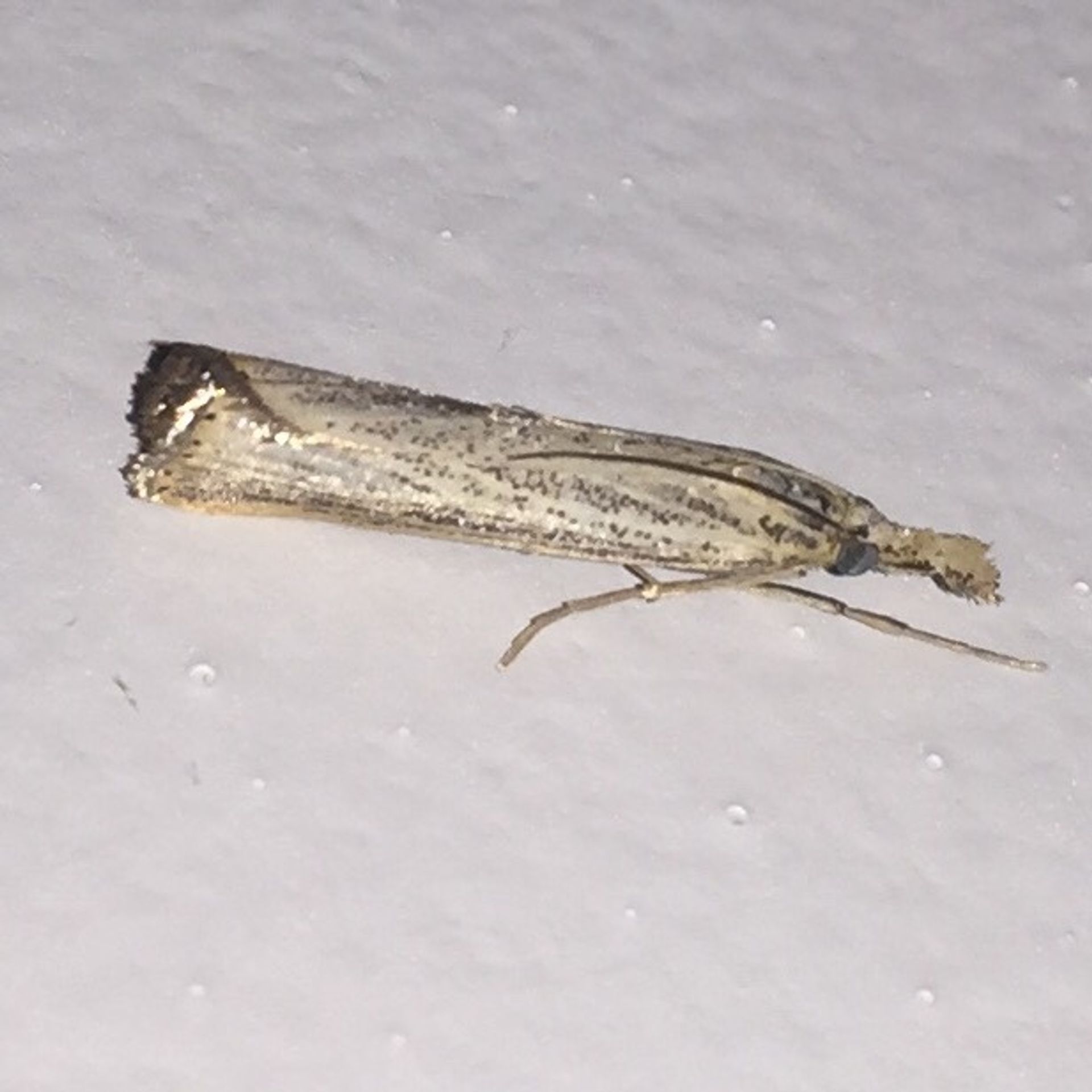
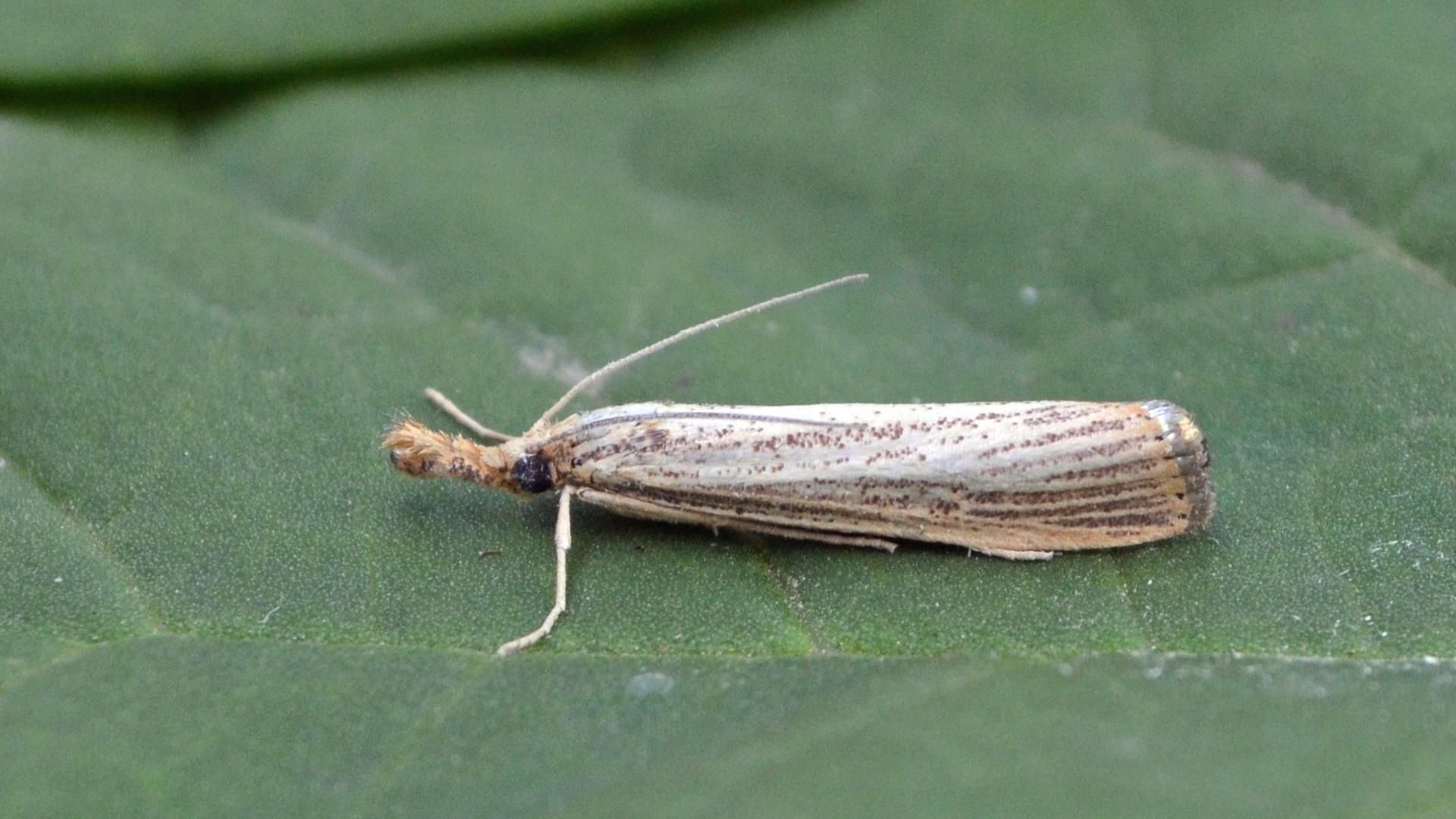
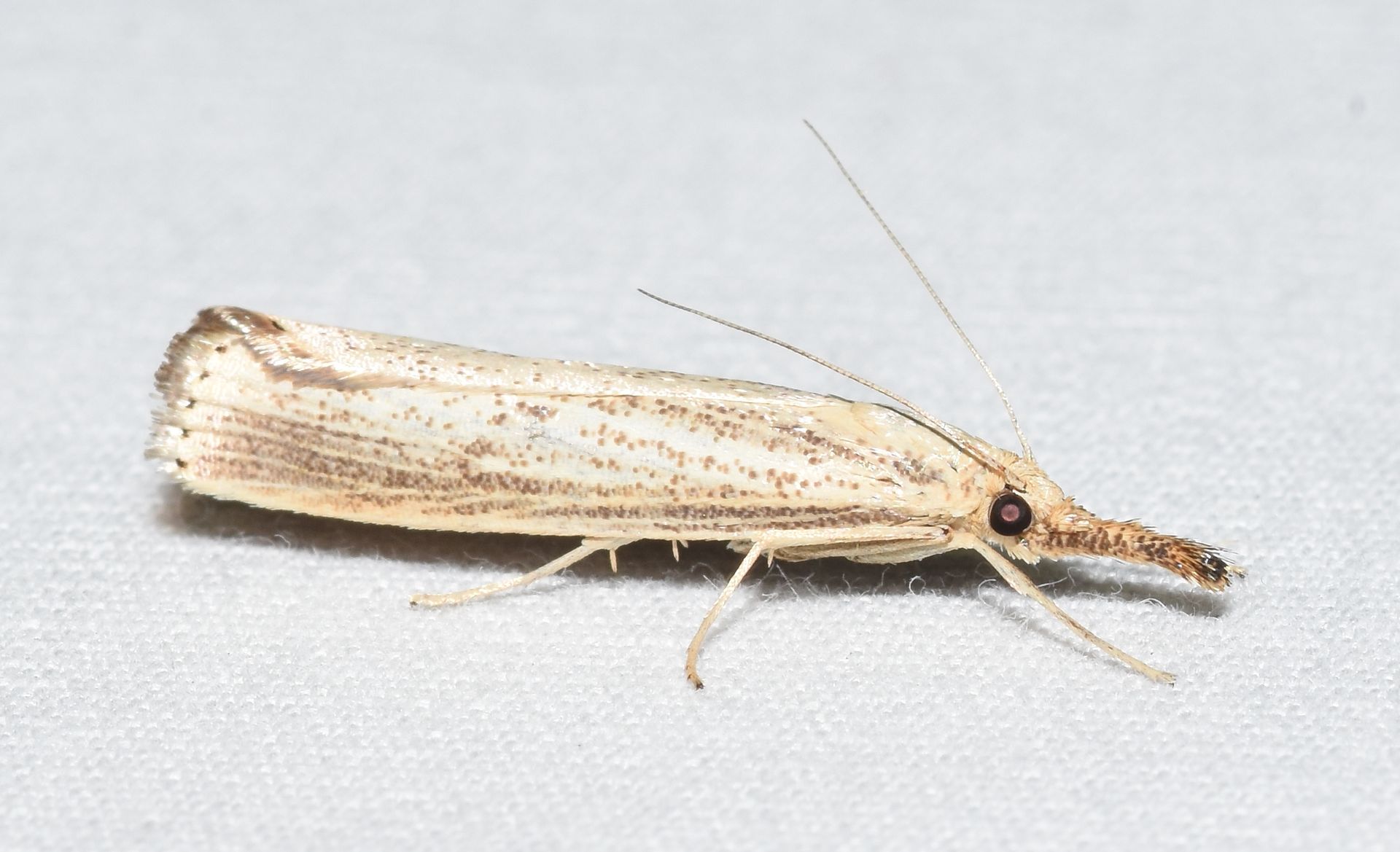
Agriphila vulgivagellus, commonly known as the Vagabond Sod Webworm , is a crambid moth distributed across eastern and central North America. The is , with active in late summer and fall. Larvae are grass-feeders and are known to damage agricultural grains including wheat and rye. larvae overwinter, completing development the following season.
Pronunciation
How to pronounce Agriphila vulgivagellus: /æɡˈrɪfɪlə vʌlˌdʒɪvədʒɛləs/
These audio files are automatically generated. While they are not always 100% accurate, they are a good starting point.
Identification
Distinguished from by the combination of broad geographic range, late-season activity (August–October), and the prominent whitish stripe on the forewing. Similar to other Agriphila but generally larger than A. tristella and with more distinct patterning than A. straminella. Genitalia examination may be required for definitive identification of worn specimens.
Images
Appearance
Wingspan 20–39 mm. Forewings pale brown to grayish with variable darker streaking and a distinct whitish stripe. Hindwings pale grayish-white. Body slender, typical of crambine . in size, with females generally larger.
Habitat
Grasslands, meadows, agricultural fields, lawns, and other open with abundant grasses. Larval habitat includes soil and thatch at the base of grass plants.
Distribution
Eastern and central North America: Quebec and New England south to Florida, west to Texas, and north to Alberta. Canadian records confirmed from Alberta, Manitoba, and Saskatchewan.
Seasonality
active August to October. Single per year (). Larvae present spring through summer; larvae overwinter.
Diet
Larvae feed on various grasses (Poaceae), including wheat, rye, and other cultivated grains. Specific native grass not documented in detail.
Host Associations
- Wheat - larval food plantcultivated grain
- Rye - larval food plantcultivated grain
- Poaceae - larval food plantvarious grasses
Life Cycle
Complete . laid in late summer and fall. Larvae hatch and feed on grasses; larvae enter and overwinter. Development resumes in spring, with in summer. emerge August–October. Single annually.
Behavior
are and attracted to light. Larvae are subterranean or concealed in thatch, feeding at the base of grass stems. Larval feeding can produce characteristic dead patches in lawns and damage to grain crops.
Ecological Role
Herbivore; larval grazing on grasses contributes to nutrient cycling in grassland . Can reach pest status in agricultural settings.
Human Relevance
Larvae are occasional pests of lawns, pastures, and cereal crops (wheat, rye). Damage manifests as dead patches or thinning turf. 'sod webworm' reflects association with turfgrass management.
Similar Taxa
- Agriphila tristellaSmaller size, different forewing pattern, earlier season in many areas
- Agriphila straminellaLess distinct forewing patterning, more uniformly straw-colored
- Other CrambinaeMany crambine share similar size and general appearance; identification requires wing pattern details and often genitalia examination
More Details
Etymology
Specific epithet vulgivagellus combines Latin vulgivagus (wandering, vagabond) with diminutive suffix, referring to the ' broad distribution and wandering habits.
Pest Status
While capable of damaging turf and grains, this is generally less economically significant than some related sod webworms (e.g., Parapediasia species). Damage is typically sporadic and localized.