
Elophila icciusalis
Walker, 1859
pondside pyralid moth, Pondside Crambid Moth
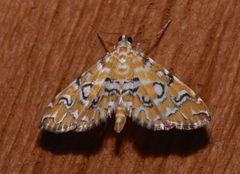
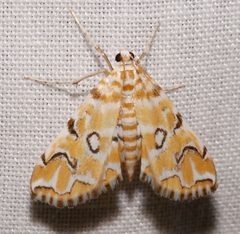
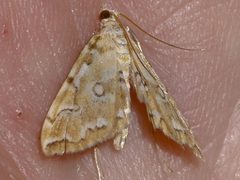
Elophila icciusalis, commonly known as the pondside pyralid , is a small crambid moth native to most of North America. The has a wingspan of 16–26 mm and is active from June through September. Its larvae are fully aquatic, feeding on submerged aquatic vegetation in freshwater . Three are recognized: E. i. albiplaga, E. i. avalona, and the nominate E. i. icciusalis.
Pronunciation
How to pronounce Elophila icciusalis: /ɛˈloʊ.fɪ.lə ˌɪk.siˈjuː.sə.lɪs/
These audio files are automatically generated. While they are not always 100% accurate, they are a good starting point.
Identification
Distinguished from similar aquatic crambid by geographic range (North America), preference, and larval associations. Specific diagnostic features for separating from congeneric such as Elophila obliteralis or E. gyralis are not documented in available sources. E. i. albiplaga and E. i. avalona may show minor morphological differences in wing pattern.
Images
Appearance
Small with wingspan of 16–26 mm. coloration and pattern details not specified in available sources. Larvae are aquatic and adapted to underwater life.
Habitat
Freshwater aquatic environments including ponds, lakes, and slow-moving water bodies. Larvae inhabit submerged vegetation in shallow water.
Distribution
Most of North America, with records from Canada (Alberta, Manitoba, Saskatchewan) and the United States (Vermont and presumably throughout the contiguous range).
Seasonality
active from June to September.
Diet
Larvae feed on aquatic plants: Menyanthes (bogbean), Lemna (duckweed), eelgrass (Zostera or Vallisneria), Potamogeton (pondweeds), and Cyperaceae (sedges). feeding habits not documented.
Host Associations
- Menyanthes - larval food plantbogbean
- Lemna - larval food plantduckweed
- Potamogeton - larval food plantpondweeds
- Cyperaceae - larval food plantsedge
Life Cycle
Larvae are aquatic and develop underwater, feeding on submerged vegetation. likely occurs in or near water, though specific details are not documented. emerge in summer and are active through early autumn.
Behavior
Larvae are aquatic, living and feeding underwater on submerged plants. are and attracted to light. Specific adult such as mating or oviposition sites are not documented.
Ecological Role
Larvae function as primary consumers in freshwater , grazing on aquatic vegetation. The serves as for ; larvae are known to be parasitized by Microgaster godzilla, a braconid wasp that dives underwater to attack caterpillars.
Human Relevance
No significant direct economic or agricultural impact documented. May serve as for healthy freshwater aquatic .
Similar Taxa
- Elophila turbataBoth are aquatic crambid with similar larval ; E. turbata is native to Asia and is the documented of Microgaster godzilla, whereas E. icciusalis occurs in North America.
- Elophila obliteralisOverlapping North American range and aquatic larval ; specific distinguishing features not documented in available sources.
- Elophila gyralisCongeneric aquatic with similar ; are larger with wingspan typically exceeding 26 mm.
More Details
Subspecies
Three are recognized: Elophila icciusalis icciusalis (nominate), E. i. albiplaga Munroe, 1972, and E. i. avalona Munroe, 1972. These were described by Munroe in 1972 based on minor morphological differences, likely in wing pattern.
Parasitoid associations
While not explicitly documented as a for Microgaster godzilla, the closely related E. turbata is the confirmed host. Given shared aquatic larval and phylogenetic proximity, E. icciusalis may be vulnerable to similar pressure from aquatic braconid wasps, though this remains speculative.