
Elophila gyralis
Hulst, 1886
Waterlily Borer Moth
Elophila gyralis, commonly known as the waterlily borer , is a of aquatic moth in the Crambidae. It was first described by George Duryea Hulst in 1886. The species is distributed across eastern North America, ranging from Canada through the eastern and central United States. Its suggests an association with waterlily plants, though specific larval details require further documentation.
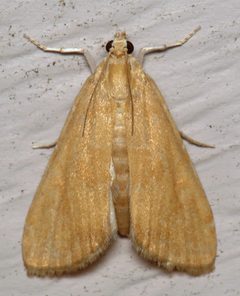
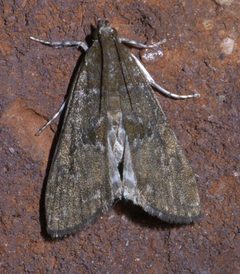
Pronunciation
How to pronounce Elophila gyralis: /ɪˈlɒfɪlə dʒaɪˈrælɪs/
These audio files are automatically generated. While they are not always 100% accurate, they are a good starting point.
Identification
The can be distinguished from similar aquatic crambid by its documented eastern North American distribution and association with waterlily . The two recognized , E. g. gyralis and E. g. serralinealis, may show subtle morphological differences in wing pattern or genitalia, though specific diagnostic features are not detailed in available sources. Accurate identification may require examination of genitalia or molecular analysis.
Images
Appearance
have a wingspan of 16–30 mm. Specific coloration and pattern details are not documented in available sources.
Habitat
Aquatic environments, specifically associated with waterlily plants. The inhabits freshwater systems where its larval plants occur.
Distribution
Eastern North America, including Canadian provinces (New Brunswick, Nova Scotia, Ontario, Quebec) and U.S. states: Alabama, Florida, Georgia, Illinois, Indiana, Iowa, Louisiana, Maine, Maryland, Massachusetts, Michigan, Minnesota, Mississippi, New Hampshire, New Jersey, New York, North Carolina, Ohio, Oklahoma, Pennsylvania, South Carolina, Tennessee, Texas, Vermont, and Wisconsin.
Seasonality
have been recorded on wing year-round in the southern part of the range. Activity patterns in northern portions are not specified.
Host Associations
- Waterlily - probable larval Inferred from ; specific plant not documented
Ecological Role
As a member of the aquatic Acentropinae, larvae likely function as herbivores in freshwater . The serves as a for , including Microgaster godzilla, which has been documented parasitizing related Elophila species.
Similar Taxa
- Elophila turbataCongeneric with similar aquatic lifestyle and preferences; both are in Acentropinae and associated with freshwater environments. E. turbata is known to be parasitized by Microgaster godzilla, suggesting ecological overlap.
- Other Acentropinae species members share aquatic or semi-aquatic larval habits and similar ; identification to level requires detailed examination.
More Details
Subspecies
Two are recognized: Elophila gyralis gyralis (nominate subspecies) and Elophila gyralis serralinealis (Barnes & Benjamin, 1924). The latter was described from more western and may show geographic variation in .
Research context
While E. gyralis itself has limited behavioral documentation, congeneric such as E. turbata have been extensively studied due to their role as for unusual . This research context suggests E. gyralis may share similar ecological traits with better-studied relatives.