
Dejongia
Gielis, 1993
Species Guides
2- Dejongia californicus(Gumweed Plume Moth)
- Dejongia lobidactylus(Lobed Plume Moth)
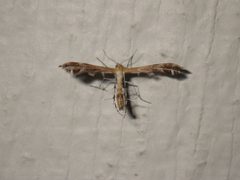
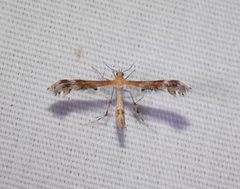
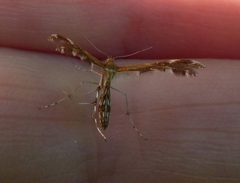
Dejongia is a of plume moths in the Pterophoridae, established by Gielis in 1993. The genus name honors Dr. R. de Jong of the Naturalis Biodiversity Center (formerly National Museum of Natural History, Leiden) for his contributions to resolving phylogenetic problems. Three are recognized: Dejongia californicus, D. lobidactylus, and D. wrightii. These are characterized by the deeply divided wings typical of plume moths, with fringed margins on the wing lobes.
Pronunciation
How to pronounce Dejongia: //deɪˈjʌŋɡiə//
These audio files are automatically generated. While they are not always 100% accurate, they are a good starting point.
Identification
Members of Dejongia can be distinguished from other by specific wing venation patterns and the degree of wing division. The genus belongs to the tribe Oxyptilini, and -level identification requires examination of genitalia and detailed wing pattern characteristics. D. lobidactylus and D. californicus are superficially similar and have overlapping ranges in parts of North America.
Images
Distribution
North America; records include the United States (Vermont, California, and other regions) and Canada. The three have somewhat distinct but overlapping ranges: D. lobidactylus is widespread in eastern North America, D. californicus occurs in western North America, and D. wrightii has a more restricted distribution.
Similar Taxa
- Other Oxyptilini generaSimilar with divided wings; requires examination of wing venation and genitalia for definitive separation
- GeinaAnother of plume moths with similar overall appearance; Dejongia tend to have more deeply cleft wings and different resting posture
More Details
Etymology
The was named by C. Gielis in 1993 to recognize Dr. R. de Jong of Leiden for his assistance with phylogenetic research on Pterophoridae.