Dejongia californicus
(Walsingham, 1880)
Gumweed Plume Moth
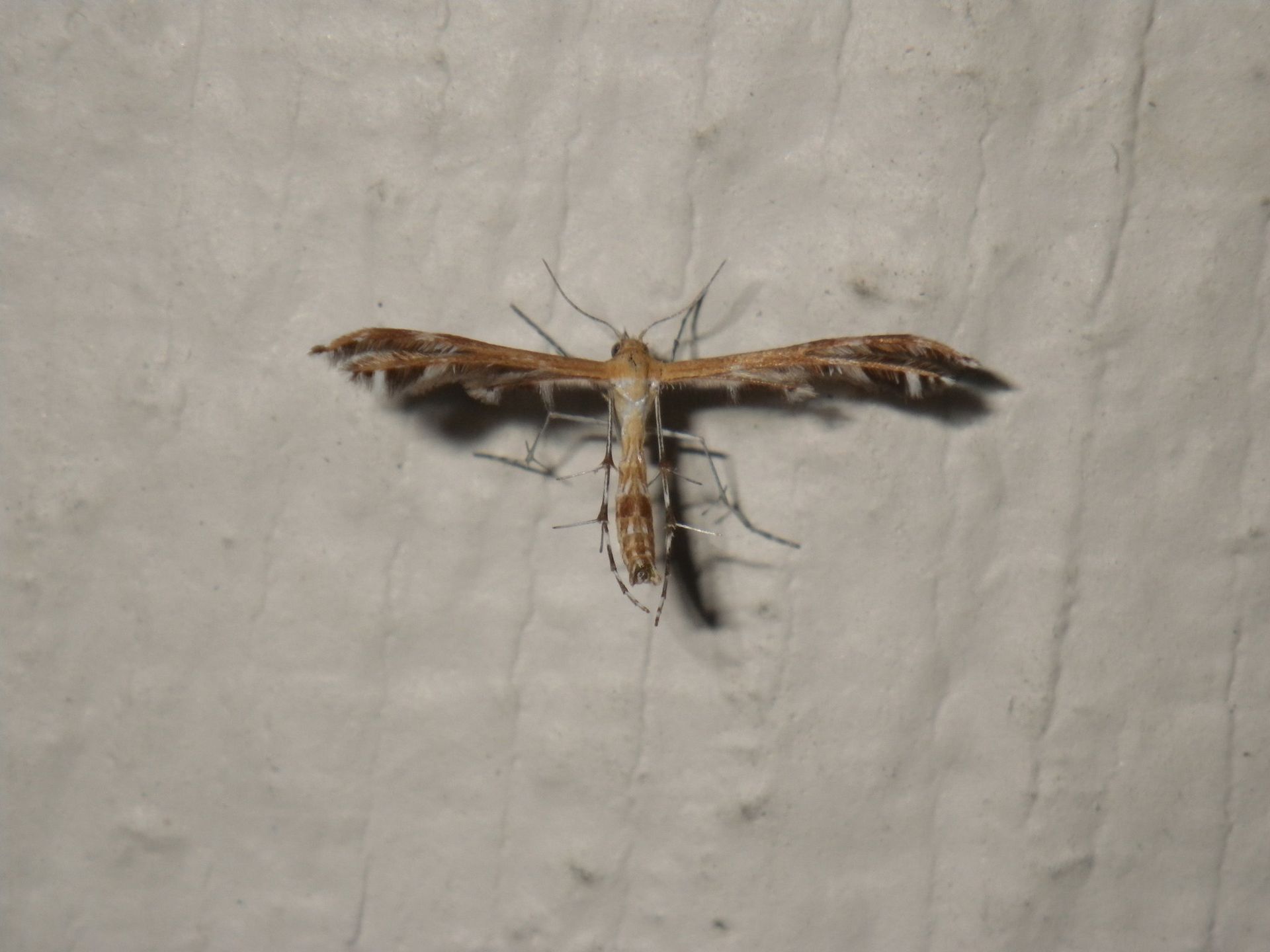
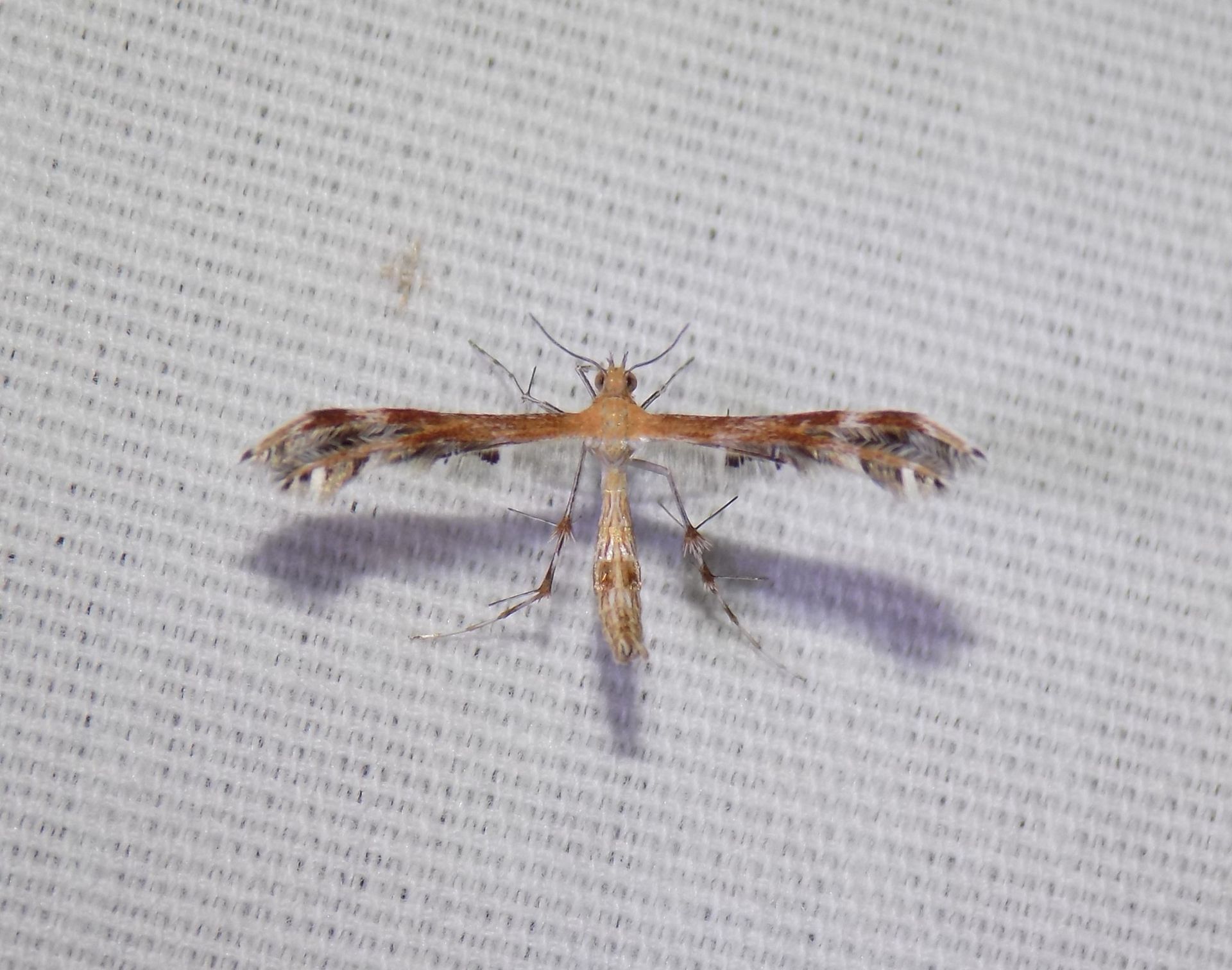
Dejongia californicus is a small ( Pterophoridae) known as the Gumweed Plume Moth. It occurs in western and southeastern North America. The wingspan ranges from 14–26 mm. Larvae feed on Asteraceae , particularly Isocoma veneta and Grindelia species. The was described by Walsingham in 1880.
Pronunciation
How to pronounce Dejongia californicus: /dɛˈjɔŋɪə kælɪˈfɔrnɪkəs/
These audio files are automatically generated. While they are not always 100% accurate, they are a good starting point.
Identification
Distinguished from other small plume moths by geographic association with gumweed (Grindelia) and goldenbush (Isocoma) plants. Specific wing venation and lobe structure differ from related Dejongia , though detailed diagnostic features require examination. The combination of small size, western North American distribution, and Asteraceae-feeding larvae helps separate it from superficially similar plume moths.
Images
Appearance
Small with wingspan of 14–26 mm. As a , wings are characteristically divided into lobes with fringed margins. have the typical T-shaped resting posture of Pterophoridae, with wings held out perpendicular to the body.
Habitat
Associated with supporting its larval plants in the Asteraceae , particularly gumweeds (Grindelia) and goldenbushes (Isocoma veneta). These include open, often disturbed areas, grasslands, and scrublands in western North America.
Distribution
North America: recorded from California and the southeastern United States. Distribution corresponds to range of plant .
Diet
Larvae feed on Asteraceae , specifically Isocoma veneta and Grindelia species. feeding habits are not documented.
Host Associations
- Isocoma veneta - larval plantAsteraceae; goldenbush
- Grindelia - larval plantAsteraceae; gumweed
Similar Taxa
- Other Dejongia speciesCongeneric share and require examination of genitalia or wing venation for definitive identification.
- Other small PterophoridaeMany plume moths overlap in size and general appearance; plant association and geographic range help distinguish D. californicus.
More Details
Nomenclature
The epithet is sometimes misspelled 'californicus' versus 'californicus' in older literature; the accepted spelling follows Walsingham's original description.
Sources and further reading
- BugGuide
- Wikipedia
- GBIF taxonomy match
- iNaturalist taxon
- Catalogue of Life
- Encyrtid Holdings | Entomology Research Museum
- California Has No State Bee--Yet! | Bug Squad
- Bohart Museum: Learn about California's State Insect on UC Davis Picnic Day | Bug Squad
- Grasshoppers of Colorado
- Grasshoppers of Colorado
- Sex Attraction Pheromone Improves Detection of a Threatened Beetle