
Dejongia lobidactylus
(Fitch, 1854)
Lobed Plume Moth
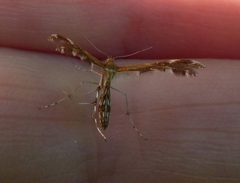
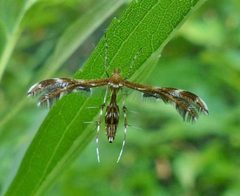
Dejongia lobidactylus, commonly known as the Lobed , is a small plume moth in the Pterophoridae. It is characterized by its deeply divided wings with distinctive pale yellow or white oblique stripes against a dark cinnamon-brown background. The occurs in northeastern North America and has been recorded feeding on Solidago (goldenrod) species as larvae.
Pronunciation
How to pronounce Dejongia lobidactylus: /dɛˈjoʊn.dʒi.ə ˌloʊ.bɪˈdæk.tɪ.ləs/
These audio files are automatically generated. While they are not always 100% accurate, they are a good starting point.
Identification
The combination of small size (17–20 mm wingspan), deeply divided plume-like wings, and the distinctive pale yellow or white oblique stripe across the basal third of the forewing first lobe separates this from other regional plume moths. The black cluster in the hindwing fringe, preceded by white, is a useful diagnostic feature. Similar Dejongia species may lack the clear oblique forewing stripe or show different fringe patterns.
Images
Distribution
Northeastern United States and central Canada (Quebec and Ontario).
Seasonality
active from June to August.
Diet
Larvae feed on terminal buds of Solidago (goldenrods).
Host Associations
- Solidago - larval food plantlarvae feed on terminal buds
Similar Taxa
- Other Dejongia speciesMay share general but differ in forewing stripe pattern and hindwing fringe details
- Other Pterophoridae in northeastern North AmericaSimilar wing division but distinguished by specific color pattern of oblique pale stripes and black cluster in hindwing fringe
More Details
Taxonomic history
Originally described as Pterophorus lobidactylus by Fitch in 1854, later transferred to Dejongia.
Observation frequency
Relatively well-documented with over 1,500 observations on iNaturalist, indicating it is not uncommon within its range.