
Anthocharis julia julia
Edwards, 1872
Southern Rocky Mountain orangetip
Anthocharis julia julia is a of orangetip in the Pieridae, found in the southern Rocky Mountain region. are active in early spring and are distinguished by orange wing tips in males and more subdued coloration in females. The subspecies represents the nominate form of A. julia, described by Edwards in 1872.
Pronunciation
How to pronounce Anthocharis julia julia: /ænˈθoʊ.kə.rɪs ˈdʒuː.liə ˈdʒuː.liə/
These audio files are automatically generated. While they are not always 100% accurate, they are a good starting point.
Identification
Distinguished from Anthocharis sara (Sara orangetip) by geographic range and, where ranges overlap, by more extensive orange on forewing apex in males. Differs from A. midea (falcate orangetip) by rounded rather than hooked forewing apex. Separated from other white butterflies by combination of orange male forewing tips and greenish marbled hindwing underside.
Images
Appearance
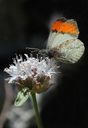
Medium-sized with white to pale yellow wings. Males have distinct orange tips on the forewings; females lack orange tips and are generally paler with more extensive dark markings. Underside of hindwing typically shows greenish-gray marbling. Wingspan approximately 35-45 mm.
Habitat
Open montane including meadows, forest clearings, and rocky slopes. Associated with coniferous and mixed coniferous-deciduous forest zones in mountainous terrain.
Distribution
Southern Rocky Mountains: Colorado, New Mexico, Arizona, and adjacent areas of Wyoming and Utah.
Seasonality
fly early spring, typically March through June depending on elevation and local conditions. Single brooded.
Diet
Larval plants include in Brassicaceae, particularly rockcresses (Boechera spp.) and other mustards. nectar at early spring wildflowers.
Host Associations
- Boechera - larval primary
Life Cycle
. laid on plant flower buds. Larvae feed on flowers and fruits. occurs in summer; emerge following spring after as pupae.
Behavior
Males patrol hilltops and ridgelines seeking females. Both sexes fly rapidly and erratically when disturbed. are and most active during warm midday hours.
Ecological Role
of early spring wildflowers. Larvae function as herbivores on Brassicaceae. Serves as prey for birds, spiders, and insect .
Human Relevance
Subject of watching and photography. No significant economic importance.
Similar Taxa
- Anthocharis saraOverlapping range in some areas; A. sara males have less extensive orange on forewing apex
- Anthocharis mideaEastern with falcate (hooked) forewing apex versus rounded apex in A. julia
- Pieris speciesSimilar white coloration but lack orange forewing tips and greenish marbled hindwing underside
More Details
Taxonomic history
Described by William Henry Edwards in 1872 from specimens collected in Colorado. The A. julia has been treated variously as with or separate from A. sara; current treatments generally recognize them as distinct but closely related species with some geographic intergradation.
Conservation status
Not formally assessed by IUCN. appear stable within core range, though loss and climate change may affect montane populations.
Sources and further reading
- BugGuide
- GBIF taxonomy match
- iNaturalist taxon
- NCBI Taxonomy
- Learning About the Bees and the Nutrition They Need | Bug Squad
- Mosquito Expert Julián Hillyer's Topic: 'Not So Heartless!' | Bug Squad
- ecotourism management | Blog
- Need to Feed Mosquitoes? Head for the Freezer Aisle
- Braconidae | Beetles In The Bush