
Phoebis sennae
(Linnaeus, 1758)
Cloudless Sulphur, Cloudless Giant Sulphur
Pronunciation
How to pronounce Phoebis sennae: //ˈfiː.bɪs ˈsɛn.iː//
These audio files are automatically generated. While they are not always 100% accurate, they are a good starting point.
Identification
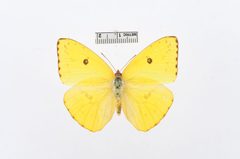
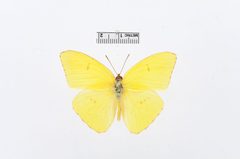
Distinguished from similar sulphurs by its larger size and unangled wing margins. The yellow angled-sulphur (Anteos maerula) has distinctly angled wings. The statira sulphur (Aphrissa statira) and other smaller sulphurs are markedly smaller. Females show a characteristic black open square or star on the forewing not present in .
Images
Habitat
Open spaces including gardens, glades, seashores, and watercourses. Occupies diverse open from subtropical to temperate zones.
Distribution
Range extends from South America to southern Canada, with core abundance from Argentina through southern Texas, Georgia, and Florida. Regular visitor north of core range, becoming progressively rarer toward northern limits. Recorded as far north as southwestern Ontario.
Seasonality
Breeding season varies by climate: year-round in warmer regions, midsummer to fall in cooler areas. migrate northward seasonally, with peak activity in late summer and fall in temperate regions.
Diet
feed on nectar from flowers with long corolla tubes including cordia, bougainvillea, cardinal flower, hibiscus, , and wild morning glory. Larvae feed on legumes (Fabaceae), primarily Senna (sennas) and partridge peas.
Host Associations
- Senna hebecarpa - larval and nectar sourceEastern United States
- Senna occidentalis - larval
- Chamaecrista - larval sensitive peas
- Trifolium - larval clovers
Life Cycle
Complete with four stages. stage lasts approximately six days. Larval development on leguminous plants. in pointed, humped chrysalis. with wingspan 55–70 mm. time varies with latitude, with multiple generations per year in southern range and fewer in north.
Behavior
Strong, fast, direct . Seasonal northward documented, with individuals traveling substantial distances. frequently visit flowers for nectar. Males patrol for females.
Ecological Role
serve as for diverse flowering plants. Larvae are herbivores on leguminous plants. Documented facultative mutualism with imported fire ants (Solenopsis invicta) in some , where ants may protect larvae in exchange for nutritional secretions.
Human Relevance
Popular subject for watching and photography due to conspicuous coloration and active . Occasionally encountered in gardens where plants are present. No significant agricultural or economic impact documented.
Similar Taxa
- Anteos maerulaYellow angled-sulphur has distinctly angled wing margins versus rounded wings of P. sennae
- Aphrissa statiraStatira sulphur is markedly smaller than P. sennae
- Colias philodiceClouded sulphur is smaller and has different wing pattern and coloration
More Details
Subspecies
Two recognized : P. s. amphitrite in Chile, and P. s. sennae (or P. s. eubule) in Jamaica, South Carolina, Kansas, Virginia, Florida, and Cuba. Former subspecies P. s. marcellina elevated to full Phoebis marcellina in 2020.
Observation frequency
Well-represented in citizen science databases with over 48,000 iNaturalist observations, indicating high detectability and broad public interest.
Sources and further reading
- BugGuide
- Wikipedia
- GBIF taxonomy match
- iNaturalist taxon
- NCBI Taxonomy
- Catalogue of Life
- A new population of the federally-endangered decurrent false aster | Beetles In The Bush
- Bug Eric: Grand Finale
- Plantae | Beetles In The Bush | Page 7
- Insecta | Beetles In The Bush | Page 8
- Cloudless Sulphur Phoebis sennae (Linnaeus) (Insecta: Lepidoptera: Pieridae: Coliadinae)