Colias pelidne
Boisduval, 1832
Pelidne Sulphur, Blueberry Sulphur
Colias pelidne is a small sulphur in the Pieridae found in North America. It inhabits high-elevation tundra and mountain environments, with a period restricted to late June through early August. The has a broad geographic range spanning from British Columbia across Canada to Newfoundland, with southern extensions into Idaho, Montana, and Wyoming. Both larval and stages have documented feeding associations with specific plant .

Pronunciation
How to pronounce Colias pelidne: /ˈko.li.as peˈli.dne/
These audio files are automatically generated. While they are not always 100% accurate, they are a good starting point.
Identification
Distinguished from other North American Colias by its restricted high-elevation (6,000–11,500 ft) and narrow window (late June to early August). Overlaps geographically with C. philodice and C. eurytheme in some areas, but these species occur at lower elevations and have broader seasonal activity. C. interior and C. meadii also occur in montane habitats but may be separated by wing pattern details and flight period differences where sympatric.
Images
Appearance
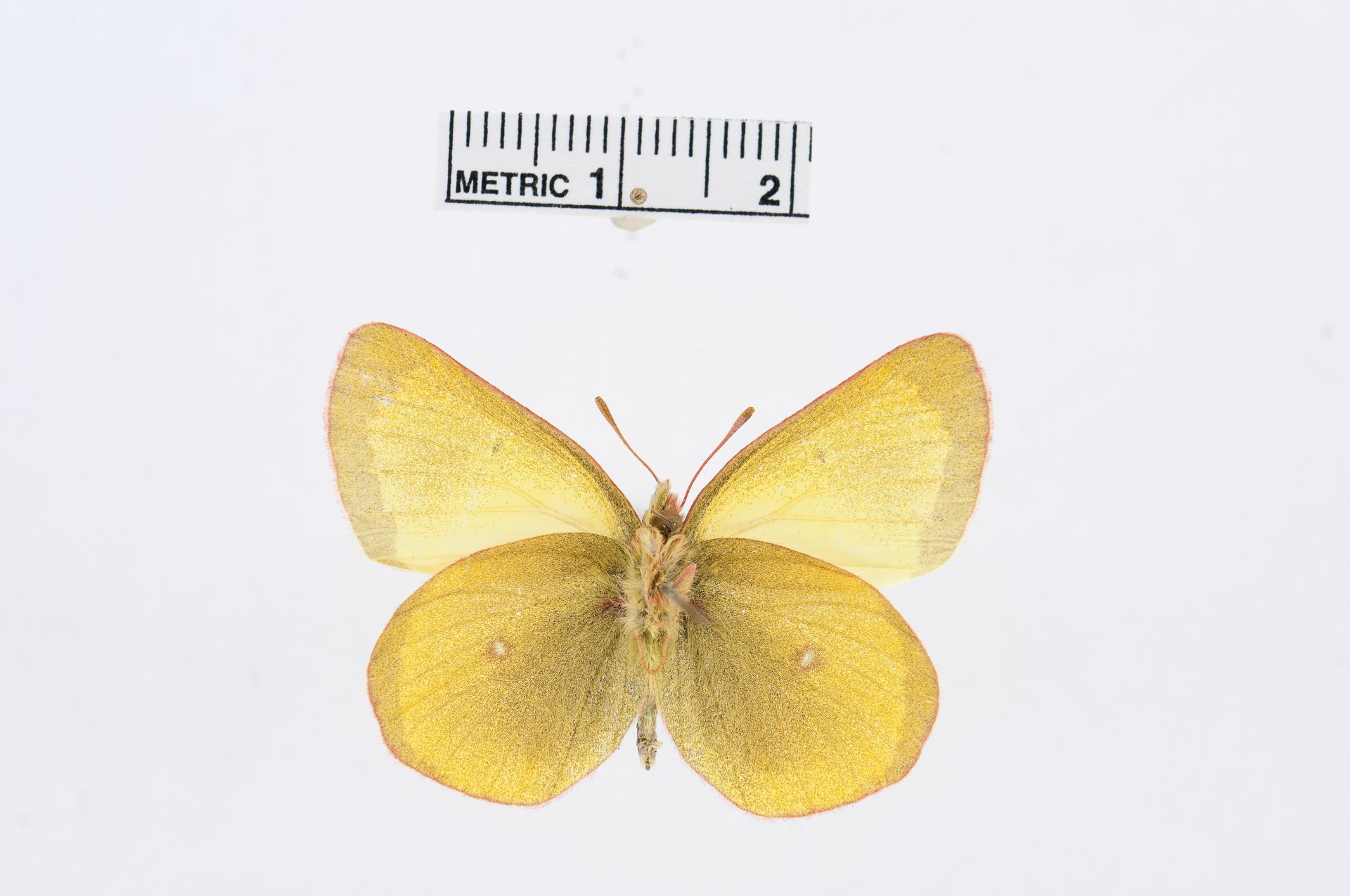
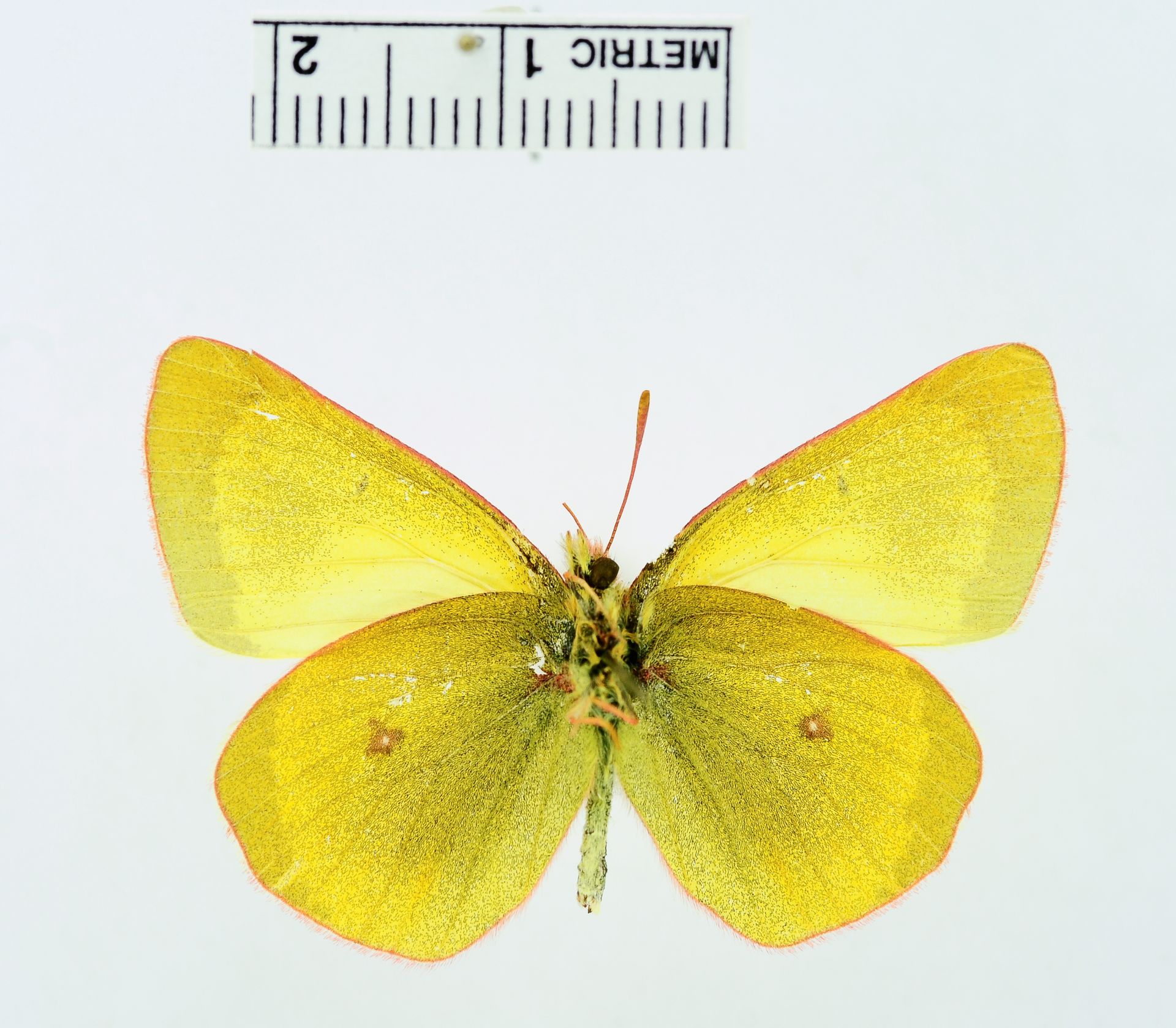
Wingspan ranges from 33 to 44 mm. As a member of the sulphur group, typically exhibit yellow or orange coloration on the upper wing surfaces, with possible dark marginal markings. is present, with females often showing paler or white coloration. The 'blueberry sulphur' references larval association rather than adult wing color.
Habitat
Tundra and mountain environments at elevations of 6,000–11,500 feet (1,800–3,500 m). Occupies alpine meadows and subalpine zones where larval plants occur.
Distribution
North America: British Columbia across Canada to Newfoundland, south to Idaho, Montana, and Wyoming.
Seasonality
period from late June until early August. Single-brooded with restricted seasonal activity at high elevations.
Diet
Larvae feed on Vaccinium (blueberries/cranberries) and Gaultheria humifusa (western teaberry). feed on flower nectar.
Host Associations
- Vaccinium spp. - larval blueberries, cranberries
- Gaultheria humifusa - larval western teaberry, creeping snowberry
Life Cycle
Complete with , larva, pupa, and stages. Specific details of stage and voltinism not documented in available sources, though high-elevation suggests pattern.
Ecological Role
function as when nectaring. Larvae are herbivores specialized on ericaceous plants in alpine and subalpine .
Human Relevance
No documented economic or agricultural significance. Occasionally encountered by hikers and naturalists in mountain environments. Not known to be of conservation concern.
Similar Taxa
- Colias eurythemeSimilar coloration but occurs at lower elevations in agricultural and open ; multiple with extended season
- Colias philodiceOverlaps in range but found in meadows and fields at lower elevations; broader seasonal activity
- Colias interiorMontane overlap; requires examination of wing pattern details for separation
More Details
Subspecies
Three recognized: C. p. pelidne (nominate), C. p. skinneri Barnes 1897, and C. p. minisni Bean 1895 (the latter treated as a full by some authorities).
Research history
The Colias has been subject to extensive ecological research, including early studies on activity influenced by environmental factors (light, temperature, humidity) that included related .
Sources and further reading
- BugGuide
- Wikipedia
- GBIF taxonomy match
- iNaturalist taxon
- NCBI Taxonomy
- Catalogue of Life
- A Butterfly Invasion in Yolo, Solano and Sacramento Counties | Bug Squad
- 'Battus philenor! Battus philenor!' | Bug Squad
- A Boy, Bugs, a Birthday and the Bohart | Bug Squad
- The Joy of Rearing Monarchs | Bug Squad
- Thinking of Noted Cotton Entomologist Thomas Frances Leigh | Bug Squad
- Insect Migration (Part 1) - Buglife Blog - Buglife