
Anteos clorinde
(Godart, 1824)
white angled-sulphur, ghost brimstone
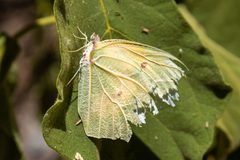
Anteos clorinde is a large pierid with a broad Neotropical distribution extending into the southern United States. are characterized by their pale yellow to white wings with distinctive angled margins. The exhibits year-round in tropical regions and seasonal in northern portions of its range. Larval development is tied to plants in the Senna.
Pronunciation
How to pronounce Anteos clorinde: /ˈæn.te.oʊs ˈklɔː.rɪn.deɪ/
These audio files are automatically generated. While they are not always 100% accurate, they are a good starting point.
Identification
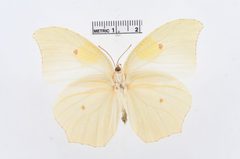
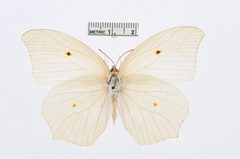
Distinguished from other Anteos by the combination of pale coloration and strongly angled wing margins. Most similar to Anteos maerula (yellow angled-sulphur), which has brighter yellow coloration; A. clorinde is noticeably paler, approaching white. Differs from Phoebis sulphurs by the angled rather than rounded wing margins and generally paler ground color. In , the large size and slow, sailing wingbeats are characteristic.
Images
Appearance
Wingspan 70–90 mm. Wings pale yellow to white with distinctly angled or notched outer margins, particularly on the forewings. Upper wing surfaces relatively unmarked; undersides may show faint greenish or grayish scaling. Body slender, typical of the . Sexes similar, though females may appear slightly paler or more greenish-tinged.
Habitat
Tropical and subtropical open including forest edges, river corridors, agricultural areas, and disturbed vegetation. Associated with lowland to mid-elevation areas where plants occur. In northern range, found in riparian zones and subtropical thorn scrub.
Distribution
Neotropical region: South America, Central America, and southern North America (southern United States). Records from Colombia (Bucaramanga, Villavicencio), Ecuador, and Mexico. In the United States, occurs primarily in southern Texas and Arizona.
Seasonality
Year-round in tropical portions of range. In northern areas (southern United States), active primarily August to December, with peak activity in late summer and fall.
Diet
Larvae feed on Senna spectabilis (Fabaceae). feeding habits not documented in available sources.
Host Associations
- Senna spectabilis - larval plant
Life Cycle
Complete typical of Lepidoptera. Specific details of , larval instars, pupal stage, and time not documented in available sources. Presumably multivoltine in tropical range.
Behavior
exhibit strong, direct and are known to migrate or disperse northward seasonally. Males patrol for females and may congregate at moist ground or other resources. Flight pattern described as slow and sailing, with intermittent gliding.
Ecological Role
may function as ; larvae are herbivores on Senna. Specific ecological impacts not documented.
Human Relevance
Occasional stray individuals reach the United States and may attract enthusiasts. Not known to be of agricultural or economic significance. Featured in regional butterfly field guides.
Similar Taxa
- Anteos maerulaYellow angled-sulphur; similar size and wing shape but distinctly yellow rather than pale/white coloration
- Phoebis sennaeCloudless sulphur; similar pale color but has rounded wing margins and lacks the characteristic angled wing shape of Anteos
- Phoebis agaritheLarge orange sulphur; overlaps in range and but orange-yellow coloration and rounded wings distinguish it
More Details
Subspecies
Two recognized: A. c. clorinde (nominate, South America) and A. c. nivifera (Mexico, described by Fruhstorfer, 1908). The latter may show slightly more extensive white coloration.