
Anteos
Hübner, 1819
Angled Sulphurs, angled-sulphurs
Species Guides
2- Anteos clorinde(white angled-sulphur)
- Anteos maerula(Yellow Angled-Sulphur)
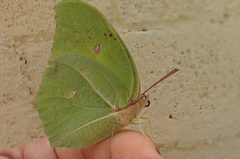
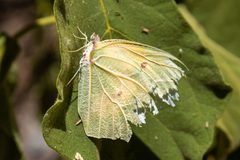
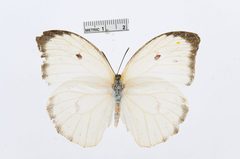
Anteos is a of butterflies in the Pieridae, commonly known as angled-sulphurs. The genus contains three recognized : Anteos clorinde (white angled sulphur), Anteos maerula (angled sulphur), and Anteos menippe (orange-tipped angled-sulphur). These butterflies are found in tropical regions of the Americas. Anteos menippe has been used in physiological research, including the first direct electrocardiographic characterization in Lepidoptera.
Pronunciation
How to pronounce Anteos: //ˈæn.ti.oʊs//
These audio files are automatically generated. While they are not always 100% accurate, they are a good starting point.
Images
Distribution
Tropical regions of the Americas; Anteos menippe has been documented from Belém, Pará, Brazil.
Life Cycle
Newly emerged have been documented in laboratory settings; breeding facility source mentioned for research specimens.
Behavior
Migratory has been attributed to the Pieridae; Anteos menippe exhibits postural reflex loss and recovery during anesthesia.
Ecological Role
; high sensitivity to alterations; used as for assessing environmental quality.
Human Relevance
Used in physiological research, including cardiac electrophysiology studies; Anteos menippe was the subject of the first direct ECG characterization in Lepidoptera.
More Details
Physiological Research
Anteos menippe was used in a 2024 study that provided the first direct electrocardiographic (ECG) characterization in Lepidoptera. The study demonstrated that isoflurane produces smooth and reversible anesthesia in this , with induction time of 48.5 ± 8.9 seconds and recovery time of 117.7 ± 16.2 seconds. Cardiac spike frequency decreased from 64.3 ± 3.9 min⁻¹ to 35 ± 3.3 min⁻¹ during anesthesia.