
Erebia epipsodea
Butler, 1868
Common Alpine
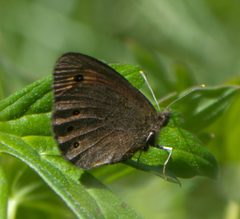
Erebia epipsodea, commonly known as the Common Alpine, is a in the Nymphalidae, Satyrinae. It is distributed across North America from Alaska through the Rocky Mountains to northern New Mexico, and eastward across the Canadian prairie provinces to southwest Manitoba. The species inhabits alpine and montane environments, with active from mid-June to early August. Larvae feed on various grass species.


Pronunciation
How to pronounce Erebia epipsodea: /ɛˈɹɛbiə ɛˌpɪpˈsoʊdiə/
These audio files are automatically generated. While they are not always 100% accurate, they are a good starting point.
Identification
Distinguished from Vidler's alpine (Erebia vidleri) by distribution and presumably subtle morphological differences, though specific diagnostic characters are not detailed in available sources. The ' broad distribution across the Rocky Mountains and prairie provinces may help separate it from more geographically restricted .
Images
Appearance
Wingspan ranges from 34–45 mm. As a member of the Satyrinae , possess the characteristic reduced front legs typical of brush-footed butterflies. Specific wing pattern details are not documented in available sources.
Habitat
Alpine and montane environments. In central Colorado, occurs in areas with marginal weather conditions during the season. Specific vegetation associations are not documented.
Distribution
North America: Alaska south through the Rocky Mountains to northern New Mexico, and east across the prairie provinces (Alberta, Saskatchewan, Manitoba) to southwest Manitoba. show more restricted ranges: E. e. epipsodea in eastern British Columbia and western Alberta; E. e. freemani from eastern Alberta to Manitoba; E. e. remingtoni in northern British Columbia and Yukon; E. e. rhodia in Colorado.
Seasonality
are on wing from mid-June to early August. activity is influenced by air temperature, wind, and solar radiation.
Diet
Larvae feed on various grass . feeding habits are not documented.
Life Cycle
Complete with , larval, pupal, and stages. Larval stage feeds on grasses. Specific details on egg deposition, sites, or stage are not documented.
Behavior
activity is thermally regulated and well adapted to marginal weather conditions. Males exhibit spacing that may serve an epideictic function, promoting greater spacing than would otherwise occur. Flight behavior responds to air temperature, wind, and solar radiation.
Ecological Role
. Larval herbivore on grasses. Specific functions are not documented.
Human Relevance
Subject of ecological research on thermal and structure in alpine environments. Not known to be of agricultural or commercial significance.
Similar Taxa
- Erebia vidleriVidler's alpine; mentioned as similar in taxonomic sources, though specific distinguishing characters are not detailed
More Details
Subspecies
Five recognized: E. e. epipsodea (eastern British Columbia, western Alberta), E. e. freemani (eastern Alberta to Manitoba), E. e. hopfingeri (range not specified in sources), E. e. remingtoni (northern British Columbia, Yukon), and E. e. rhodia (Colorado)
Research History
Subject of behavioral research in central Colorado examining thermal- relationships and male spacing in large, effectively panmictic
Sources and further reading
- BugGuide
- Wikipedia
- GBIF taxonomy match
- iNaturalist taxon
- NCBI Taxonomy
- Catalogue of Life
- Nota Lepidopterologica goes advanced open access with Pensoft Publishers | Blog
- Uncategorized | Blog - Part 22
- Pensoft Editorial Team | Blog - Part 126
- Adult Behavior and Population Structure in Erebia Epipsodea (Lepidoptera: Satyrinae)