
Erebia vidleri
Elwes, 1898
Vidler's Alpine, Northwest Alpine
Erebia vidleri is a in the Nymphalidae, Satyrinae, found in western North America. The inhabits moist alpine and subalpine meadows in mountainous regions of Washington and British Columbia. It is characterized by dark wings with distinctive orange bands and eyespots. Larvae feed on grasses in the family Poaceae.
Pronunciation
How to pronounce Erebia vidleri: //ɛˈriː.bi.ə ˈvɪd.lɛr.i//
These audio files are automatically generated. While they are not always 100% accurate, they are a good starting point.
Identification
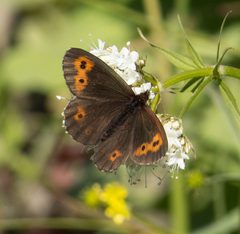
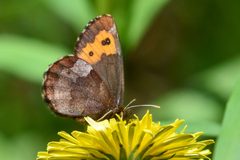
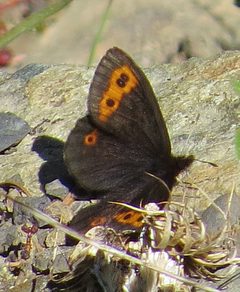
Distinguished from other Erebia by the combination of: jagged (not smooth) orange band on both wings; three eyespots on forewing and two or three on hindwing; grey hindwing with reduced or absent eyespots. The jagged orange band separates it from Erebia species with more uniform banding patterns.
Images
Appearance
Wingspan 35–45 mm. wings brownish black with jagged orange band on both wings. Forewings with three black eyespots surrounded by orange band; hindwings with two or three eyespots. forewing similar to dorsal side. Ventral hindwing grey with eyespots vague or absent.
Habitat
Moist, flowery alpine and subalpine meadows and slopes. Occurs in mountainous terrain above tree line or in open subalpine zones.
Distribution
Mountainous regions of Washington state and British Columbia, north to Mt. Hoadley. Restricted to western North America.
Diet
Larvae feed on various of Poaceae (grasses). feeding habits not documented.
Host Associations
- Poaceae - larval food plantvarious grass
Life Cycle
Complete with , larva, pupa, and stages. Larval development occurs on grasses.
Ecological Role
are likely of alpine flowering plants. Larvae function as herbivores in alpine grassland .
Similar Taxa
- Erebia euryaleSimilar orange banding pattern but occurs in European Alps, not western North America; band pattern differs in details
- Other Erebia species in western North AmericaE. vidleri distinguished by jagged orange band and specific eyespot arrangement on grey hindwing
More Details
Conservation status
Not formally assessed; restricted range in alpine may make it vulnerable to climate change impacts on montane .