
Colobura
Billberg, 1820
Species Guides
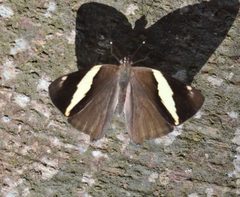
2- Colobura annulata(new beauty)
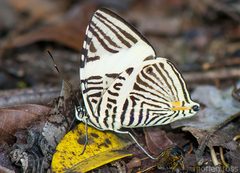
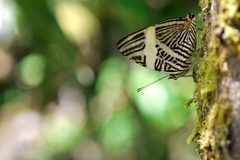
- Colobura dirce(Dirce Beauty)
Colobura is a of butterflies in the Nymphalidae containing two recognized : Colobura dirce (zebra mosaic) and Colobura annulata (new beauty). The genus ranges from Mexico through Central America to South America. Larvae of at least one species have been documented feeding on Cecropia obtusifolia (Urticaceae).
Pronunciation
How to pronounce Colobura: /kəˈlɒbjʊrə/
These audio files are automatically generated. While they are not always 100% accurate, they are a good starting point.
Identification
The two can be distinguished by wing pattern differences. Colobura dirce has a distinctive zebra-like striped pattern on the wings, while Colobura annulata was described as a based on morphological differences. are medium-sized nymphalid butterflies with reduced forelegs typical of the .
Images
Distribution
Mexico to South America, including Suriname where detailed plant studies have been conducted.
Host Associations
- Cecropia obtusifolia - larval plantDocumented for Colobura annulata in Suriname
More Details
Historical host plant corrections
An erroneous plant record for Colobura annulata in Sepp's Surinaamsche Vlinders (1848–1852) was later rectified through comparison with an original painting by H. J. Scheller, highlighting challenges in historical lepidopteran documentation.
Sources and further reading
- BugGuide
- Wikipedia
- GBIF taxonomy match
- iNaturalist taxon
- NCBI Taxonomy
- Catalogue of Life
- A contribution to the life history of Colobura (Gynaecia auct.) dirce dirce (Linnaeus). (Butterfly)
- A New Host Plant and Notes on the Last Larval Instar of Colobura annulata (Nymphalidae: Nymphalinae) in Suriname
- Erroneous Hostplant of Colobura annulata (Nymphalidae: Nymphalinae) in Sepp's Surinaamsche Vlinders [1848–1852] Rectified through Comparison with Original Painting By H. J. Scheller
- A Review of <I>Colobura</I> (Lepidoptera: Nymphalidae) with Comments on Larval and Adult Ecology and Description of a Sibling Species