
Colobura dirce
Linnaeus, 1764
Dirce Beauty, mosaic, zebra mosaic
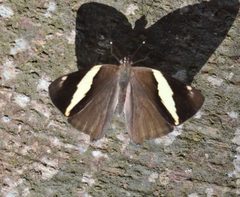
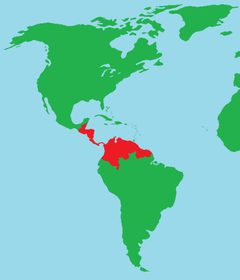
Colobura dirce is a medium-sized nymphalid with distinctive zebra-like wing patterning. The is notable for its larval specialization on Cecropia plants. It occurs across a broad Neotropical range from Central America through the Caribbean to northern South America. The forewings measure approximately 33 mm in length.

Pronunciation
How to pronounce Colobura dirce: /kɔˈlo.bu.ra ˈdir.ke/
These audio files are automatically generated. While they are not always 100% accurate, they are a good starting point.
Identification
The zebra-like or mosaic wing pattern distinguishes this from other Nymphalidae in its range. The approximately 33 mm forewing length and specific banding arrangement separate it from similar-sized nymphalids with different pattern elements.
Images
Appearance
Medium-sized with forewings approximately 33 mm in length. Wings display bold contrasting patterning of dark and light bands, creating a zebra-like or mosaic appearance.
Habitat
Associated with Cecropia vegetation, which serves as larval plant. Specific preferences for are not documented in available sources.
Distribution
Central America, the Caribbean, and northern South America. Specific locality records include sites in Colombia (Bucaramanga, Floridablanca, Piedecuesta, Puerto Parra, Nariño, Armenia, Manizales, Villavicencio, Bolívar, Turbaco), and other Neotropical locations.
Diet
Larvae feed on Cecropia . feeding habits are not documented.
Host Associations
- Cecropia - larval plantLarvae feed on Cecropia
Life Cycle
Complete with larval stage specialized on Cecropia plants. Specific details of pupal stage and timing are not documented.
Similar Taxa
- Other Nymphalidae with banded patternsSimilar size and general wing shape, but distinguished by the specific zebra-like mosaic banding pattern of C. dirce
More Details
Subspecies
Two recognized : C. d. dirce (Linnaeus, 1758) and C. d. wolcotti Comstock, 1942