
Coeini
Cecropians and Allies
Genus Guides
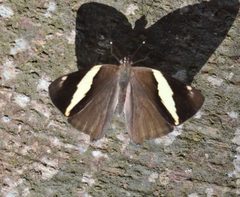
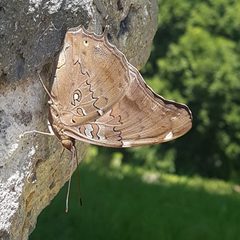
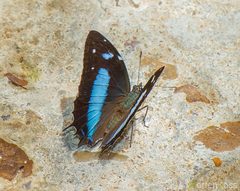
1Coeini is a tribe of brush-footed butterflies ( Nymphalidae) restricted to the . The tribe comprises six recognized : Baeotus, Colobura, Historis, Pycina, Smyrna, and Tigridia. Members are commonly referred to as "Cecropians and Allies" in reference to their association with Cecropia trees. The group is characterized by reduced forelegs typical of the Nymphalidae family.
Pronunciation
How to pronounce Coeini: /ˈkoʊ.iːˌnaɪ/
These audio files are automatically generated. While they are not always 100% accurate, they are a good starting point.
Identification
Coeini butterflies can be distinguished from other Nymphalinae tribes by a combination of Neotropical distribution and morphological traits associated with their . Historis display large eyespots on the hindwings. Colobura species have distinctive angular wing margins. Tigridia (sometimes placed in Nymphalini) shows orange and black patterned wings. Smyrna species exhibit rapid, erratic patterns. The tribe lacks the pronounced seen in some related Nymphalini genera.
Images
Distribution
Host Associations
- Cecropia - larval Multiple Coeini are associated with Cecropia (Urticaceae), particularly Historis and Smyrna. This relationship is the basis for the "Cecropians."
- Piper - larval Some , including Historis, have been recorded using Piper (Piperaceae) as larval .
- Urticaceae - larval Broader -level plant associations have been documented for several .
Behavior
Ecological Role
Larvae function as herbivores on fast-growing pioneer trees (Cecropia, Piper), potentially influencing plant dynamics in Neotropical forests. may contribute to nutrient cycling through sap-feeding and fruit-feeding .
Similar Taxa
- NymphaliniTigridia is sometimes placed in Nymphalini rather than Coeini, indicating close morphological similarity. Nymphalini shares reduced forelegs and Neotropical distribution with some members, but differs in plant associations and wing pattern elements.
- JunoniiniBoth tribes occur in the Neotropics and share brush-footed . Junoniini typically shows more pronounced eyespot patterns and different plant preferences (Acanthaceae, Plantaginaceae).
More Details
Taxonomic Uncertainty
The placement of Tigridia remains disputed, with some classifications assigning it to Nymphalini. This reflects ongoing uncertainty about tribal boundaries within Nymphalinae.