
Phyciodes pulchella
Boisduval, 1852
Field Crescent
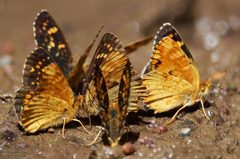
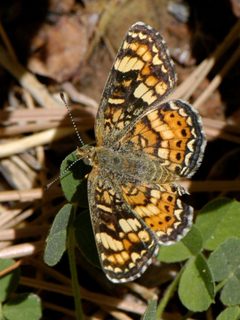
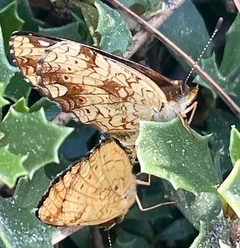
Phyciodes pulchella, commonly known as the field crescent, is a small in the Nymphalidae. It is found across the , with a wingspan of 24–36 mm. The is active from May to August in Canada. Multiple have been described, reflecting geographic variation across its range.
Pronunciation
How to pronounce Phyciodes pulchella: /faɪˈsaɪoʊdiːz pʊlˈkɛlə/
These audio files are automatically generated. While they are not always 100% accurate, they are a good starting point.
Identification
Distinguished from similar Phyciodes by geographic range and subtle wing pattern differences. Phyciodes cocyta (northern crescent) occurs in more northern areas. Phyciodes batesii (tawny crescent) has more tawny orange coloration. Phyciodes mylitta (Mylitta crescent) shows different wing shape and pattern intensity. Phyciodes pallida (pale crescent) has noticeably paler overall coloration. Phyciodes tharos (pearl crescent) has more rounded wing margins and different spot arrangement. identification requires examination of precise locality and subtle pattern variations.
Images
Appearance
Small with wingspan of 24–36 mm. Upper wing surfaces typically display orange and black checkered or crescent-shaped markings characteristic of the . Wing pattern includes dark marginal bands with pale crescent spots. Underside of wings usually paler with more subdued patterning.
Habitat
Open including fields, meadows, prairies, and grasslands. Associated with areas supporting larval plants in Asteraceae. Occurs in both lowland and montane environments across its range.
Distribution
. Present in Canada (Alberta, Manitoba, Saskatchewan, and likely other provinces), United States (Vermont and widely across northern and western states), and northern Mexico. Multiple reflect geographic variation across this range: P. p. montana in mountainous regions, P. p. camillus, P. p. deltarufa, P. p. inornatus, P. p. owimba, P. p. tutchone, P. p. shoshoni, P. p. vallis, and nominate P. p. pulchella.
Seasonality
fly from May to August in Canada. period likely extends earlier and later in more southern portions of range. Multiple may occur in favorable southern locations.
Diet
Larvae feed on in Asteraceae. Specific plant records not documented in available sources. feed on nectar; specific floral records not documented.
Host Associations
- Asteraceae - larval food plant-level association; specific or not documented
Life Cycle
Complete with , larva, pupa, and stages. Females deposit eggs on plants. Larvae feed on Asteraceae foliage. likely occurs on or near host plants. Adults emerge and seek nectar sources. stage not documented in available sources.
Behavior
are active fliers in open sunny areas. Likely perches on vegetation when not feeding. Specific behavioral observations not documented in available sources.
Ecological Role
may serve as when feeding on nectar. Larvae function as herbivores on Asteraceae. Specific ecological interactions not documented.
Human Relevance
Subject of watching and photography. Contributes to biodiversity in native grassland and meadow . No documented economic importance.
Similar Taxa
- Phyciodes cocytaNorthern crescent; more northern distribution, subtle wing pattern differences
- Phyciodes batesiiTawny crescent; more tawny orange wing coloration
- Phyciodes mylittaMylitta crescent; different wing shape and pattern intensity
- Phyciodes pallidaPale crescent; noticeably paler overall coloration
- Phyciodes tharosPearl crescent; more rounded wing margins and different spot arrangement
More Details
Taxonomic Status
Some sources list Phyciodes pulchella as a synonym of Phyciodes tharos, while others maintain it as a valid . The Catalogue of Life and GBIF indicate synonymy with P. tharos, whereas iNaturalist and NCBI recognize it as a valid species. This taxonomic uncertainty reflects ongoing debate about species boundaries within the Phyciodes complex.
Subspecies Diversity
Eight have been described, indicating substantial geographic variation across the range. Subspecies names and their distributions: P. p. camillus (Edwards, 1871), P. p. deltarufa (Scott, 1998), P. p. inornatus (Austin, 1998), P. p. montana (Behr, 1863) in montane regions, P. p. owimba (Scott, 1998), P. p. pulchella (nominate), P. p. tutchone (Scott, 1994), P. p. shoshoni (Scott, 1994), and P. p. vallis (Austin, 1998).
Sources and further reading
- BugGuide
- Wikipedia
- GBIF taxonomy match
- iNaturalist taxon
- NCBI Taxonomy
- Catalogue of Life
- Bembicid Holdings | Entomology Research Museum
- Stylish Lepidoptera: Ermine Moth, Atteva aurea; Yellow-Collared Scape Moth, Cisseps fulvicollis; Pearl Crescent, Phyciodes tharos; Variegated Fritillary, Euptoieta claudia — Bug of the Week
- Bug Eric: City Nature Challenge 2023 Recap
- 2019 Arkansas/Oklahoma Insect Collecting Trip iReport | Beetles In The Bush
- Bug Eric: White Prairie Clover: An Awesome Blossom