
Phyciodes pallida
Edwards, 1864
Pale Crescent, Pallid Crescentspot
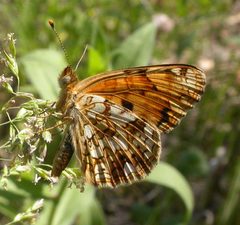
Phyciodes pallida is a in the Nymphalidae, commonly known as the pale crescent or pallid crescentspot. It occurs in western North America. have a wingspan of 33–44 mm. The species has at least two recognized : P. p. pallida and P. p. barnesi.
Pronunciation
How to pronounce Phyciodes pallida: //faɪˈsaɪ.oʊdiːz ˈpæl.ɪdə//
These audio files are automatically generated. While they are not always 100% accurate, they are a good starting point.
Identification
Distinguished from the similar Phyciodes mylitta (Mylitta crescent) by paler overall coloration and less pronounced dark wing markings. The reduced intensity of crescent spots on the wing margins separates it from other Phyciodes in sympatry.
Images
Appearance
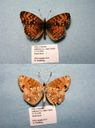
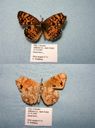
Wingspan 33–44 mm. Overall coloration pale relative to , with reduced dark markings on wings. Crescent-shaped spots on wing margins, characteristic of the Phyciodes, present but less pronounced than in related .
Distribution
Western North America. Specific range details beyond this broad region are not well-documented in available sources.
Seasonality
fly in June in Canada. period in other parts of the range is not specified.
Diet
Larvae feed on Cirsium (thistles). feeding habits are not documented.
Host Associations
- Cirsium - larval food plant-level identification only; specific not stated
Life Cycle
Complete with , larva, pupa, and stages. Larval stage associated with Cirsium plants. Detailed including number of per year and stage is not documented.
Ecological Role
Larvae function as herbivores on native thistles. may contribute to pollination, though this has not been quantified. Specific roles beyond larval herbivory are not documented.
Similar Taxa
- Phyciodes mylittaSimilar size and wing pattern, but P. pallida is distinguished by paler coloration and less pronounced dark markings
More Details
Subspecies
Two recognized: P. p. pallida (nominate) and P. p. barnesi Skinner, 1897. Distinguishing characters between subspecies are not specified in available sources.
Sources and further reading
- BugGuide
- Wikipedia
- GBIF taxonomy match
- iNaturalist taxon
- NCBI Taxonomy
- Catalogue of Life
- Those Incredible Digger Bees and Their Nest Parasites | Bug Squad
- Bees, Parasites and Maybe the End? | Bug Squad
- The Amazing Bee-Parasite Research of Leslie Saul-Gershenz | Bug Squad
- A Silver Digger Bee in Flight at Bodega Head | Bug Squad
- Congrats to Our UC Davis Nematologists! | Bug Squad
- Why Silver Digger Bees Are Like Gold | Bug Squad